
UV light helps experimental contact lens material mend scratches
Researchers report a hydrogel for soft contact lenses that can repair surface damage after an hour under 365-nanometer UV light at room temperature.
By Lucas Ferreira · Science & Environment Writer
2 min read
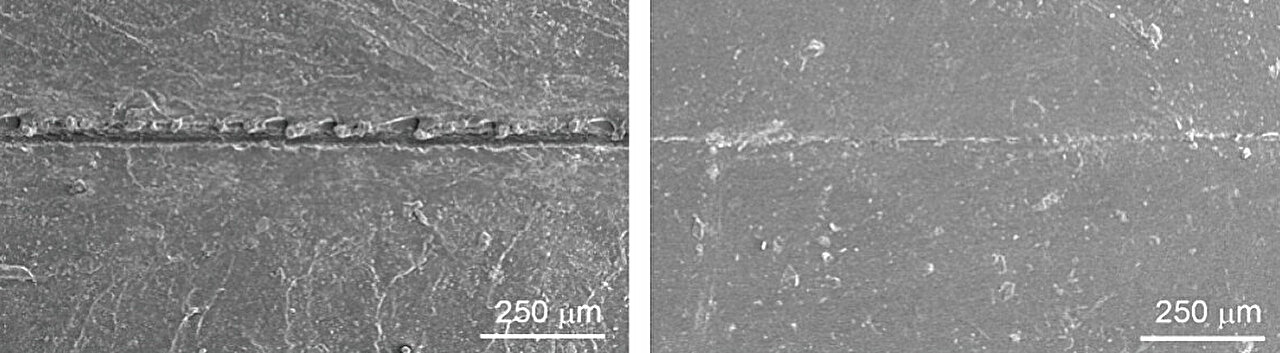
Researchers have designed an experimental soft contact lens material that can mend scratches after one hour of ultraviolet light exposure. The work could point toward repairable lenses, though the material still faces further testing and regulatory review before any consumer use, according to the American Chemical Society.
Jung-Hyun Choi and Byoung-Ki Cho reported the hydrogel system in ACS Applied Polymer Materials. The researchers aimed to address a basic problem with soft contacts: once a lens is scratched, damaged or clouded by wear, dust or debris, users generally have no repair option.
Soft contact lenses commonly rely on hydrogels, which are polymer networks that contain water, according to the American Chemical Society. Those materials can be comfortable for vision correction, but damage can make a lens unusable.
Choi and Cho had previously made a hydrogel that could repair itself after several hours of heating, the American Chemical Society said. That approach was poorly suited to contact lenses because prolonged heat can dry out a delicate lens. In the new work, the researchers used ultraviolet light to trigger a repair reaction at room temperature.
The team built the hydrogel from a methacrylate polymer and a disulfide cross-linker, according to the study. They also added a separate polymer coating intended to reduce bacterial growth and resist scratching on the lens surface.
When damaged samples were exposed for one hour to UV light with a wavelength of 365 nanometers, the light drove a chemical process called disulfide exchange, the American Chemical Society reported. During that process, sulfur-sulfur bonds break and reconnect with other sulfur atoms, helping the hydrogel close the damaged area.
In laboratory tests, the repair produced an almost continuous-looking lens surface, according to the American Chemical Society. Cho said the repair step can be repeated and may be possible with household UV lamps, including devices used for cleaning or curing gel nail polish.
The researchers also tested whether the coated hydrogel had traits expected of soft contact lenses. According to the American Chemical Society, a lens made from the coated material showed mechanical behavior and water retention similar to those associated with soft contacts.
The coating also performed well in abrasion tests. The American Chemical Society said the material resisted scratches from fine-grit sandpaper, and its transparency fell by about 2% after abrasion.
The findings do not mean self-repairing contact lenses are ready for stores. The researchers said additional stability testing is needed, and any future product would also require regulatory approval. They said the work could help lead to more durable contact lenses.
This story draws on original reporting from Phys.org.