
Two-step treatment stimulates digit regrowth in mice
Texas A&M researchers say sequential growth-factor treatment redirected healing in mice from scarring toward partial digit regeneration.
By Lucas Ferreira · Science & Environment Writer
3 min read
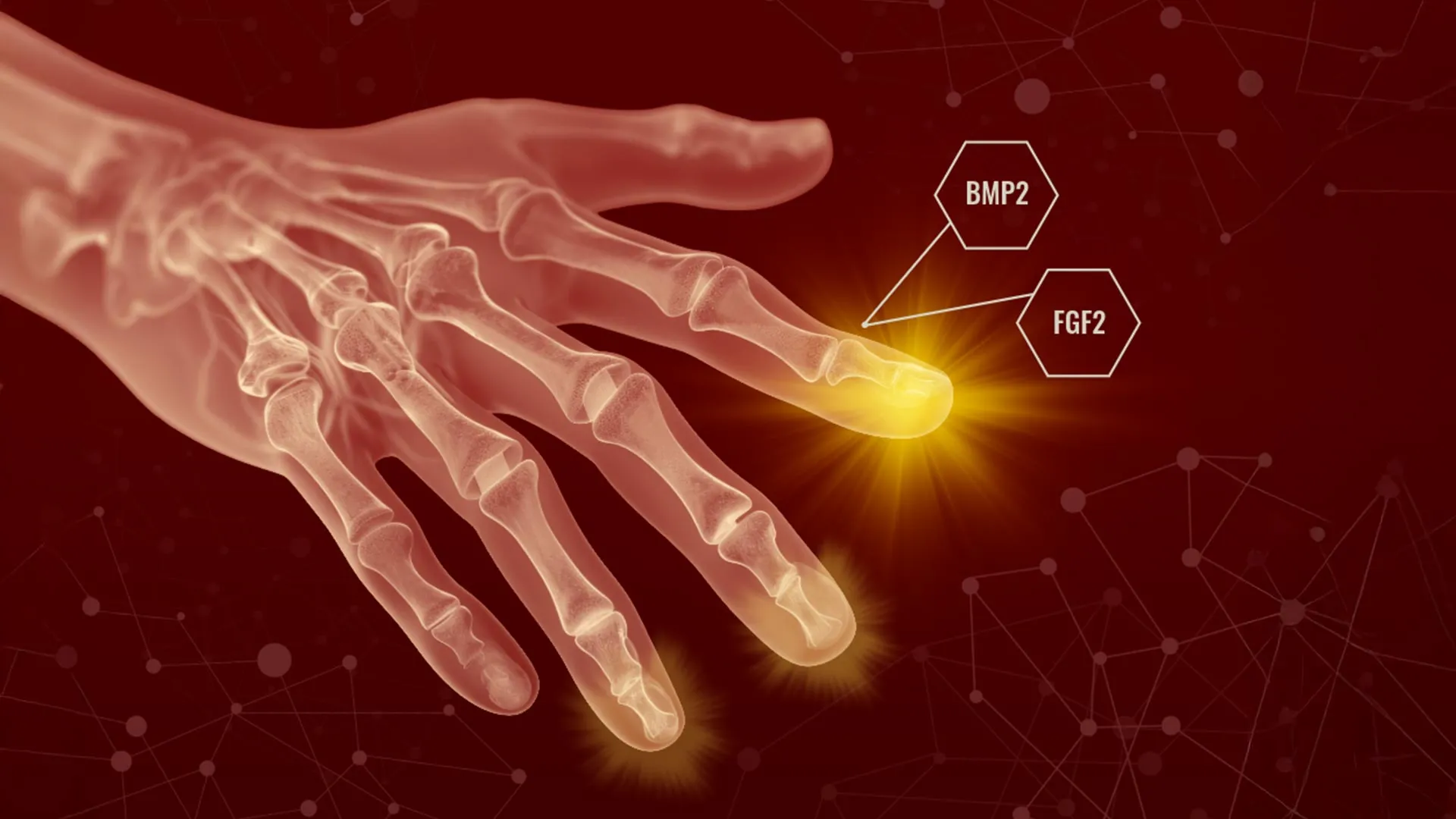
Researchers at Texas A&M University say they have stimulated regrowth of complex digit structures in mice using a two-stage treatment, a finding that could reshape how scientists study mammalian wound repair. The work matters because mammals typically seal severe injuries with scar tissue rather than rebuilding lost bone, joints and connective tissue.
The study, published in Nature Communications, was led by Ken Muneoka of the Texas A&M College of Veterinary Medicine and Biomedical Sciences and colleagues. According to Texas A&M, the team used two known growth factors in sequence after amputation injuries and observed regeneration of bone, joint structures, ligaments and tendons.
The findings do not show that humans can regrow limbs, and the university said the restored tissues were not exact copies of the original anatomy. The researchers described the work as evidence that mammalian cells may retain more regenerative capacity than previously assumed.
Changing the wound response
Texas A&M said mammalian injuries usually trigger fibrosis, in which fibroblast cells close a wound and produce scar tissue. That response helps protect the body, but it also limits the rebuilding of lost structures.
Animals known for regeneration, including salamanders, form a different structure called a blastema, which supports new tissue growth, according to the university’s summary of the research. Muneoka said the study focused on changing how fibroblasts already present at the wound site behave after injury.
The team first allowed the wound to close, then applied fibroblast growth factor 2, or FGF2, Texas A&M said. That step promoted formation of a blastema-like structure that normally does not appear in mammals after this kind of injury.
Several days later, the researchers applied bone morphogenetic protein 2, or BMP2, which directed the cells toward tissue formation, according to the study summary. Texas A&M said the sequence was central to the result: first moving cells away from scarring, then giving signals for what to build.
Regrowth without added stem cells
The researchers said the results challenge a common assumption in regenerative medicine: that new stem cells must be introduced from outside the body. Muneoka said the relevant cells were already present and needed the right signals to act differently, according to Texas A&M.
Larry Suva, another Texas A&M professor involved in the study, said the findings suggest cells once viewed as fixed in their roles can be redirected. The university said the work also found evidence of positional re-specification, a developmental process in which cells are instructed to form structures outside their usual location.
In the mouse digit experiments, Texas A&M said the regenerated areas included the major tissue types removed by amputation. The new tissue included skeletal and connective components in arrangements that resembled normal anatomy, though Muneoka said the structures were present in imperfect form.
The results also indicate that regeneration depends on several biological pathways rather than a single switch, according to the university. That complexity may help explain why mammalian regeneration has been difficult to activate.
Possible path toward wound-healing uses
Texas A&M said the research remains early and has not established a human therapy. The scientists said the same approach could have nearer-term value if it reduces scar formation or improves repair after serious injuries.
The university noted that BMP2 already has approval from the U.S. Food and Drug Administration for certain medical uses, while FGF2 is being tested in multiple clinical trials. The study’s journal reference identifies the paper as “Digit regeneration in mice is stimulated by sequential treatment with FGF2 and BMP2.”
This story draws on original reporting from ScienceDaily.