
Amazon spider found mimicking fungus that infects spiders
Researchers identified Taczanowskia waska in Ecuador, a new spider species that resembles a parasitic fungus found on spiders.
By Tom Brennan · Health & Medicine Correspondent
3 min read
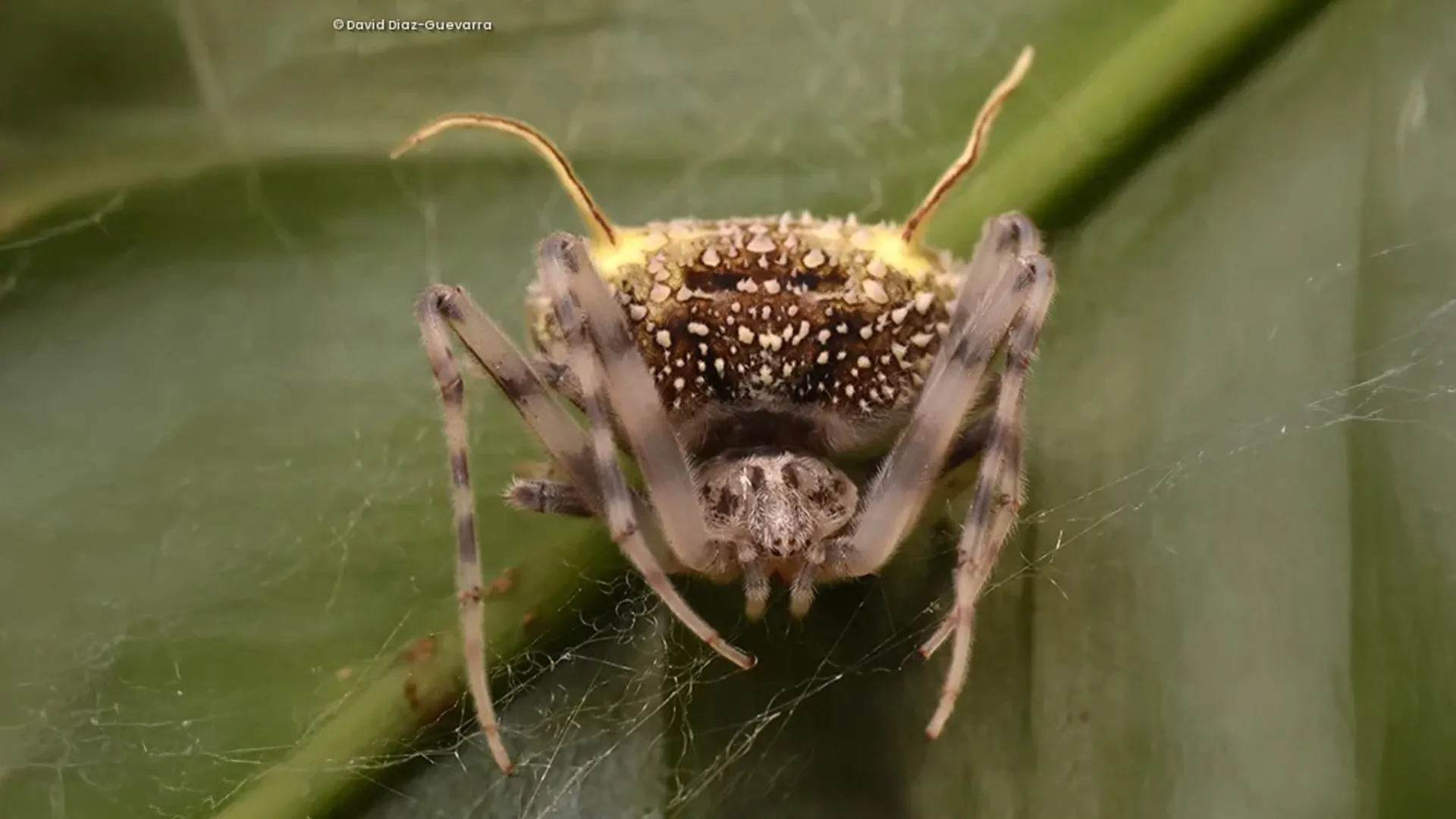
Scientists have described a new spider from the Ecuadorian Amazon that appears to pass itself off as a fungus known to infect spiders. The finding matters because researchers say it is the first documented case of a spider imitating a parasitic fungus that attacks other spiders.
The species, named Taczanowskia waska, was reported in the journal Zootaxa by David R. Díaz-Guevara, Alexander Griffin Bentley and Nadine Dupérré, according to the Leibniz Institute for the Analysis of Biodiversity Change. The institute said the work involved an international team, including researchers affiliated with its Museum of Nature Hamburg.
Researchers found the spider in the Llanganates-Sangay Corridor, a biodiverse area of Ecuador’s Amazon rainforest, according to the Leibniz Institute. During a night survey, the animal was first taken for a mushroom, the institute said, before further examination showed it was a spider.
A disguise built from shape and behavior
The study says Taczanowskia waska resembles the fruiting body of fungi in the genus Gibellula, which grow on spiders. According to the Leibniz Institute, the spider’s pale coloring and elongated projections from the abdomen contribute to the fungus-like appearance.
The resemblance is not limited to its body shape. Researchers said the spider stays still on the undersides of leaves, matching the kind of place where Gibellula fungi are commonly found.
The study authors interpret that combination of appearance and posture as a specialized form of mimicry. According to the Leibniz Institute, the disguise may help the spider avoid predators by making it look like something they would overlook, and it may also help the spider remain undetected by potential prey.
A rare group with many unknowns
The genus Taczanowskia is considered rare and remains poorly known, the Leibniz Institute said. Researchers have limited information about the ecology of these spiders because they are not often encountered in the wild.
Dupérré, of the Museum of Nature Hamburg at the Leibniz Institute, helped classify the species by studying reference material from scientific collections, according to the institute. The institute said those collections allowed researchers to compare the new spider with previously preserved specimens.
The discovery also began outside a conventional museum or lab setting. According to the Leibniz Institute, observers posted the find on iNaturalist, a citizen science platform, where users initially treated it as a mushroom before others recognized it as a spider.
The institute said the case shows how citizen science, museum collections and international collaboration can work together in biodiversity research. It also points to the amount of undescribed or poorly understood life that remains in tropical ecosystems, according to the researchers.
The journal reference identifies the paper as “The Cordyceps spider”: Taczanowskia waska sp. nov. (Araneae: Araneidae), a new spider species and a novel case of mimicry of an araneopathogenic fungus (Cordycipitaceae: Gibellula), published in Zootaxa in 2026.
This story draws on original reporting from ScienceDaily.