
Juvenile great white caught off Spain revives Mediterranean shark question
Researchers say a juvenile shark caught off Spain adds to records showing great whites still appear in the Mediterranean and may be breeding there.
By Priya Raghavan · Science Reporter
3 min read
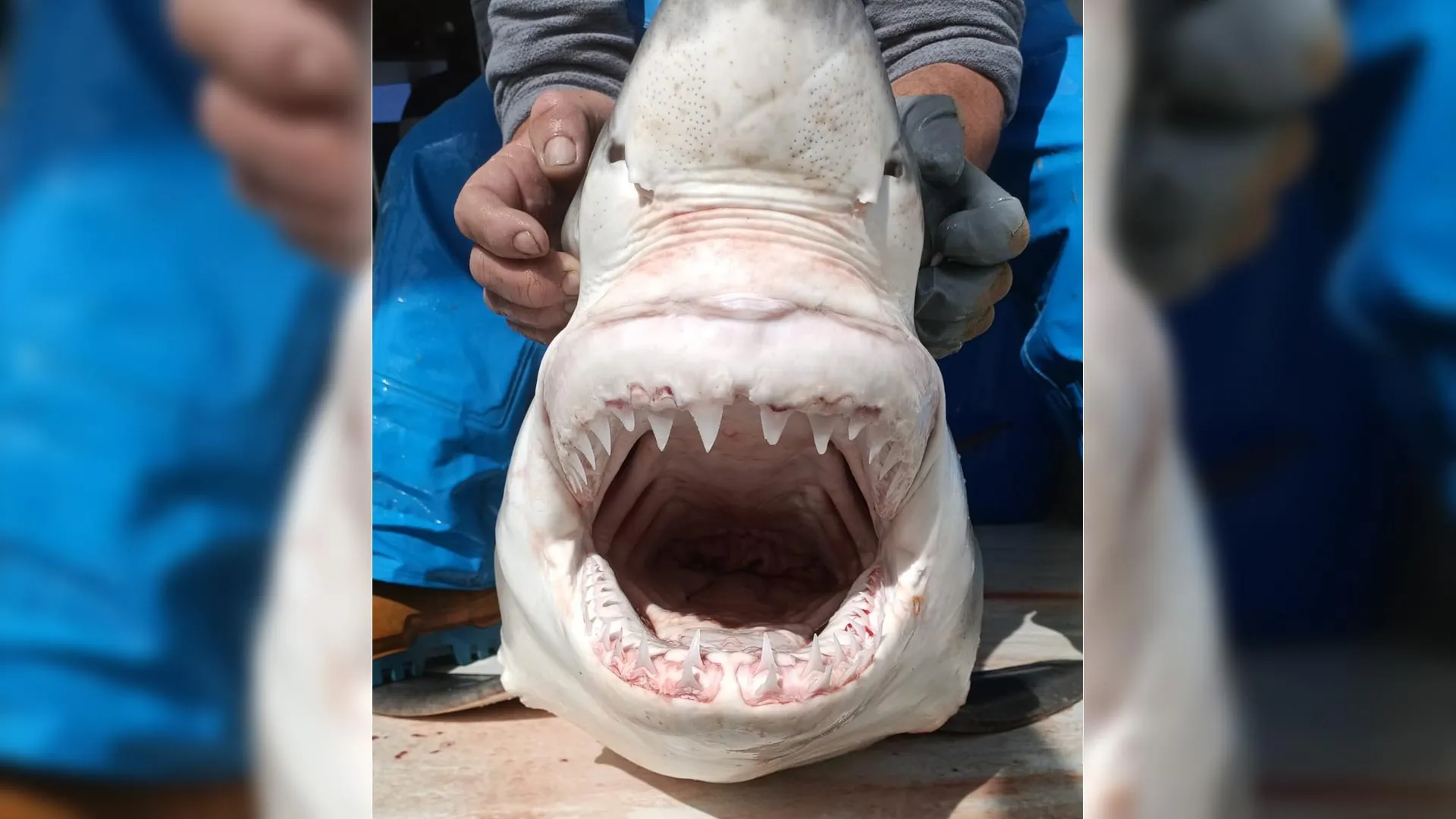
A juvenile great white shark accidentally caught by fishermen off Spain has renewed scientific scrutiny of the species’ rare presence in the Mediterranean Sea. Researchers say the catch adds evidence that great whites still occur in the region and raises the possibility that they may continue to reproduce there.
Pensoft Publishers said local fishermen caught the shark on April 20, 2023, off the coast of the eastern Spanish peninsula. The animal measured about 210 centimeters, or nearly 7 feet, and weighed between 80 and 90 kilograms, according to the researchers.
The record appears in a review by José Carlos Báez, Miguel A. Puerto, Davinia Torreblanca, José L. Varela, Leila Carmona and David Macías published in the open-access journal Acta Ichthyologica et Piscatoria. The study examined documented reports of white sharks, Carcharodon carcharias, from Mediterranean Spanish waters from 1862 through 2023.
According to Pensoft Publishers, the scientists describe the Mediterranean great white as a “ghost” population because confirmed encounters are so uncommon. The researchers concluded from the historical records and the 2023 catch that great whites have not vanished from Mediterranean waters, even though sightings remain sporadic.
Báez, the study’s lead researcher, said juvenile animals are especially important for understanding the population. According to Pensoft Publishers, he said the presence of young sharks raises the question of whether breeding is still taking place somewhere in the region.
The researchers did not report proof of a nursery area or a confirmed breeding site. They said the juvenile record points to a question that will require more evidence, because great white sharks can travel long distances and single sightings cannot establish population size or reproductive status.
The International Union for Conservation of Nature lists the great white shark as Vulnerable, according to the report. Pensoft Publishers said scientists consider information on the species’ remaining range and habitat use especially valuable because great white shark populations are believed to be declining.
The study also underscores the difficulty of studying a large, highly mobile predator that is rarely recorded in the Mediterranean. According to the researchers, each confirmed record can help refine knowledge of where the species still appears and how it uses the region.
Báez said scientific study can help counter public myths about great white sharks, Pensoft Publishers reported. He argued that better knowledge of the species’ biology and ecology can replace fear with a more accurate understanding.
The researchers called for long-term monitoring to clarify the status of Mediterranean great whites. Pensoft Publishers said future work could combine conventional sighting records with technologies such as satellite tracking to improve knowledge of shark movements, behavior and conservation needs.
Báez said large marine predators play important ecological roles, including moving energy and nutrients across broad areas and consuming carrion. According to Pensoft Publishers, he also noted that when such animals die and sink, their bodies can provide food for deep-sea communities.
This story draws on original reporting from ScienceDaily.