
Sugar-coated nanoparticles slow brain tumors in mouse study
Oregon State researchers reported longer survival in mice with glioblastoma after nanoparticles delivered tumor-suppressing mRNA across the blood-brain barrier.
By Tom Brennan · Health & Medicine Correspondent
3 min read
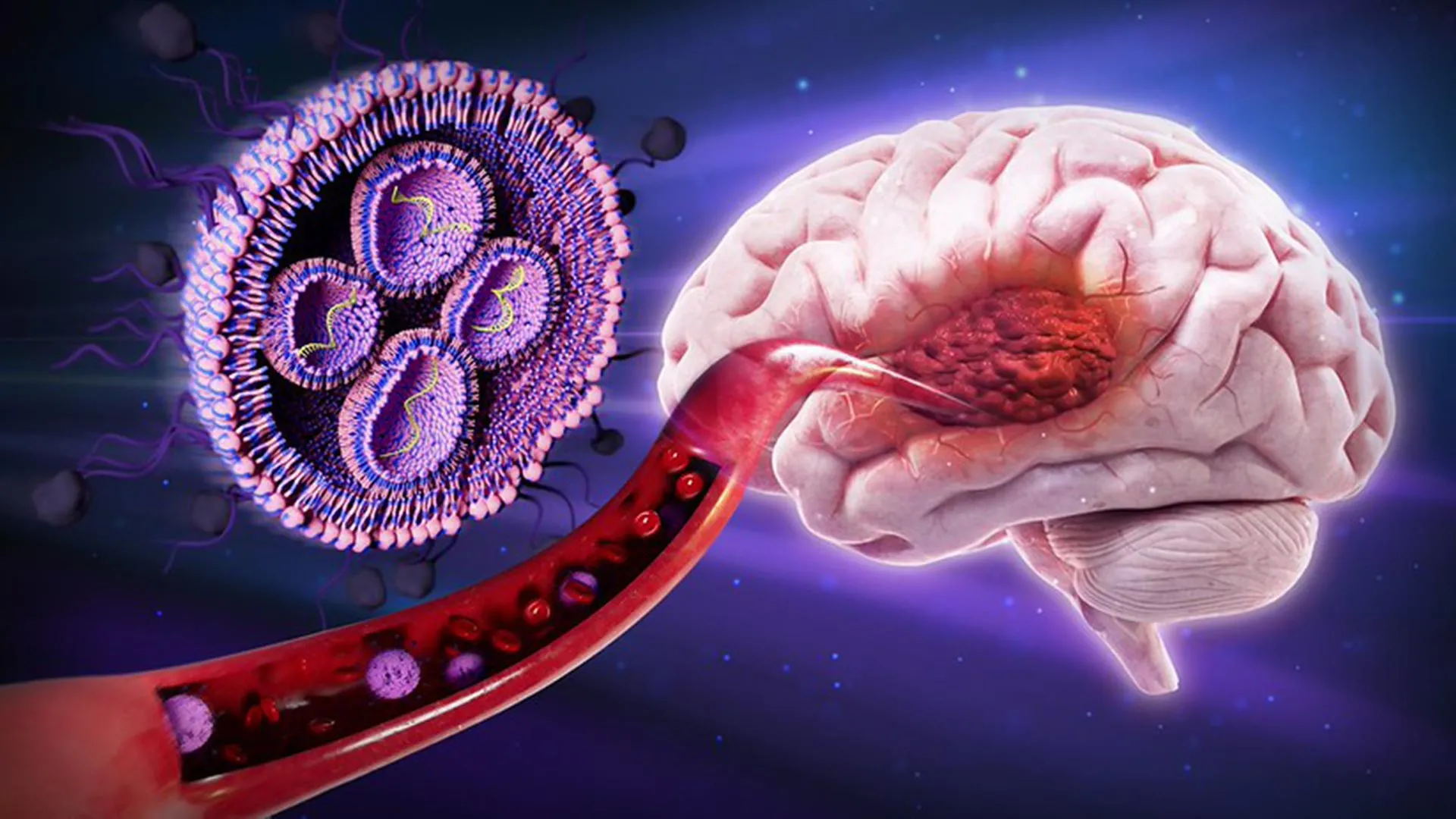
Oregon State University researchers say an experimental nanoparticle treatment extended survival in mice with glioblastoma, an aggressive brain cancer with limited treatment options. The study matters because the approach is designed to cross the blood-brain barrier, one of the main obstacles to treating tumors in the brain.
The work, published in the Journal of Controlled Release, used lipid nanoparticles carrying messenger RNA instructions for a tumor-suppressing protein called PTEN. In mice with glioblastoma, Oregon State said the treatment increased median survival by 50% and reduced tumor size without measurable toxicity in other organs.
How the delivery system works
The research team was led by Oleh Taratula, Olena Taratula and Yoon Tae Goo of Oregon State’s College of Pharmacy. Their method centers on coating nanoparticles with mannose, a sugar related to glucose, to help the particles pass from the bloodstream into the brain.
According to Oregon State, cells that line blood vessels in the brain carry a transporter called GLUT1, which normally moves glucose into the central nervous system. GLUT1 can also recognize mannose, allowing the coated nanoparticles to use that route through the blood-brain barrier.
The researchers chemically attached mannose to cholesterol, a structural component of the nanoparticles. Oleh Taratula said the change increased the sugar coverage on the particle surface sixfold, which helped the particles compete with glucose in the blood for access to GLUT1.
After crossing into the brain, the particles were intended to concentrate in tumor cells. Oregon State said glioblastoma cells express GLUT1 at about three times the level seen in normal brain tissue, giving the mannose-coated particles another way to favor tumor tissue over healthy tissue.
Restoring a tumor brake
The nanoparticles carried mRNA that tells cells to produce PTEN, a protein that helps restrain abnormal cell growth. Oregon State said PTEN is often absent or inactive in glioblastoma cells, which can weaken the body’s ability to slow tumor progression.
To help keep the mRNA intact before delivery, the team added a positively charged cholesterol derivative to the nanoparticle design. According to the university, that helped secure the genetic cargo inside the particles until it reached its target.
Olena Taratula said restoring PTEN expression in tumor cells reinstated growth control in the mouse experiments. Oregon State said repeated dosing was associated with tumor shrinkage and no measurable organ toxicity.
A difficult cancer target
Glioblastoma is described by Oregon State as the most aggressive form of brain cancer. The university said fewer than 30% of patients survive two years after diagnosis, and more than 95% die within five years.
The cancer affects about 3.19 people per 100,000 in the United States, according to the university. Oregon State said it is more common in males than females, and the median age at diagnosis is 64.
Other contributors to the study included Vincent Cataldi, Vladislav Grigoriev, Neera Yadav, Tetiana Korzun, Chao Wang and Adam Alani of Oregon State’s College of Pharmacy. The research was supported by the National Cancer Institute, the Eunice Kennedy Shriver National Institute of Child Health and Human Development, and the National Research Foundation of Korea.
This story draws on original reporting from ScienceDaily.