
Engineered living plastic breaks down in six days in lab test
Researchers reported a plastic embedded with engineered bacterial spores that decomposed after activation without producing microplastics.
By Priya Raghavan · Science Reporter
3 min read
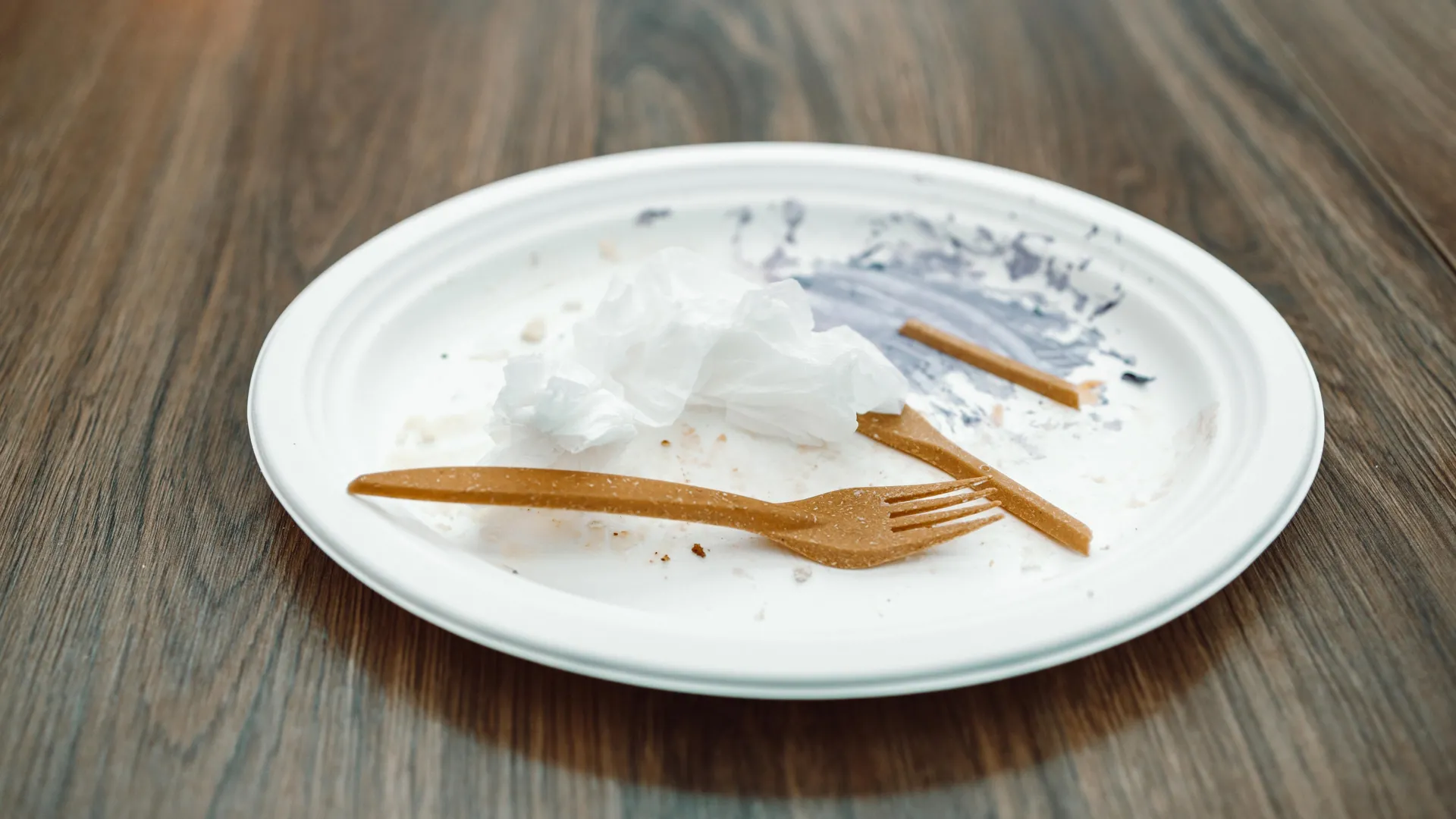
Researchers have developed a plastic that can break itself down after a laboratory trigger, a possible route to cutting waste from products used briefly but discarded for years. The American Chemical Society said the material decomposed in six days in tests and did not leave microplastics behind.
The work, published in ACS Applied Polymer Materials, used engineered microbes built into a polymer rather than relying on plastics to degrade slowly after disposal. The study was led by researchers including Zhuojun Dai, Jin Geng and Dianpeng Qi, according to the journal reference released by the American Chemical Society.
How the material works
The plastic belongs to a class researchers call living plastics, materials that contain dormant microorganisms able to produce enzymes that attack the surrounding polymer. In this case, the team engineered Bacillus subtilis, a bacterium that can form hardy spores, to make two enzymes that degrade polymers.
According to the American Chemical Society, the two enzymes act in sequence. One cuts long polymer chains at scattered points, while the other works from the ends of the shortened pieces to reduce them further into monomer building blocks.
Dai said the team was motivated by the gap between short-lived uses such as packaging and the long persistence of conventional plastics. The goal, Dai said, was to build degradation into the material’s life cycle.
Six-day breakdown after activation
The researchers mixed dormant B. subtilis spores into polycaprolactone, a polymer used in some 3D printing applications and surgical sutures, according to the American Chemical Society. Keeping the bacteria as spores protected them until the researchers started the breakdown process.
The resulting plastic films had mechanical properties similar to standard polycaprolactone films, the society said, indicating that adding the spores did not substantially undermine the material’s strength under normal conditions. The study focused on that one polymer, not the full range of commercial plastics now in use.
To start decomposition, the researchers added a nutrient broth heated to 122 degrees Fahrenheit, or 50 degrees Celsius. The spores then became active and produced the two enzymes, and the material was reduced to its basic building blocks within six days, according to the American Chemical Society.
The group reported that the process avoided the formation of microplastics because the polymer did not merely fragment into smaller plastic pieces. Instead, the enzymes broke it down further through the staged reaction described in the study.
Possible uses and next steps
To show one possible application, the researchers made a wearable plastic electrode from the living material. The device functioned as intended and then fully degraded within two weeks after activation, according to the American Chemical Society.
The team said the approach could be useful for products that need to stay durable for a limited period and then disappear after disposal. The researchers also hope to develop a way to activate the spores in water, where plastic pollution often accumulates.
Although the experiments used polycaprolactone, the researchers said the same general strategy may be adaptable to other plastics, including materials common in disposable goods. The authors acknowledged support from Chinese national, provincial and Shenzhen research programs and funds.
This story draws on original reporting from ScienceDaily.