
Stem-nesting native bees face higher heat risk in Australia
A study of 95 Australian native bee species links nesting behavior and tropical range to higher vulnerability as temperatures rise.
By Priya Raghavan · Science Reporter
3 min read
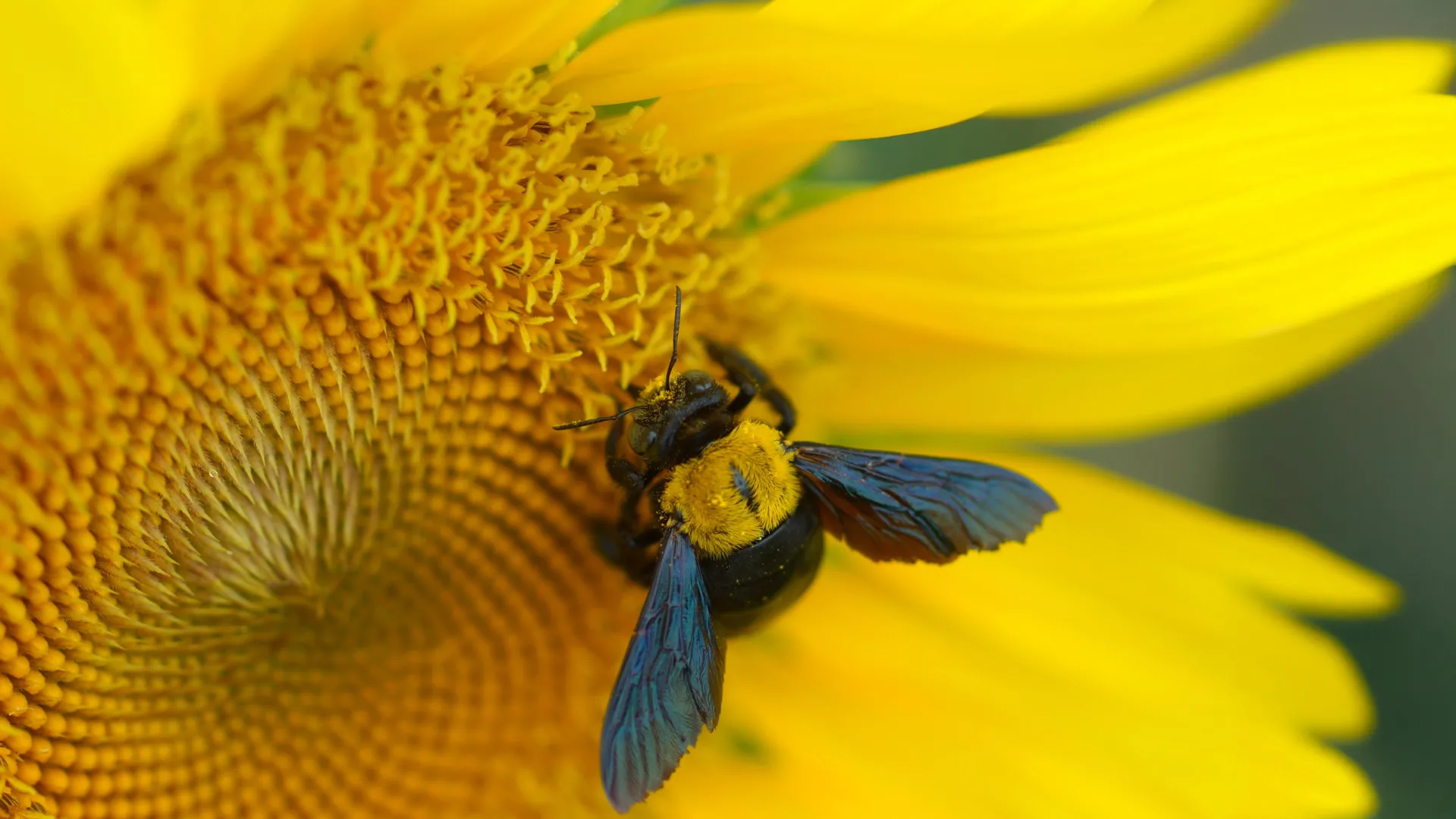
Some Australian native bees that nest in plant stems may be among the first to suffer as climate change raises temperatures, according to research led by Macquarie University. The finding matters because nesting behavior may help determine which pollinators can avoid lethal heat and which have fewer options.
The study, published in Nature Communications, examined heat tolerance in 95 native bee species across eastern mainland Australia. Researchers compared species from the tropical north with those from cooler southern areas to assess how heat tolerance has evolved and how exposed different bees may be under warming conditions.
Macquarie University said the work involved scientists from Macquarie University, The University of Sydney, La Trobe University, Flinders University, the University of Wollongong, Adelaide University and The University of Queensland. The research focused on whether where bees build their nests changes their ability to avoid dangerous temperatures.
Australia has about 1,700 native bee species, according to Macquarie University. Many nest in one of three broad settings: underground burrows, cavities in wood such as hollows or fallen branches, or plant stems and small holes in twigs.
Dr. Carmen da Silva, a research fellow at Macquarie University’s Pollinator Futures Research Centre and lead author of the study, said underground-nesting bees can retreat from extreme surface heat. Bees living above ground, especially inside narrow stems with little insulation, face higher exposure, she said.
The researchers found that stem-nesting species appear to have less ability to avoid unfavorable temperatures than bees that nest below ground. Da Silva said those species are likely to be affected sooner by human-driven climate change.
The study also found a geographic pattern. Bees living nearer the equator appeared more vulnerable overall, with tropical species at particular risk, according to Macquarie University.
Dr. Vanessa Kellermann, a senior lecturer at La Trobe University and a senior author of the study, said predicting which species climate change will threaten remains a major ecological challenge. She said the team found that species with higher heat tolerance were not necessarily safer because many already live in very hot places.
That means some tropical bees may have limited room to withstand further warming, even if they are already adapted to hot conditions. The study’s authors link that risk to both climate exposure and species behavior, including nest choice.
Da Silva said native bees support natural ecosystems and agricultural production through pollination. She said tropical native bees help pollinate crops including macadamia nuts, avocados, mangoes and lychees.
Dr. Ros Gloag, a senior lecturer in evolutionary biology at the University of Sydney and co-senior author, said scientists still know relatively little about many Australian native bees. She said the study shows that understanding their behavior is needed to identify which wild populations face the greatest threats.
The journal reference lists the paper as “Nesting behaviour predicts heat tolerance evolution and climate vulnerability in bees,” by Carmen R. B. da Silva and colleagues, published in Nature Communications in 2026.
This story draws on original reporting from ScienceDaily.