
Ningaloo groundwater study tests reef role in blue carbon storage
AIMS scientists are measuring land-to-sea groundwater flows at Ningaloo Reef to see how nutrients and carbon may support seaweed-based carbon storage.
By Tom Brennan · Health & Medicine Correspondent
3 min read
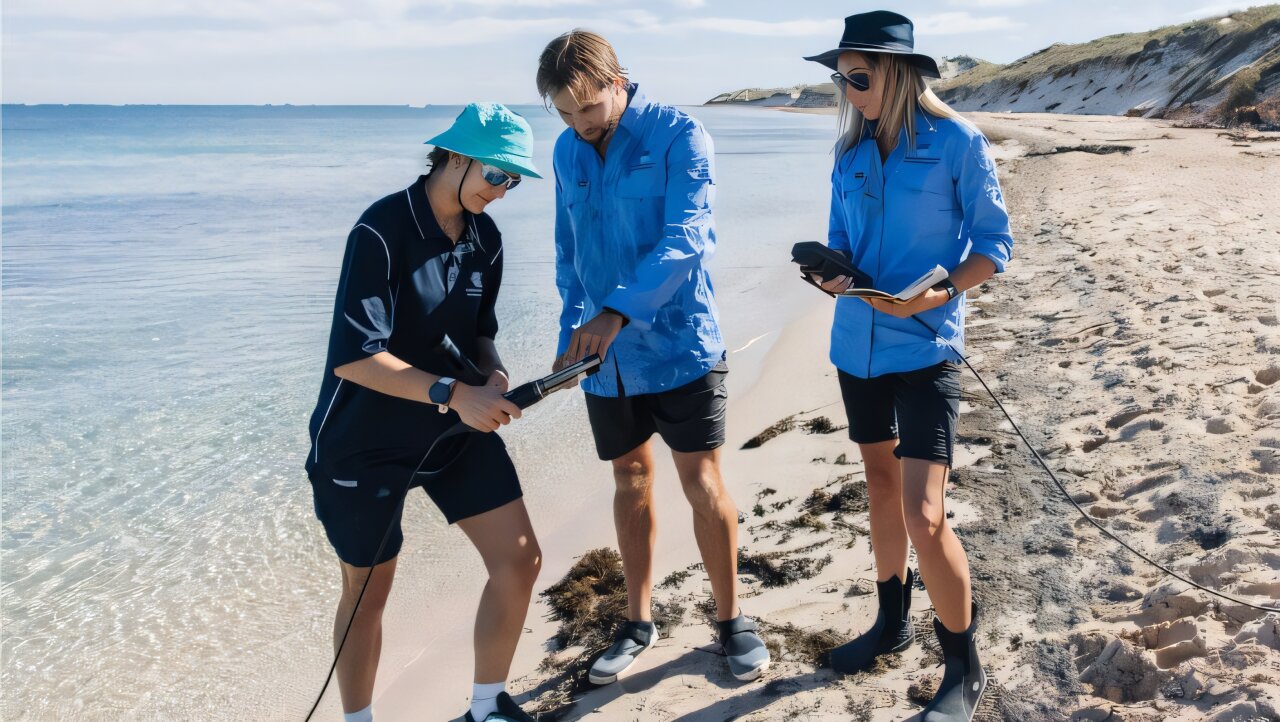
Scientists are measuring how groundwater moves from the Western Australian coast into Ningaloo Reef to assess whether natural flows help store carbon in the ocean. The Australian Institute of Marine Science said the work could guide protection of nutrient pathways that support reef life and may contribute to blue carbon storage.
The AIMS team is studying groundwater, the freshwater held below ground in cracks and spaces in soil and rock. Researchers are testing how carbon and nutrients carried by that water affect seaweed growth and the eventual burial of seaweed material in marine sediments.
Seaweeds take up carbon dioxide from air and surrounding water through photosynthesis, using it to build leaves and stems. AIMS said nutrients help drive seasonal seaweed growth, and canopy-forming seaweeds can shed foliage that becomes buried on the seafloor.
When that organic material is covered by sediment, the carbon inside it can remain out of the atmosphere for hundreds to thousands of years, according to AIMS. That process is known as carbon storage and is part of the broader field of blue carbon, which focuses on carbon held in coastal and marine ecosystems.
Sampling groundwater along the coast
AIMS research scientist Dr. Kay Davis said groundwater naturally travels from land to ocean, carrying freshwater, nutrients and carbon that can help algae, fish and corals grow. She said the Ningaloo study covers the coast from Tantabiddi to just beyond Coral Bay and is examining whether nutrients in groundwater are reaching the reef.
Davis said the northern and southern parts of the study area have different groundwater systems. In the north, the Cape Range has an unconfined aquifer, allowing groundwater to move more freely toward the sea, while groundwater in the south lies much deeper, making that exchange more difficult.
The project team includes Frederike Kunz, a master's student from Germany's Leibniz Center for Tropical Marine Research, known as ZMT. According to AIMS, the researchers collected samples from 33 groundwater sources, including bores, beach groundwater and open springs, as well as 54 ocean surface samples for nutrient testing.
The team also used radon, a naturally occurring component found in soils, to trace groundwater in reef surface waters. AIMS said the field measurements will be combined with a model developed by Kunz to estimate groundwater flow to the reef across broader areas and longer time periods.
Links to reef management
Davis said the data will feed into the Blue Carbon Seascapes project, which is assessing how ecosystems support reef growth and biodiversity. She said the results are expected to inform management of natural nutrient pathways that sustain Ningaloo Reef and may contribute to blue carbon storage in marine soils.
AIMS described the study as the first of its kind at Ningaloo. Davis said the researchers also drew on knowledge from local people who care about the reef and groundwater resource.
The fieldwork was interrupted by Cyclone Narelle, which brought heavy rain to the area. Davis said the team had begun work in the northern region and left before the cyclone arrived, then returned afterward to resample some bores that had already been surveyed.
AIMS said the storm created an unexpected chance to compare conditions before and after major rainfall. Davis said those repeat samples could help researchers understand how groundwater changed after the cyclone and what that may mean for flows reaching the reef.
This story draws on original reporting from Phys.org.