
Space station quantum lab resumes work after cold-atom upgrade
NASA says the Cold Atom Lab is using microgravity to create ultracold matter and test quantum tools that could support future missions.
By Lucas Ferreira · Science & Environment Writer
3 min read
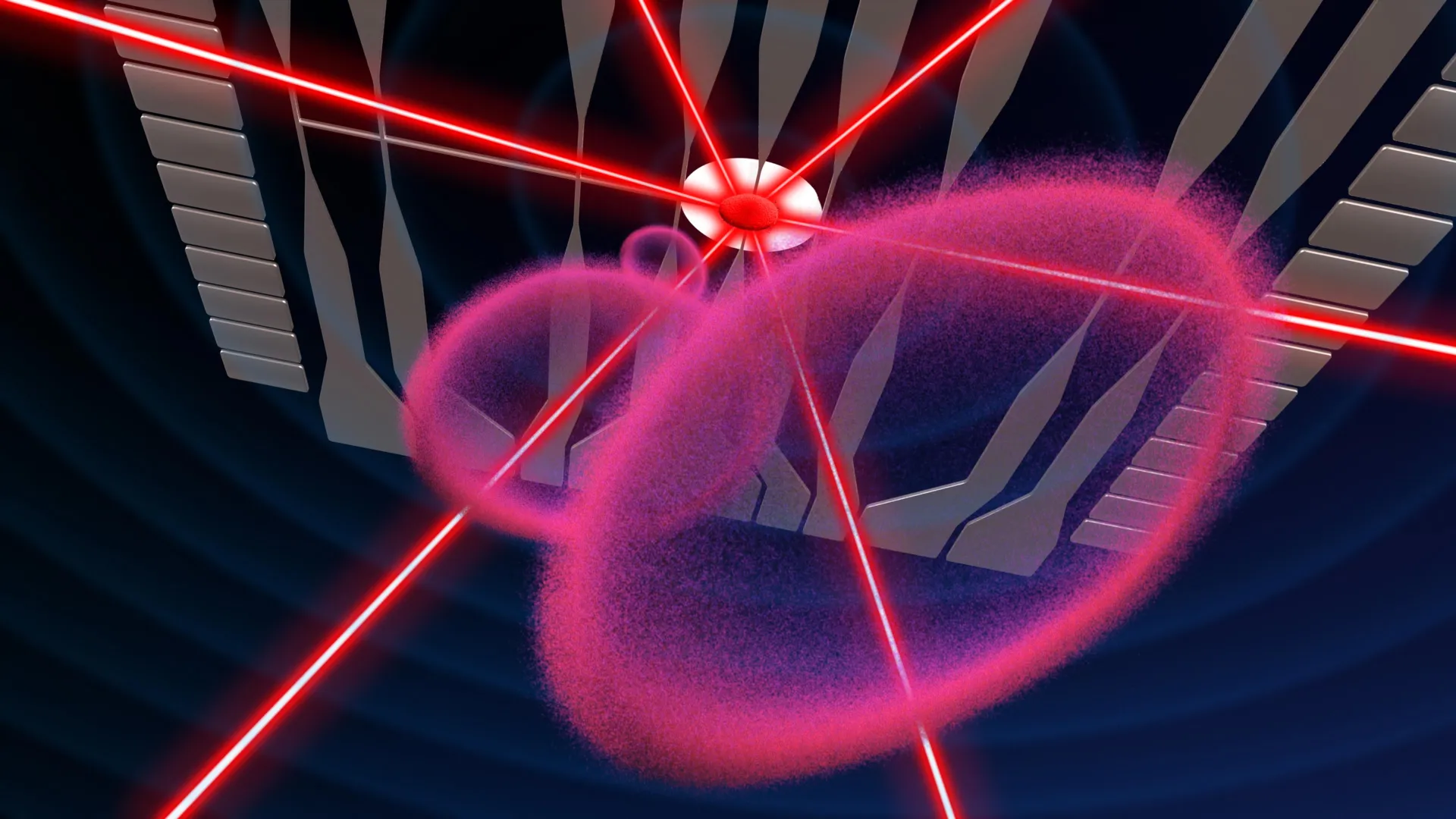
NASA’s Cold Atom Lab has resumed operations on the International Space Station after an upgrade that expands the kinds of quantum physics experiments researchers can run in orbit. The agency says the facility uses microgravity to study matter near absolute zero, where atoms can act in ways that cannot be sustained as well in Earth laboratories.
The experiment system, built and operated by NASA’s Jet Propulsion Laboratory in Southern California, is about the size of a small refrigerator and is controlled from the ground. NASA says it chills atoms below minus 459 degrees Fahrenheit, or minus 237 degrees Celsius, bringing them close to absolute zero.
At those temperatures, atoms can form a Bose-Einstein condensate, a quantum state NASA describes as a fifth form of matter alongside solids, liquids, gases and plasma. In that state, matter behaves more like waves than separate particles, allowing researchers to examine quantum effects at scales larger than individual subatomic particles.
Why orbit helps
NASA says the space station gives the lab an advantage because microgravity lets ultracold gases be observed for longer periods and cooled to lower temperatures than is practical on Earth. The weaker gravity in low Earth orbit also allows larger matter waves to form and interact with gravity for longer spans.
Jason Williams, Cold Atom Lab project scientist at JPL, said the coldest temperatures reveal behavior far outside daily experience. “The wavelike nature of matter dominates, and ultracold matter can behave in ways that are not only unexpected, but that also enable extremely precise measurements of time, gravity, and motion,” Williams said, according to NASA.
The lab currently supports five international research teams studying fundamental physics, NASA said. The agency also describes it as a test bed for quantum instruments that could later aid Earth science work and exploration missions.
What changed in the upgrade
The new science module reached the station April 11 on a Commercial Resupply Services mission, according to NASA. It is the fourth major upgrade to the Cold Atom Lab since the facility was installed on the orbiting laboratory in 2018.
NASA says one major change is a redesigned magnetic trap that can reshape clouds of quantum gas. The upgrade also includes redesigned metal atom sources that create the gases used in the experiments.
During a run, strips of rubidium or potassium metal are heated to as much as 750 degrees Fahrenheit, or 400 degrees Celsius, producing gas inside a vacuum chamber, NASA said. Lasers then remove energy from the atoms, slowing and cooling them before magnetic fields contain the cloud and additional techniques reduce its energy further.
Ethan Elliott, deputy project scientist for Cold Atom Lab at JPL, said NASA is showing that quantum technology can operate dependably in orbit. He said the work involves “direct manipulation of large quantum states” and could help drive future advances in quantum technology.
Kamal Oudrhiri, project manager for the lab at JPL, said the upgrade pushes researchers closer to controlling the edge of quantum behavior. NASA said possible future applications include matter-wave interferometers for physics missions, positioning, navigation, timing and gravity sensing involving Earth, the Moon and beyond.
Caltech in Pasadena manages the Cold Atom Lab, while JPL designed, built and operates it. NASA said the project is sponsored by the Biological and Physical Sciences division within the agency’s Science Mission Directorate.
This story draws on original reporting from ScienceDaily.