
Silk and kudzu gel closes lab wounds within 72 hours
Terasaki Institute researchers say an injectable hydrogel supported rapid wound closure in cell tests, but animal studies are still needed.
By Tom Brennan · Health & Medicine Correspondent
3 min read
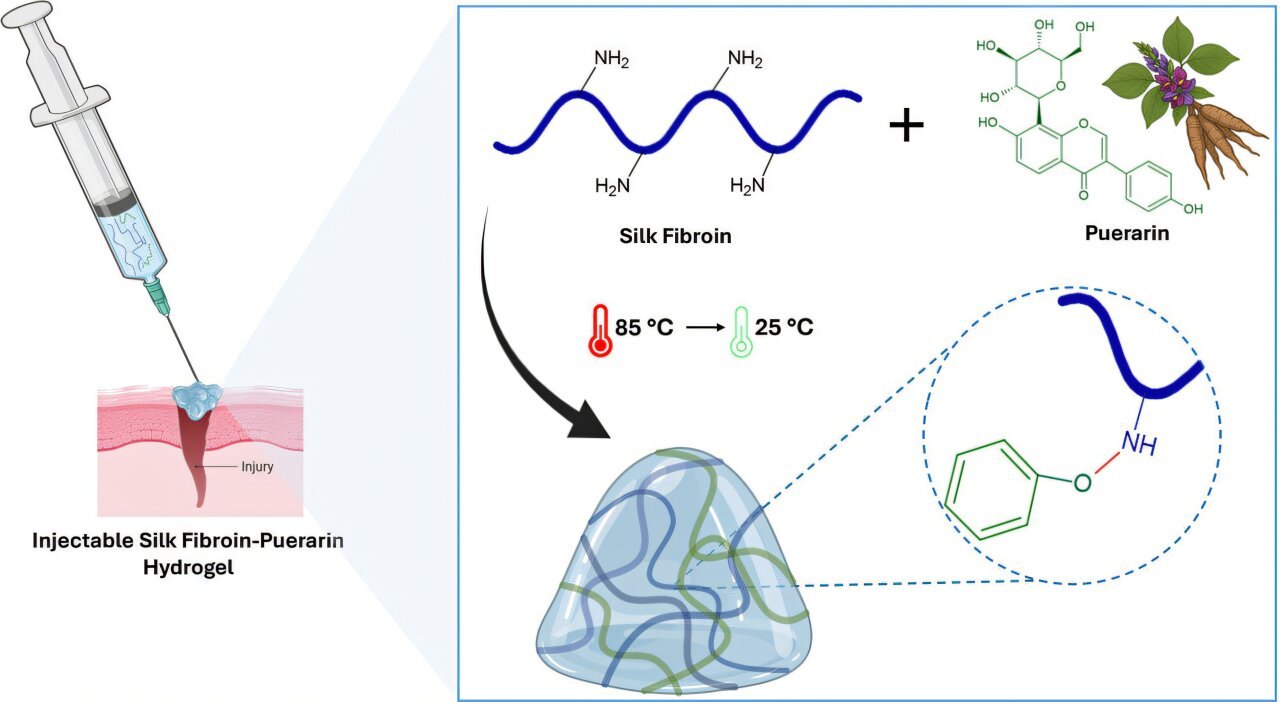
Researchers at the Terasaki Institute for Biomedical Innovation have made an injectable hydrogel from silk protein and a kudzu-derived compound that closed test wounds in human skin cell experiments within 72 hours. The finding, published in ACS Omega, points to a possible route for less invasive repair of soft tissue injuries and chronic wounds.
The work remains at the laboratory stage. According to the Terasaki Institute, the material still needs testing in animal models to show whether it performs under physiological conditions outside cell-culture experiments.
The gel combines silk fibroin, a protein obtained from silkworm cocoons, with puerarin, a bioactive compound found in kudzu root. The institute said silk fibroin is generally well tolerated by the body, while puerarin has anti-inflammatory and antioxidant properties.
The researchers designed the material to address limits seen in some biomaterials used for wound repair, according to the institute. Existing materials can require surgical placement, may not bend or fit well with soft tissues, or may fail to support strong cell growth.
Five versions tested
The team tested five hydrogel formulations, each with the same amount of silk fibroin and rising levels of puerarin from 1% to 5%, according to the ACS Omega paper. The study reported that puerarin helped reinforce the gel structure through hydrogen bonding, a physical attraction between molecules, without changing the underlying silk fibroin protein structure.
As the puerarin concentration increased, the internal structure of the hydrogel became denser and the material gained mechanical stability, according to the researchers. The institute said the gel could pass through a fine 27-gauge needle under pressure and then return to a gel-like state after injection.
That injectability is central to the proposed use. A material that can be delivered through a small needle could reduce the need for more invasive procedures in some soft tissue applications, Dr. Menekse Ermis Sen, a Terasaki fellow, said in the institute’s announcement.
Cell tests showed no toxicity signs
In laboratory tests, human skin cells exposed to the hydrogels showed viability above 95% from the first day, according to the study. The researchers reported no signs of toxicity in any of the tested formulations.
Cells grown with the hydrogel reached complete wound closure within 72 hours in all five formulations, the institute said. The formulation with the highest puerarin level produced about 60% closure during the first 24 hours, according to the study.
Dr. Bruna V. Quevedo, a visiting scholar at the Terasaki Institute and first author of the paper, said the combination of full closure in the lab assay and delivery through a fine needle suggested clinical relevance for soft tissue uses.
The paper, titled “Injectable Silk Fibroin–Puerarin Hydrogels with Tunable Supramolecular Organization as a Potential Platform for Tissue Engineering,” lists Quevedo and colleagues as authors. The Terasaki Institute said further animal research will be needed before the material can be assessed for real-world wound treatment.
This story draws on original reporting from Phys.org.