
Silica nanoparticles clear prostate tumors in some mice
Weill Cornell-led researchers say the experimental particles killed tumor cells and improved immunotherapy responses in preclinical prostate cancer models.
By Priya Raghavan · Science Reporter
3 min read
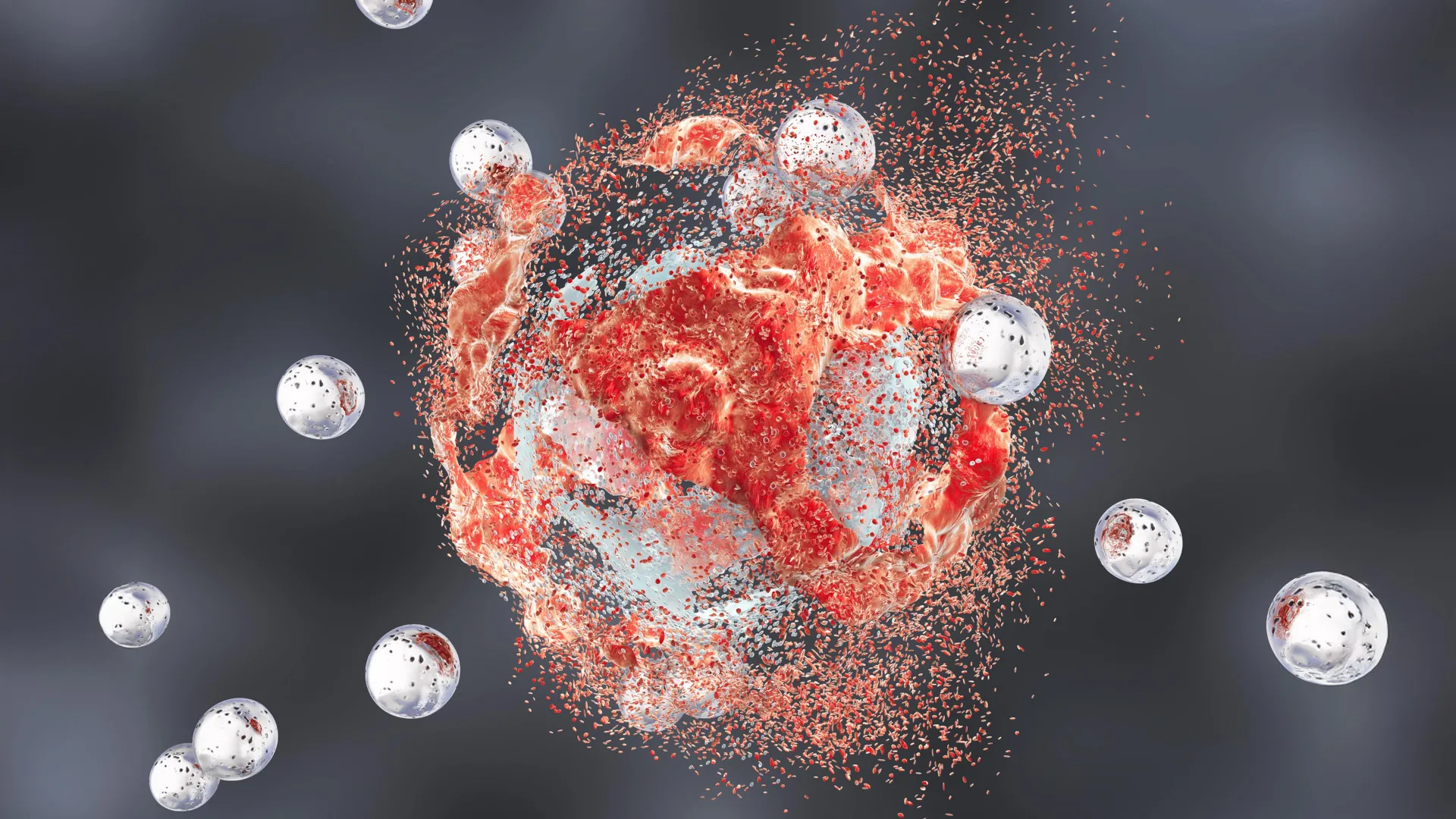
Engineered silica nanoparticles eliminated aggressive prostate tumors in some mice and strengthened the animals’ response to immunotherapy, according to researchers at Weill Cornell Medicine and the Cornell Duffield College of Engineering. The findings matter because prostate cancer has often been difficult to treat with immune checkpoint drugs, and the work points to a possible new approach that still must be tested in people.
The study was published June 15 in Cancer Research, a journal of the American Association for Cancer Research, according to Weill Cornell Medicine. The research team tested ultrasmall fluorescent core-shell silica nanoparticles, known as Cornell Prime dots or C’ dots, in mouse models of aggressive prostate cancer.
The particles were first developed for medical imaging, Weill Cornell Medicine said. They have since moved into late-stage clinical trials for image-guided surgery and other uses, and researchers later found that the particles themselves could damage cancer cells while largely sparing healthy cells.
In the prostate cancer study, the team attached a targeting molecule that recognizes PSMA, a protein found on the surface of prostate tumor cells, according to Weill Cornell Medicine. The researchers said some particles temporarily collected in organs including the spleen, but they found no signs of toxicity outside tumors.
How the particles acted in tumors
The Weill Cornell-led team reported that the nanoparticles appeared to attack cancer through more than one mechanism. They made tumor cells more prone to ferroptosis, a form of cell death driven by oxidative damage, especially to fatty molecules in cell membranes.
Researchers have not fully determined how the particles trigger ferroptosis, Weill Cornell Medicine said. Evidence from the study suggests the particles may collect positively charged iron ions from the blood and carry them into tumor cells, where the iron may help drive the oxidative process.
The particles also changed the tumor microenvironment, according to the study team. Researchers observed T cells, macrophages and other immune cells around tumors shifting away from inactive or immune-suppressing states toward cancer-fighting activity.
Dr. Michelle Bradbury, senior author of the study and director of the Molecular Imaging Innovations Institute at Weill Cornell Medicine, said the results encouraged the team because the treatment both caused tumor-cell death and changed the immune setting around the cancer. Dr. Ulrich Wiesner of Cornell, a co-corresponding author, said the breadth of effects in tumors and not healthy tissue was striking.
Combination treatment worked best
In survival studies, C’ dots alone and immunotherapy alone each produced modest survival gains compared with no treatment, according to Weill Cornell Medicine. The strongest results came when the nanoparticles were paired with immune checkpoint blockade therapy.
That two-part combination produced complete or nearly complete remissions and indefinite survival in four of 10 mice, the researchers reported. When the team added CSF-1R blockade, a treatment aimed at tumor-associated macrophages, complete remissions rose to five of 10 mice.
Dr. Jedd Wolchok, a study co-author and director of the Sandra and Edward Meyer Cancer Center at Weill Cornell Medicine, said the work brings together direct tumor killing and broad immune changes. He said the particles may help immunotherapy work better in prostate cancer, where durable responses have been hard to achieve.
The researchers said their longer-term goal is to evaluate the safety and effectiveness of the nanoparticles in human clinical trials. Weill Cornell Medicine reported that Bradbury and Wiesner are inventors on patents related to the technology, and that the study received support from the Department of Defense, the National Cancer Institute, Cycle for Survival and the Parker Institute for Cancer Immunotherapy.
This story draws on original reporting from ScienceDaily.