
Ship exhaust found to change Arctic cloud behavior
EPFL-led research says emissions from one polar vessel made clouds trap more heat, raising questions as Arctic shipping grows.
By Lucas Ferreira · Science & Environment Writer
3 min read
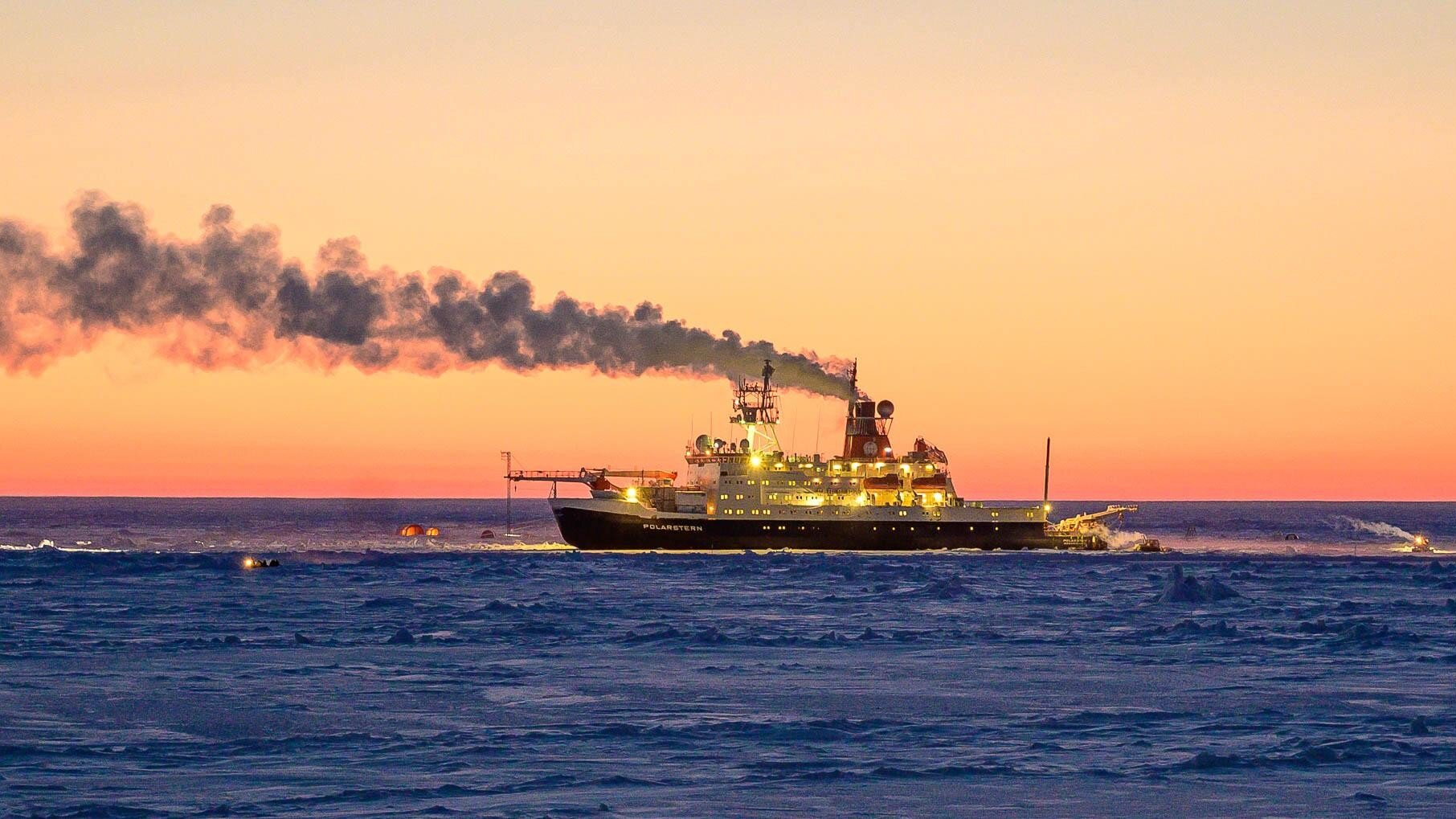
Exhaust from ships in the Arctic can change how clouds form and how much heat they hold, according to an EPFL-led study. The finding matters as shrinking sea ice opens polar routes to more traffic and adds a new pressure on a region warming faster than the global average.
The research, published in Environmental Research Letters, found that emissions from a single vessel raised local cloud radiative power by as much as 22%. EPFL said that means polluted clouds retained more heat than clouds in cleaner conditions, with possible effects on regional climate processes and weather farther south.
The study was led by Julia Schmale, a tenure-track assistant professor at EPFL, and Benjamin Heutte, a doctoral student in the Extreme Environment Research Laboratory. Their team used observations from the Polarstern research vessel during the MOSAiC expedition, a yearlong effort to study rapid Arctic climate change.
EPFL said the Arctic has lost about half of its September sea ice over recent decades, an area nearly twice the size of Switzerland. As ice retreats, shipping routes that were previously difficult or impossible to use are becoming more accessible.
According to estimates cited by EPFL, Arctic maritime traffic has grown 40% over the past 12 years. By 2100, traffic in the polar region is expected to carry more global trade than the Suez and Panama canals, EPFL said. The school also said tensions and disruptions in the Middle East, including the blockage of the Strait of Hormuz, are adding pressure by pushing some vessel transit toward Arctic routes.
Pollution inside the measurements
The researchers initially set out to measure natural Arctic aerosols and pollution carried from lower latitudes into the polar region. EPFL said the team then discovered that a large share of its measurements had been affected by exhaust from the Polarstern itself.
Schmale said 60% of the team’s data were contaminated by the ship. Heutte said emissions from the vessel produced particle concentration spikes 10 to 100 times higher than typical Arctic background levels.
Rather than discard the affected observations, the researchers treated the situation as an accidental experiment. EPFL said the team examined how the ship’s emissions changed the nearby atmosphere and affected clouds.
The scientists measured particle concentrations, particle sizes and the number of condensation nuclei, the particles around which cloud droplets form. Schmale said the team used black carbon to identify ship-related pollution, along with other chemical components. EPFL said the work also drew on observations from other research groups to assess aerosol-cloud interactions.
Clouds as a heat trap
The team focused on cloud sensitivity to exhaust during summer, when Arctic ship traffic is highest. Schmale said polluted clouds can warm the surface more than clean clouds, and that the study found such clouds could contribute to faster sea ice melt.
Heutte said one challenge was judging how far the pollution could spread while still affecting cloud formation. The researchers used models to simulate how emissions changed chemically and physically as they dispersed through the atmosphere, according to EPFL.
Schmale said the vessel used one of the cleanest fuels, with very low sulfur content, yet still produced a clear effect. She said cleaner fuels are helpful but not sufficient on their own.
EPFL said assessing the full impact of Arctic shipping will require scaling results from one vessel into models that include fuel type, engine technology and routes. Schmale also pointed to possible effects on Arctic ecosystems through the deposition of nutrients and contaminants from exhaust.
The next stage of this work is tied to the Tara Polar Station consortium. EPFL said the station is scheduled to leave Lorient, France, for the central Arctic on July 19 to collect data on atmospheric processes, climate, contaminants and biodiversity.
This story draws on original reporting from Phys.org.