
Researchers identify metabolic switch in tuberculosis bacterium
A University of Surrey-led study says a protein called VadK helps tuberculosis bacteria use host nutrients and may offer a target for future drugs.
By Priya Raghavan · Science Reporter
3 min read
Researchers have identified a protein that helps Mycobacterium tuberculosis control access to nutrients it needs during infection, according to the University of Surrey. The finding matters because the team says the protein, called VadK, is required for the bacterium to cause tuberculosis and may expose a drug target.
The work, published in EMBO Reports, involved scientists from the University of Surrey, Imperial College London, the University of Birmingham, the Indian Institute of Science and the University of California, Irvine. The paper reports that VadK regulates the methylcitrate cycle, a metabolic pathway tied to how the pathogen processes nutrients inside a host.
According to the University of Surrey, tuberculosis remains one of the world’s major infectious disease threats. The university said about a quarter of the global population carries latent TB infection, while 2023 saw more than 11 million active cases and 1.3 million deaths.
The bacterium’s ability to survive in people depends in part on metabolic flexibility, the University of Surrey said. Mycobacterium tuberculosis can draw on a range of nutrients in the human body, a trait the research team linked to its persistence and capacity to cause disease.
How the protein works
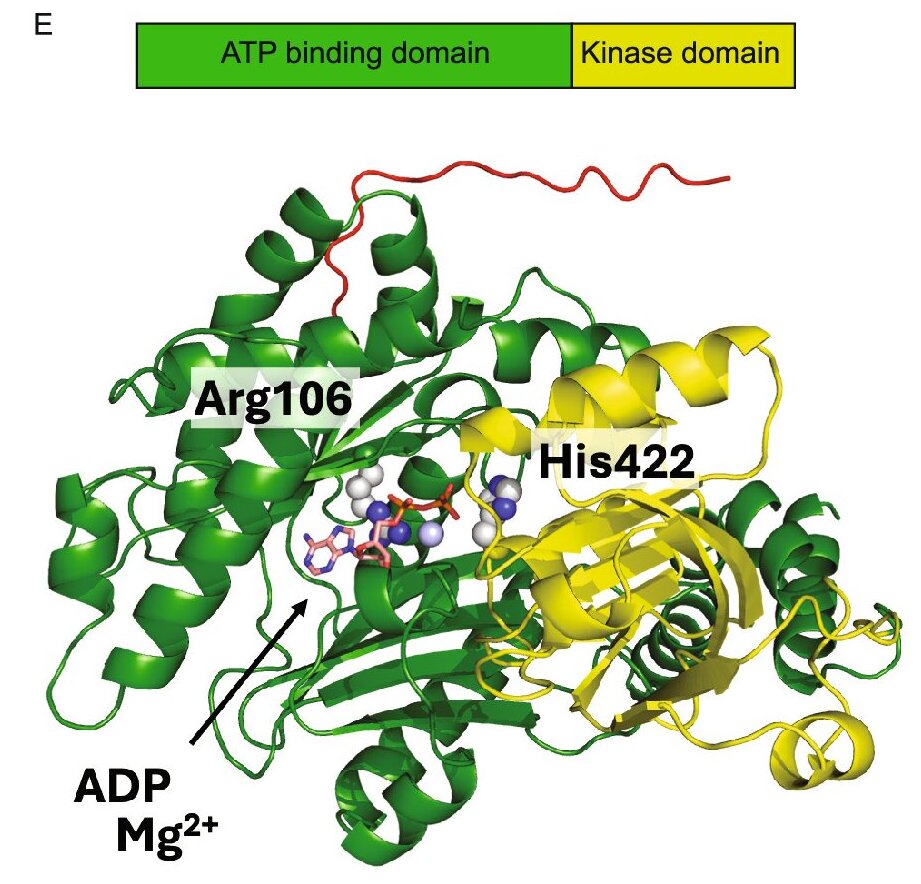
Using biochemical and systems-level analyses, the researchers identified VadK, short for virulence associated dikinase, according to the university. The team found that the protein is involved in nutrient metabolism, including processes needed for bacterial survival in the host.
The EMBO Reports paper, by Jordan Pascoe and colleagues, describes VadK as necessary for regulation of the methylcitrate cycle and virulence. The University of Surrey said that makes the protein a molecular control point in the pathogen’s energy use.
Dr. Jane Newcombe, a research fellow at the University of Surrey and lead author of the study, said TB remains a largely uncontrolled pandemic that falls hardest on marginalized communities. Newcombe also said the disease receives far less funding and resources than diseases that affect socioeconomic groups more evenly, leaving gaps in basic knowledge of the pathogen.
Dr. Tom Mendum of the University of Surrey, a co-author who proposed the name VadK, said the enzyme appears to have changed roles over evolution. According to Mendum, VadK developed from a metabolic enzyme known as pyruvate phosphate dikinase into a regulator that supports the TB bacterium during infection.
Possible wider relevance
The researchers also built evolutionary trees to compare VadK-like enzymes, according to the University of Surrey. They found that similar proteins seem to have arisen independently more than once in other bacterial pathogens.
The team said that pattern suggests VadK or related proteins could play a broader role in bacterial virulence. The University of Surrey said the finding raises the possibility that future antibiotics could target this kind of regulatory protein, though the study reports a vulnerability rather than a treatment.
The study is titled “Mycobacterium tuberculosis VadK is required for the regulation of the methylcitrate cycle and virulence” and was published in EMBO Reports in 2026. Its DOI is 10.1038/s44319-026-00818-0.
This story draws on original reporting from Phys.org.