
Stone tools point to wide social ties among prehistoric Caucasus groups
A study says hunter-gatherers in the Southern Caucasus stayed resilient through mobility, shared technology and long-distance social links.
By Priya Raghavan · Science Reporter
3 min read
Prehistoric hunter-gatherers in the Southern Caucasus may have endured climate and ecological stress by keeping broad social connections across the region, according to a new study. The research matters because it challenges the view that survival between 57,000 and 27,000 years ago depended mainly on adapting to local environments.
The study, led by Dr. Ariel Malinsky-Buller of the Hebrew University of Jerusalem and published in Quaternary Science Reviews, draws on archaeological, geological and paleoenvironmental evidence from a region that includes present-day Armenia, Georgia and nearby areas. The team examined how small groups lived and moved during a key stretch of prehistory spanning the Middle Paleolithic to Upper Paleolithic transition.
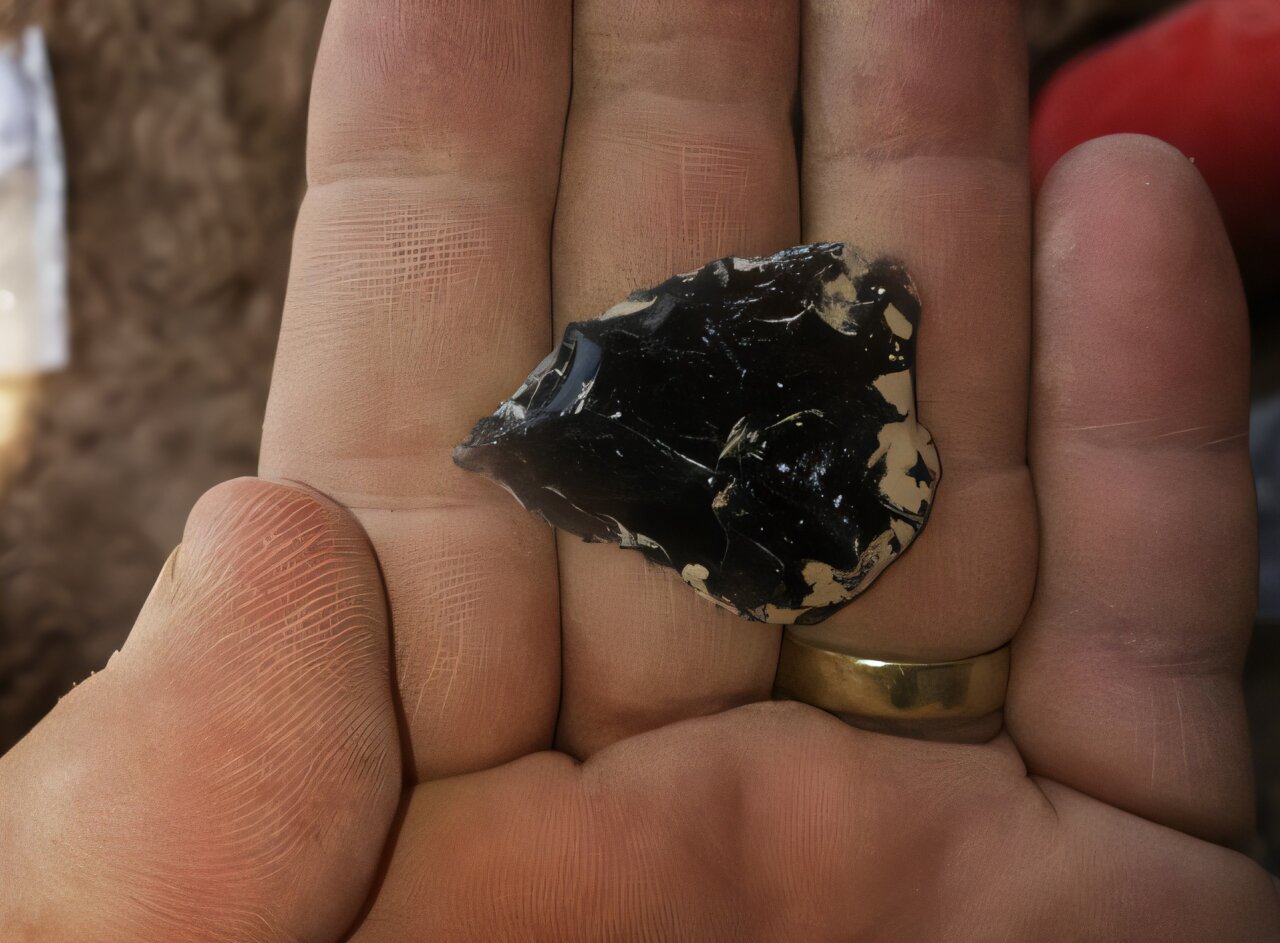
According to the researchers, the evidence points to communities that were small and spread out, yet still linked across long distances. Stone tools and obsidian artifacts indicate that people moved between 40 and 200 kilometers, or about 25 to 124 miles, across the Southern Caucasus and Armenian Highlands.
The team said shared stone-tool technologies across the region suggest that hunter-gatherers exchanged skills and information as well as materials. Those patterns, the researchers argue, show that social links and knowledge transfer played a central role in how prehistoric groups coped with uncertainty.
Malinsky-Buller said the findings show that travel by itself does not explain how ancient populations survived. “Even in regions with small and dispersed populations, people remained connected through networks of knowledge, technology and social interaction,” she said. “These connections may have been just as important as environmental adaptation in helping communities endure periods of profound change.”
The study also presents a more gradual picture of cultural change in the region. Rather than finding evidence for a swift replacement of one population or tradition by another, the researchers report signs that different cultural practices existed alongside one another and interacted over thousands of years.
That interpretation bears on one of the central debates in Paleolithic archaeology: how human groups changed as Middle Paleolithic traditions gave way to Upper Paleolithic ones. The authors argue that population size, mobility, environmental pressures and social networks should be studied together when reconstructing ancient responses to change.
The researchers list several main conclusions: low-density groups could still maintain wide networks; travel distances exceeded what older settlement models would predict; shared technology points to active information exchange; and the Middle-to-Upper Paleolithic shift appears more complex than a sudden cultural break.
The project included researchers from the Hebrew University of Jerusalem, the National Academy of Sciences of Armenia, Yerevan University, the University of Castilla-La Mancha, the University of Algarve, the American School of Classical Studies at Athens, the University of Seville, the University of California, Berkeley, Yale University, the University of Liverpool, the Technical University Bergakademie Freiberg and Royal Holloway, University of London.
The paper is titled “Investigating population dynamics in the Southern Caucasus: Current progress and future steps.” It was published in Quaternary Science Reviews with the DOI 10.1016/j.quascirev.2026.109877.
This story draws on original reporting from Phys.org.