
Sea star ovaries point to ancient roots of human fertility biology
A study in Nature Communications finds bat sea stars and humans share ovarian genes, support cells and reproductive signaling pathways.
By Priya Raghavan · Science Reporter
3 min read
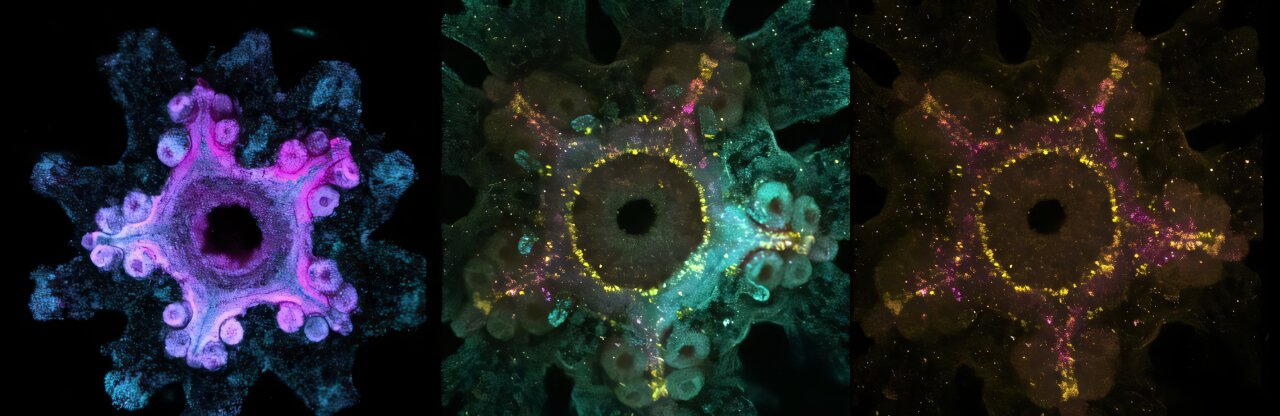
Bat sea stars may help explain how some features of human ovaries evolved. Researchers at the Marine Biological Laboratory report that the animals share ovarian genes, cell types and signaling systems with humans, despite a split in their evolutionary history more than 500 million years ago.
The findings, published in Nature Communications, suggest that parts of the ovarian “toolkit” used in human reproduction are far older than mammals. The team, led by Zak Swartz of the Marine Biological Laboratory’s Eugene Bell Center, says the work also supports using sea stars as a model for studying stem cells, fertility and reproductive aging.
Human and sea star reproduction differ sharply, according to the researchers. Humans form their lifetime supply of eggs before birth; those eggs can remain inactive for years, and the finite reserve declines over time. Sea stars and related animals can live up to 200 years, keep producing millions of eggs throughout life and release them into seawater for external fertilization.
Swartz’s group studied the bat sea star ovary to identify its cell types and structure. The researchers found that sea star egg cells are surrounded by support cells resembling granulosa cells, the cells that surround and help regulate eggs in human ovaries.
Swartz said that, from an evolutionary view, the finding points to a basic reproductive role for that support-cell type. The study reports that the similarity was visible not only in ovarian organization, but also in gene expression patterns.
Signals inside the ovary
The team also found a network of neuron-like cells in the outer layers of the sea star ovary. That observation led the researchers to examine which genes those cells were using and whether they could help control egg development or release.
According to the Marine Biological Laboratory, some of the genes resembled neuropeptides involved in communication between the brain and reproductive organs in vertebrates. The researchers say that raises the possibility that the sea star ovary contains its own neuroendocrine system.
Swartz said many animals have ovaries without having brains, which makes sea stars useful for asking how reproduction can be controlled in such organisms. His team proposes that an ovary-based signaling system may have helped regulate egg release early in animal evolution, before more specialized organs emerged.
Why sea stars keep making eggs
The study also examined how sea stars sustain egg production across long lives. The researchers describe the bat sea star ovary as a branching structure that contains clusters of cells they believe act as germline stem cells, continually renewing the supply of developing egg cells.
In mammals, the researchers say, cells that give rise to eggs are depleted as eggs form. In sea stars, Swartz’s team hypothesizes that comparable cells may both produce eggs and renew themselves, allowing the ovary to keep functioning over decades.
Swartz said future work will focus on how ovarian cell types communicate and how the stem cell population is maintained. Because sea stars use a gene set that overlaps with humans, he said, researchers want to understand how the same genes can be switched on or off in different ways to support long-term stem cell persistence.
The Marine Biological Laboratory says that knowledge could eventually inform human fertility research or stem cell therapies. The study does not report a treatment, but it identifies sea stars as a system for probing reproductive biology that humans share with distant animal relatives.
This story draws on original reporting from Phys.org.