
Optical chip detects tiny traces of brain injury biomarkers
Researchers reported a metasurface biosensor that spots two TBI markers at very low concentrations, a step toward faster head-injury testing.
By Tom Brennan · Health & Medicine Correspondent
3 min read
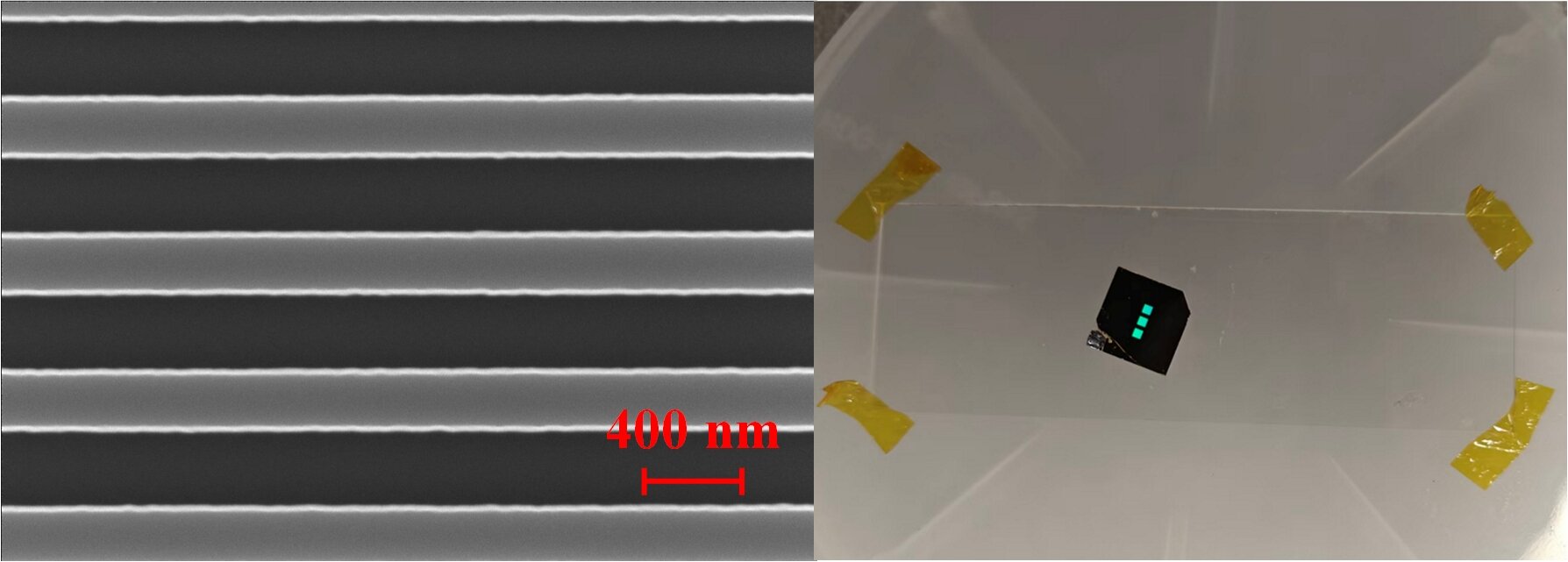
Researchers have built a chip-based optical biosensor that detected traumatic brain injury biomarkers at extremely low concentrations, according to Optica. The work could help speed diagnosis after head injuries if the platform is developed for clinical and point-of-care use.
The device uses a metasurface, an ultrathin patterned material that can control light in ways ordinary lenses cannot. In a study published in Optical Materials Express, a team jointly led by Guangyuan Li of the Beijing Institute of Technology, Zhuhai, and Yunhui Liu of the Shenzhen Institute of Technology, CAS, reported detection of two TBI-related proteins: glial fibrillary acidic protein, or GFAP, and S100 calcium-binding protein β, known as S100β.
Optica said the sensor detected the biomarkers at femtogram-per-milliliter levels, with a femtogram equal to roughly one quadrillionth of a gram. In testing, the platform showed subfemtogram-per-milliliter detection limits for S100β and GFAP.
How the sensor works
According to the researchers, current tests for validated TBI biomarkers can take time and involve several laboratory steps. Their approach uses a corrugated gold metasurface coated with antibodies that capture specific target molecules.
When light hits the sensor, the reflected spectrum includes a very narrow dip because of the metasurface’s high-quality, or high-Q, optical behavior. If a target biomolecule binds to the surface, it slightly changes the local refractive index, shifting the wavelength of that dip.
Because the dip is narrow, small shifts can be measured, allowing the device to detect low biomarker concentrations. Li’s team said it also developed fabrication methods to reduce surface roughness and optical losses, along with surface chemistry intended to capture target molecules while limiting nonspecific binding.
The researchers also used an optical setup designed to collect spectra with a high signal-to-noise ratio, according to Optica. Li said those pieces allowed the group to combine high sensitivity with a compact chip format.
Tests and possible uses
To evaluate the platform, the researchers prepared two separate sensors: one functionalized with anti-S100β antibodies and another with anti-GFAP antibodies. They measured biomarkers across concentrations from 1 fg/mL to 100 ng/mL.
The team also tested two other TBI biomarkers, H-FABP and UCH-L1, as non-target controls. According to the study, the sensors produced concentration-linked wavelength shifts and responded much more strongly to the intended targets than to the controls.
Liu said that, if the technology can be turned into a point-of-care format, it could provide faster answers after brain injury and might work with a finger-prick sample. Optica said such a system could potentially help reduce unnecessary CT scans in lower-risk cases while identifying higher-risk patients sooner.
The researchers also said the approach could be adapted to detect multiple biomarkers at the same time. Potential settings named by the team include ambulances, rural clinics, sports environments and emergency departments.
The platform is not ready for clinical use. The researchers noted that gold metasurface fabrication can be scaled but remains costly, and said they are working to lower expenses. Packaging and fluid-handling systems also need improvement, and the technology must be tested with more complex clinically relevant samples and patient cohorts to assess repeatability, robustness and real-world performance.
This story draws on original reporting from Phys.org.