
Sahara meteorite points to vanished moon-sized early world
Researchers say a rare angrite meteorite preserves evidence of a lost protoplanet unlike Earth, Mars or known asteroid parent bodies.
By Lucas Ferreira · Science & Environment Writer
3 min read
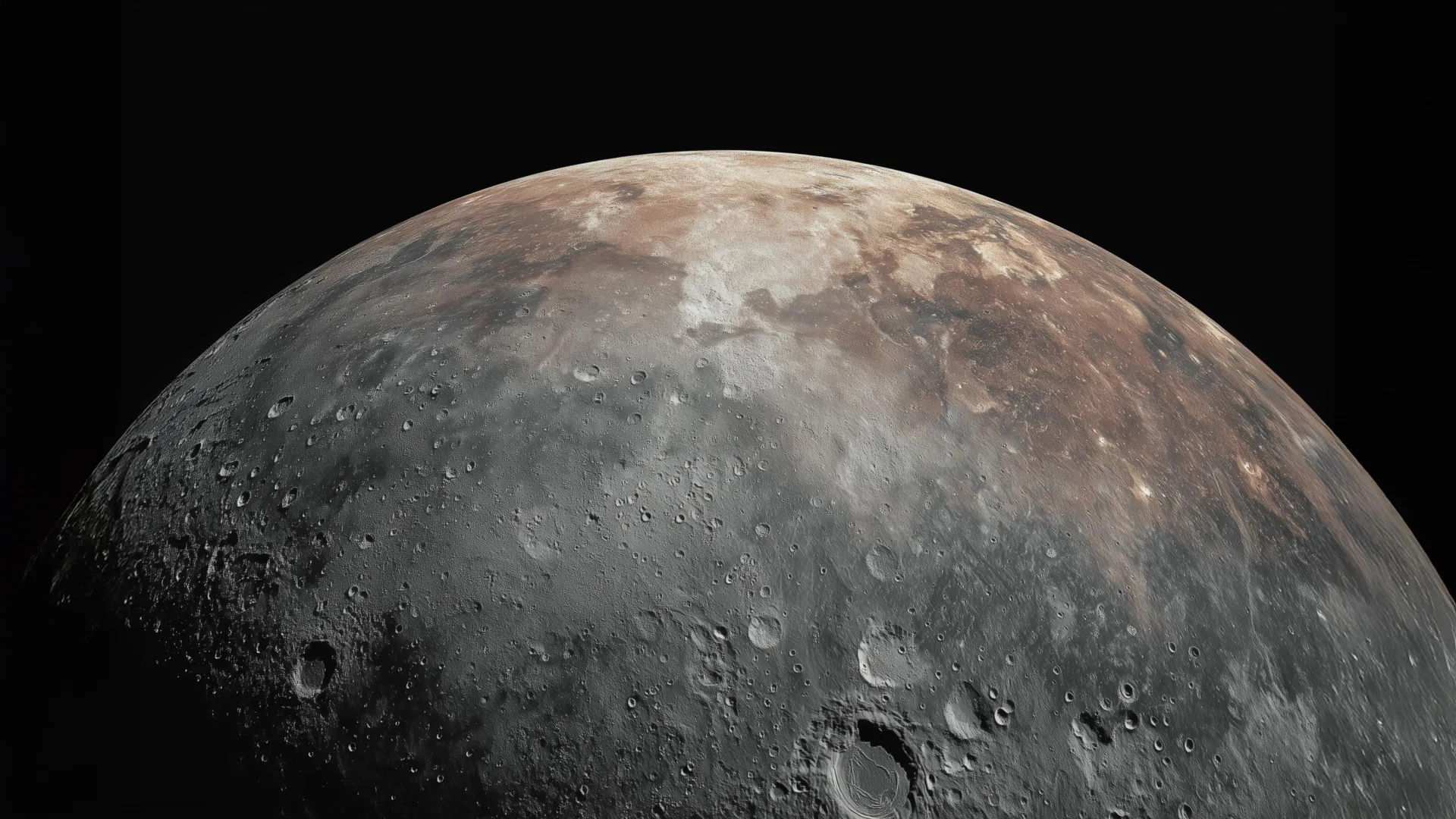
A rare meteorite found in the Sahara Desert may be a surviving piece of a destroyed world that formed near the start of the solar system. Researchers at the University of Colorado Boulder say the rock points to an early protoplanet at least as large as the moon-sized range, with chemistry unlike Earth and Mars.
The findings, published in Earth and Planetary Science Letters, center on Northwest Africa 12774, a meteorite from a scarce class known as angrites. According to the university, angrites are among the oldest volcanic rocks known from the solar system and formed within a few million years of its birth about 4.56 billion years ago.
The material is uncommon even by meteorite standards. The University of Colorado Boulder said only 68 angrites have been identified among more than 80,000 meteorites found on Earth.
A mineral clue from deep pressure
Angrites have long stood out because they contain very little silicon dioxide, or silica, compared with Earth, Mars and other rocky planets, according to the university. That unusual makeup had led researchers to connect them with small asteroids, with radii below 200 kilometers, or 124 miles.
Aaron Bell, an assistant research professor in the university’s Department of Earth Science, and colleagues Laura Waters and Mark Ghiorso found evidence that challenges that view. In Northwest Africa 12774, the team identified clinopyroxene, a mineral also found in Earth’s crust and mantle, with unusually high aluminum content.
According to the study, that aluminum-rich clinopyroxene would have required at least 17.5 kilobars of pressure to form. The university compared that with pressure at the bottom of the Mariana Trench, which reaches about 1 kilobar.
The researchers said that level of pressure could not be produced inside a small asteroid. Their calculations indicate the angrite parent body had to be at least 1,000 kilometers, or 621 miles, in radius.
A larger body may be needed
The team reported another constraint from the meteorite’s crystals. The University of Colorado Boulder said the crystals still show sharp edges and fine chemical features that would likely have been altered if they had spent long periods deep inside a large planetary body.
That preservation suggests the crystals formed closer to the surface, according to the researchers. If so, the parent world would need to have been larger than the minimum pressure estimate, possibly exceeding 1,800 kilometers, or 1,118 miles, in radius.
That size would put the object in the range of Earth’s moon and below Mars, whose radius is about 3,300 kilometers, according to the university. Bell said the meteorites preserve signs of “a completely different pathway” for early planetary development.
The researchers describe the object as a planetary embryo, or protoplanet, from the solar system’s early period. The university said it may have orbited the young sun more than 4.5 billion years ago before being destroyed, possibly in a major collision during a chaotic phase of planet formation.
Scientists have not determined exactly what happened to the body, according to the university. Its debris may later have been incorporated into other rocky planets, including Earth.
Bell said the materials that made the angrite parent body differ from the ingredients that built Earth and Mars. He also said other museum or laboratory meteorites that have not been studied in detail could hold evidence of additional lost protoplanets.
This story draws on original reporting from ScienceDaily.