
Roman bathhouse find points to a larger ancient Nijmegen
Excavations in Nijmegen-West have exposed the Netherlands’ largest known Roman bathhouse complex, Radboud University said.
By Tom Brennan · Health & Medicine Correspondent
3 min read
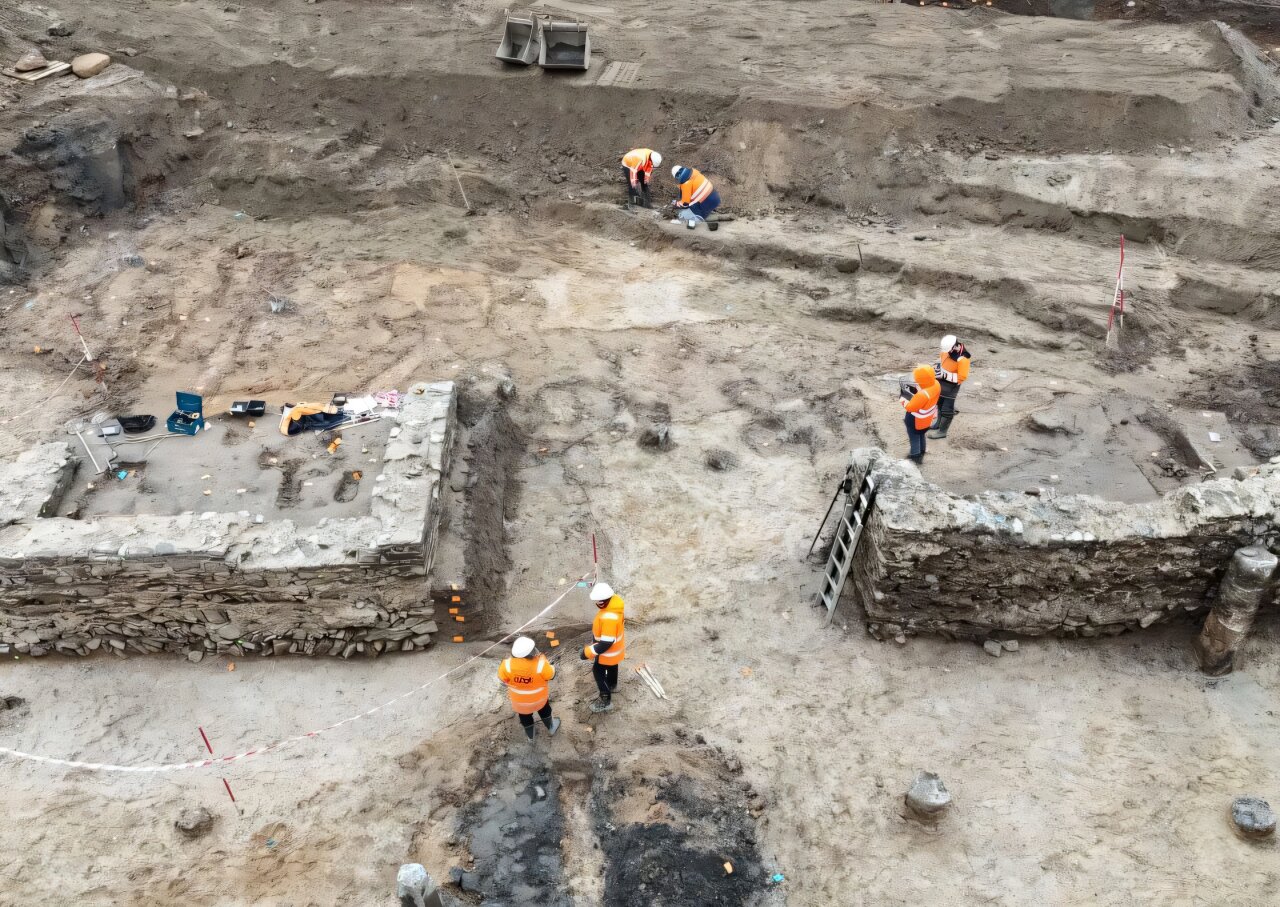
Archaeologists in Nijmegen-West have uncovered large parts of a Roman bathhouse complex that Radboud University says is the biggest Roman-era bathhouse yet found in the Netherlands. The discovery adds evidence that Ulpia Noviomagus, the Roman settlement at modern Nijmegen, was a substantial city rather than a remote frontier outpost.
The work is being carried out by archaeologists from RAAP and BAAC at a new-build site developed by BPD | Bouwfonds Gebiedsontwikkeling, according to Radboud University. The excavation began in September 2025 and is scheduled to run until the end of July 2026.
Stephan Mols, a Radboud University researcher, is not leading the digging himself, the university said. He and his team are working with the archaeologists and the Valkhof Museum to build a clearer picture of Roman Nijmegen, known in antiquity as Ulpia Noviomagus.
A bathhouse on an unusually large scale
Radboud University said the bathhouse complex covered at least 4,900 square meters, or about 52,700 square feet. That would make it at least twice the size of previously studied public baths at Forum Hadriani, near The Hague, and Coriovallum, in present-day Heerlen, which measured about 2,200 and 2,500 square meters respectively.
Mols said a public bathhouse was a standard feature of a Roman town. Although the excavation mainly exposes foundations and lower structural remains, he said the surviving evidence allows researchers to reconstruct how large and imposing the buildings once were.
Part of the same bathhouse was identified in 1992, but Radboud University said only a limited area could be studied at that time. The broader excavation now shows a complex that was larger than researchers had previously understood.
Researchers believe the Roman settlement along the River Waal received city rights from Emperor Marcus Ulpius Trajanus around AD 100, according to the university. Soon afterward, large public buildings made with natural stone were erected, including the bathhouse.
Luxury materials and surviving engineering
The excavation has revealed the use of expensive materials, including marble, limestone and sandstone, Radboud University said. Many walls were later removed because the site was used as a source of building stone during the Middle Ages and afterward.
Despite that damage, substantial parts of the drainage system and floors remain in place, according to the university. One surviving element is a concrete floor with small brick pillars from a hypocaust, the Roman underfloor heating system.
Mols said the scale and comfort of the buildings would have made the city feel far from marginal, even though Nijmegen lay near the edge of Roman control. He also linked the size of the complex to the presence of many soldiers in the area, saying such facilities provided activity when troops were not fighting.
The wider site has produced more than the bathhouse. Archaeologists have also found nearby housing blocks with streets between them, upscale townhouses and a tower, Radboud University said.
Objects recovered from the site include hairpins, jewelry, coins and a bronze bust of Bacchus, the Roman god of wine, according to the university. Mols and his colleagues plan to study the bathhouse technology, including wall and underfloor heating, as well as Roman concrete, which he said is relevant to modern research into self-healing materials.
This story draws on original reporting from Phys.org.