
Red blood cell nanocarriers show preclinical delivery potential
Ohio State researchers built drug-delivery vesicles from expired red blood cell lipids, with early tests in cells and mice.
By Priya Raghavan · Science Reporter
2 min read
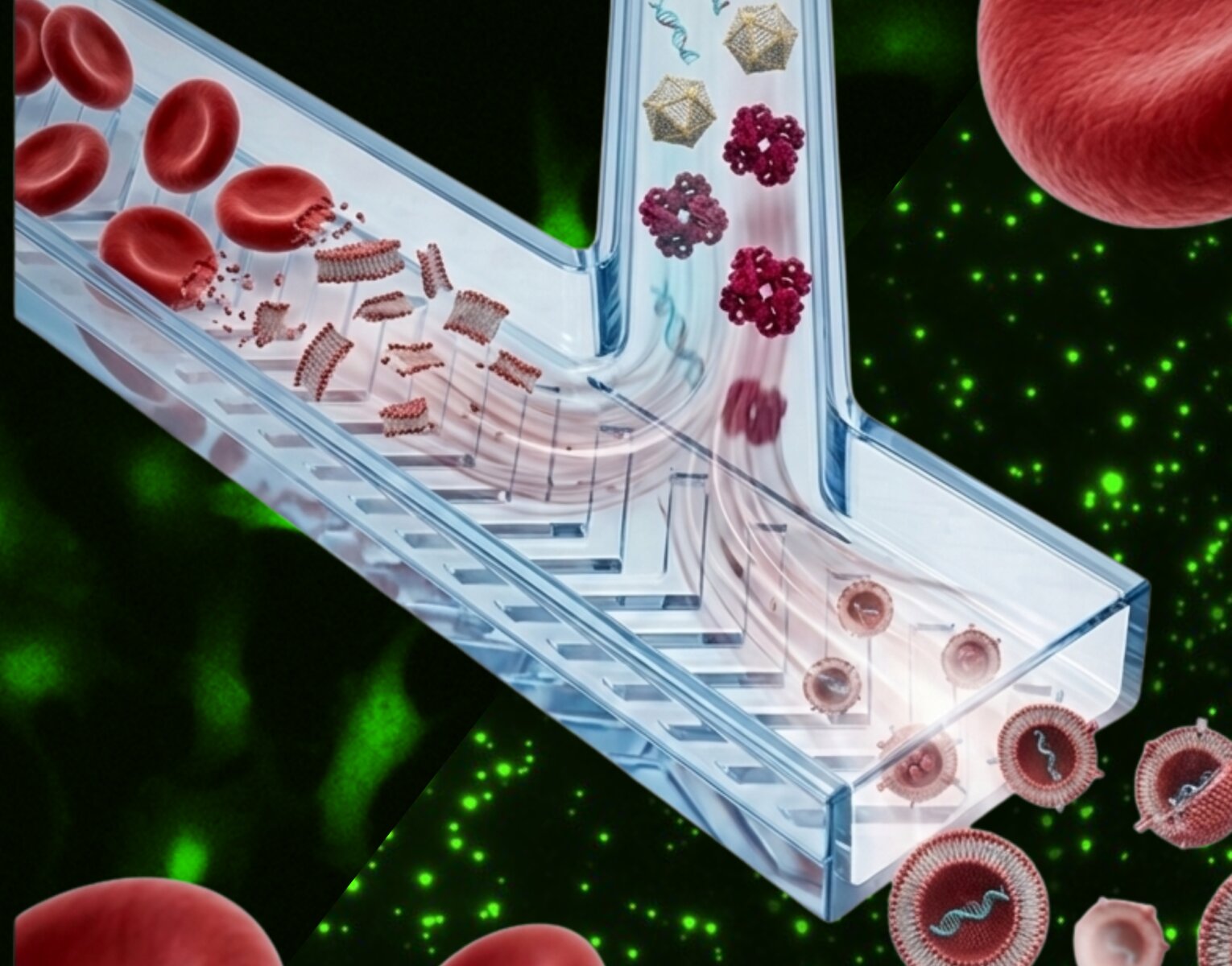
Ohio State researchers have reported red blood cell nanocarriers made from lipids recovered from expired blood cells, using a microfluidic process to form tiny therapeutic-delivery vesicles. The work matters as an early attempt to combine controllable manufacturing with properties that may help cargo circulate, avoid immune clearance or reach selected tumors, though it has not been tested in people.
The team described the platform in Advanced Healthcare Materials, according to Ohio State News. The researchers used expired red blood cells as a lipid source; such cells cannot be used for transfusions and otherwise would be discarded, co-author Andre Palmer said.
What are red blood cell nanocarriers?
They are engineered extracellular vesicles, not transfused red blood cells. Extracellular vesicles are small particles that cells release to carry signals to other cells; in this study, researchers assembled comparable particles from red-blood-cell lipids, Ohio State said.
Red-blood-cell-inspired drug-delivery research predates this work. A 2015 AIChE Journal perspective described red-blood-cell-membrane-coated nanoparticles for biomedical uses, but that publication does not establish how this newer method compares with earlier systems.
How the vesicles were built and tested
Ohio State said the group turned to microfluidics after finding limits in producing naturally generated red-blood-cell vesicles at scale and in varying their cargo. The technique puts therapeutic material into the vesicles as they form, rather than requiring a separate loading stage afterward.
In reported experiments, the carriers accommodated genetic material, proteins and adeno-associated virus, or AAV, a virus used as a delivery vehicle in many gene therapies. Senior author Eduardo Reátegui said the aim was greater control over the vesicles' makeup, not a claim that the method is better than other approaches.
- Adding a CD47 peptide to the surface reduced uptake by macrophages, immune cells that can consume material they identify as foreign, Ohio State reported.
- Vesicles marked with molecules that recognize PD-L1, including anti-PD-L1 nanobodies, showed preferential uptake in PD-L1-positive breast-cancer tumors.
- When AAV was enclosed in the vesicles, Ohio State reported that it still delivered gene therapy into cells and was protected from neutralizing antibodies in the experiment.
What did the mouse study show?
In mice, the engineered vesicles remained in circulation and spread to several organs in a pattern Ohio State said resembled naturally occurring extracellular vesicles. The lungs showed notable accumulation.
Those findings are preclinical results, not evidence of a treatment's safety or benefit in patients. Ohio State said the researchers plan to concentrate on gene therapy and selected treatments that could use the vesicles' observed affinity for the lungs; tumor targeting and immune-evasion features also remain research-stage possibilities.
This story draws on original reporting from Phys.org.