
EMF gene switch controls engineered genes in mouse studies
A Cell study used electromagnetic fields to activate engineered genes in mice, but the system has not been tested in people.
By Priya Raghavan · Science Reporter
3 min read
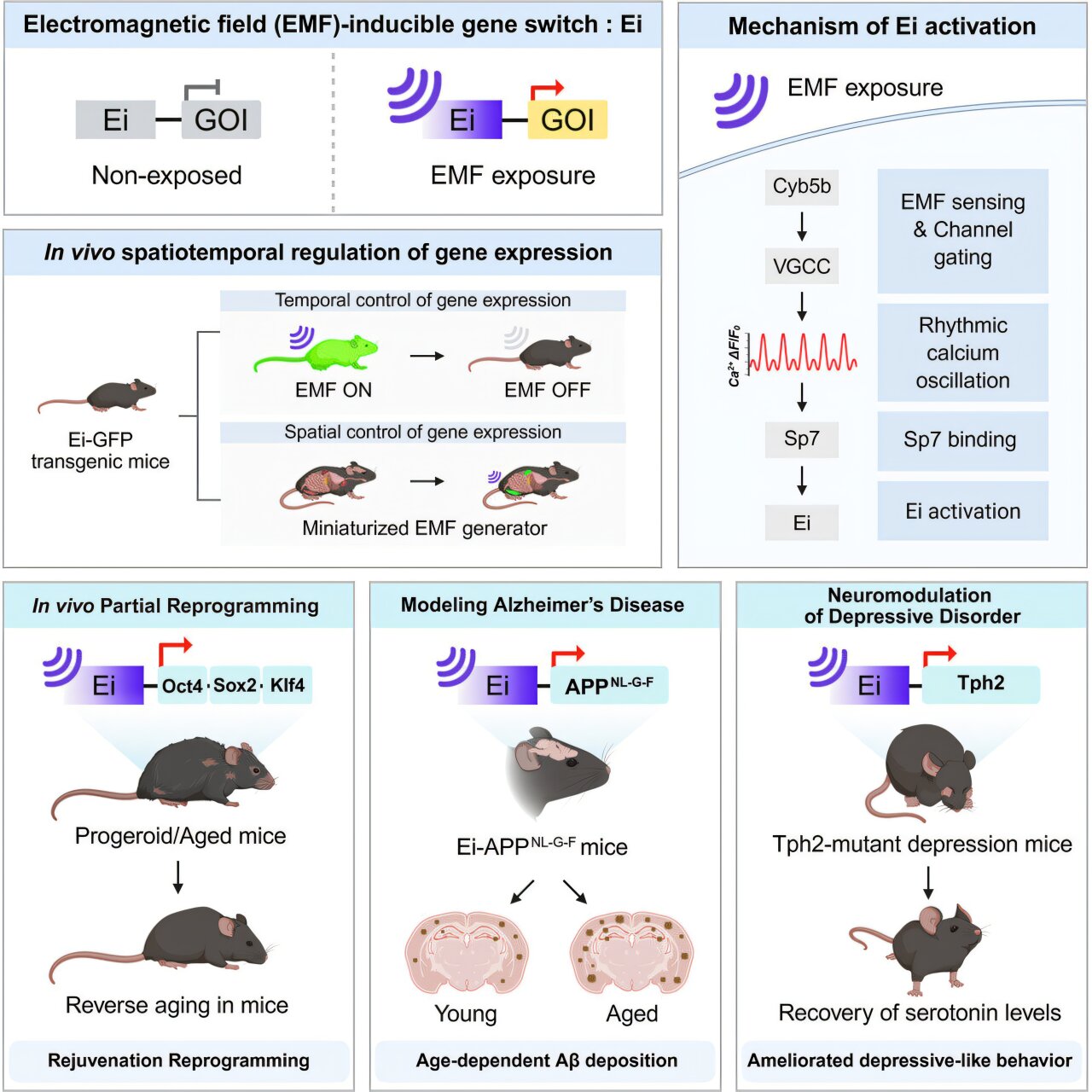
An EMF gene switch reported by researchers at Dongguk University can turn engineered target genes on in mice using electromagnetic fields. The Cell study matters as an early way to control when and where an added genetic program operates, though it is not a gene therapy tested in people.
The team built the system around a regulatory DNA sequence, or promoter, from the mouse Lgr4 gene. A promoter helps determine when a gene is active; in this case, the researchers coupled the EMF-responsive element to target genes they wanted to control, according to the paper published May 28 in Cell.
How does the EMF gene switch activate genes?
To find genes that responded to the field, the researchers examined mouse brain tissue after exposure to a 2.0-millitesla, 60-hertz electromagnetic field. They identified Lgr4 as the responsive gene and used its promoter to create what they call an EMF-inducible, or Ei, switch, Dongguk University said.
A genome-wide CRISPR-Cas9 screen identified cytochrome b5 type B, known as Cyb5b, as an essential mediator and a likely molecular sensor for the field, the Cell paper said. The researchers reported that the field generated rhythmic calcium oscillations inside cells; those patterned signals, rather than a general rise in calcium, activated the switch.
That proposed mechanism distinguishes the work from the broad idea that an electromagnetic field could control ordinary genes in an untreated person. The experiments used an engineered regulatory system and animal models.
What did the researchers show in mice?
In transgenic mice carrying an Ei-linked green fluorescent protein reporter, field exposure produced strong reporter activity throughout the body, Dongguk University reported. Directing the field at particular areas produced expression in specific organs, and the reporter signal returned to baseline within 24 hours after stimulation stopped.
The researchers also tested several biological applications. EMF-driven expression of the Oct4-Sox2-Klf4 gene set produced partial cellular reprogramming in aged mice, while conditional activation of mutant human amyloid precursor protein was used to model features of Alzheimer’s disease, according to the Cell paper. That Alzheimer’s experiment modeled disease; it was not a treatment for Alzheimer’s.
In Tph2-mutant mice used as a depression model, EMF-controlled Tph2 expression restored serotonergic activity and improved depression-like behaviors, the study reported. These results remain preclinical, and the researchers said further validation and testing are needed.
How does it compare with other gene switches?
Drug-, light-, heat-, ultrasound- and electricity-responsive switches have also been explored for remote gene control, the Cell authors wrote. They describe EMF as noninvasive and reversible, with potential advantages for reaching tissue that light may not penetrate well; those are platform characteristics, not evidence of human safety or clinical benefit.
A separate 2025 Nature Nanotechnology study used a different EMF-controlled design: magnetic nanoparticles, reactive oxygen species and implanted engineered cells to regulate insulin in diabetic mice. The Dongguk approach instead centers on the Lgr4 promoter, Cyb5b and calcium signaling, underscoring that electromagnetic control describes several distinct experimental strategies.
This story draws on original reporting from Phys.org.