
Recovered notebooks complete study of ancient New Zealand fish
University of Otago researchers used late paleontologist Richard Köhler’s field notes to document a 55-million-year-old tarpon-like fossil.
By Tom Brennan · Health & Medicine Correspondent
3 min read
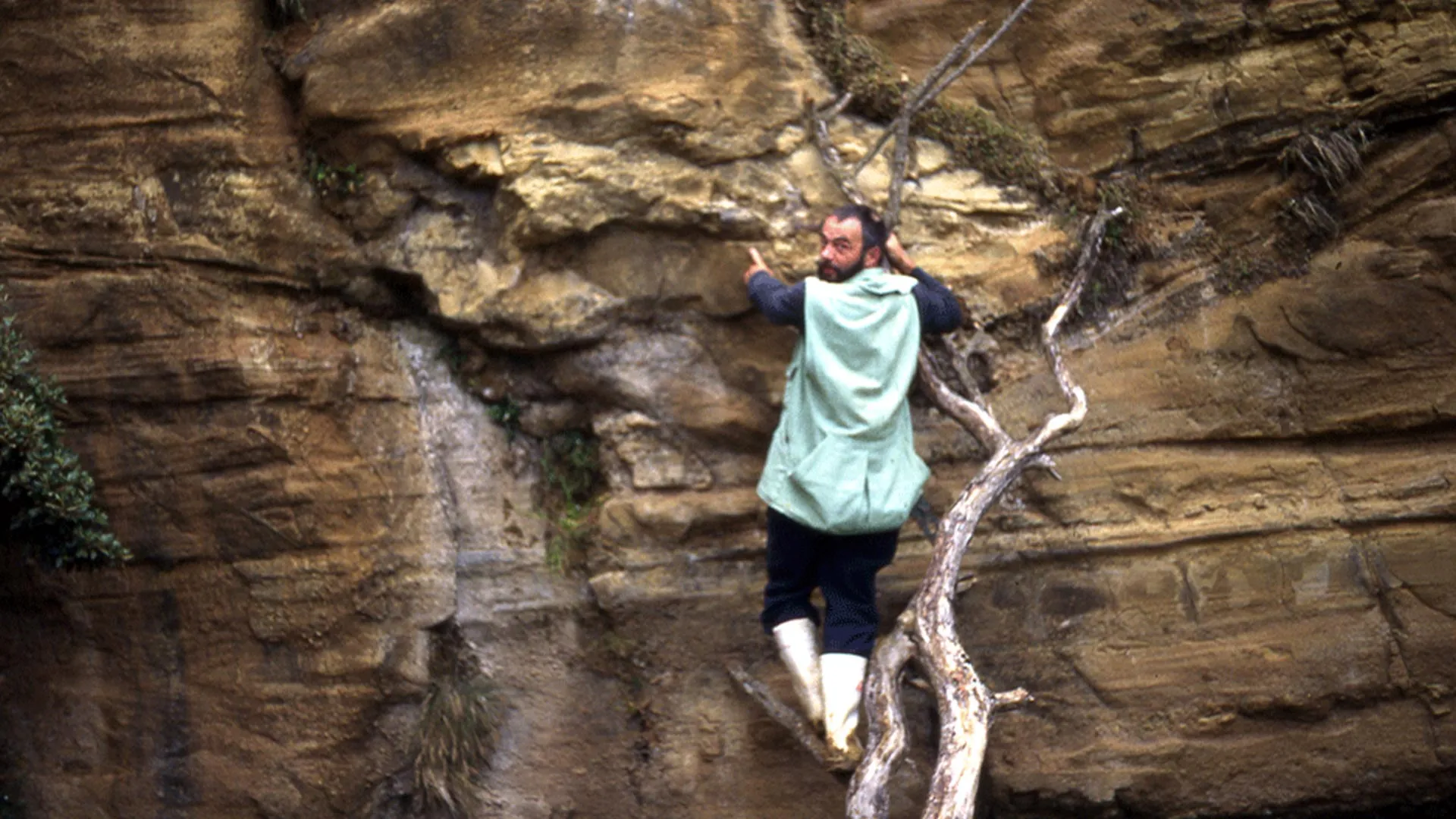
Recovered field notebooks from a late New Zealand paleontologist allowed researchers to finish documenting an unusual fossil fish found on Pitt Island in 1999, the University of Otago said. The study identifies the 1.2-meter specimen as a tarpon-like predator from about 55 million years ago, adding evidence of a large pursuit-hunting bony fish in Paleogene rocks from Aotearoa New Zealand.
The fossil was discovered by Dr. Richard Köhler during a research trip to Pitt Island in the Chatham Islands, according to the university. Köhler found the fish embedded in a hard-to-reach cliff above Waihere Bay on the island’s western coast.
To remove it, Köhler walked about 3 kilometers back to Flowerpot Bay to borrow a ladder, then returned and extracted the fossil in several heavy blocks, the university said. He later brought the specimen to the University of Otago’s geology department in Dunedin.
A predator preserved in detail
Emeritus Professor Daphne Lee said she and the late Professor Ewan Fordyce recognized the fossil’s scientific value when it arrived at Otago. Lee said it differed from other known fish fossils from Aotearoa New Zealand.
The fossil was prepared by the late Andrew Grebneff and remained in the department’s collection for years, according to the university. Professor Mike Gottfried of Michigan State University, a fossil fish specialist who had worked with Fordyce on New Zealand fossil fish and shark studies, later began examining it.
The researchers concluded that the fish belonged to the tarpon family, a group no longer found in New Zealand waters, the University of Otago said. Its long body, strong tail, heavy rigid scales and large upward-facing mouth indicate an active predator that likely fed by swallowing smaller fish whole, similar to modern tarpon, according to the researchers.
Missing field data stalled the paper
The project remained incomplete because researchers lacked precise geological information on where the fossil had been collected, the university said. Köhler had died, and after Fordyce’s death in November 2023, a draft paper still could not be finalized without the locality details needed for formal scientific documentation.
The missing information surfaced in early 2025, when one of Köhler’s children, then studying at Otago, visited the geology department while looking for photographs of his father, according to the university. After speaking with Lee, Köhler’s family donated his field notebooks, including records from the Pitt Island expedition.
Lee said the notebooks supplied enough detail to prepare a Fossil Record Form and catalogue the specimen scientifically. The completed research appeared in the New Zealand Journal of Geology and Geophysics.
The new species was named Ikawaihere koehleri, honoring Köhler and the place where the fossil was found, the university said. The paper’s authors also acknowledged Heidi Lanauze and the Hokotehi Moriori Trust for approving the name.
Gottfried said the fossil expands scientific understanding of tarpon evolution and preserves unusual features in three-dimensional detail. Lee said the finished work honors Köhler, Fordyce and Grebneff, and credited Köhler’s family for donating the notebooks that made the study possible.
This story draws on original reporting from ScienceDaily.