
Rainwater found to reverse airflow in deep underground lab
Engineers at a South Dakota research facility linked storm-driven ventilation shifts to water falling through a mine shaft.
By Tom Brennan · Health & Medicine Correspondent
3 min read
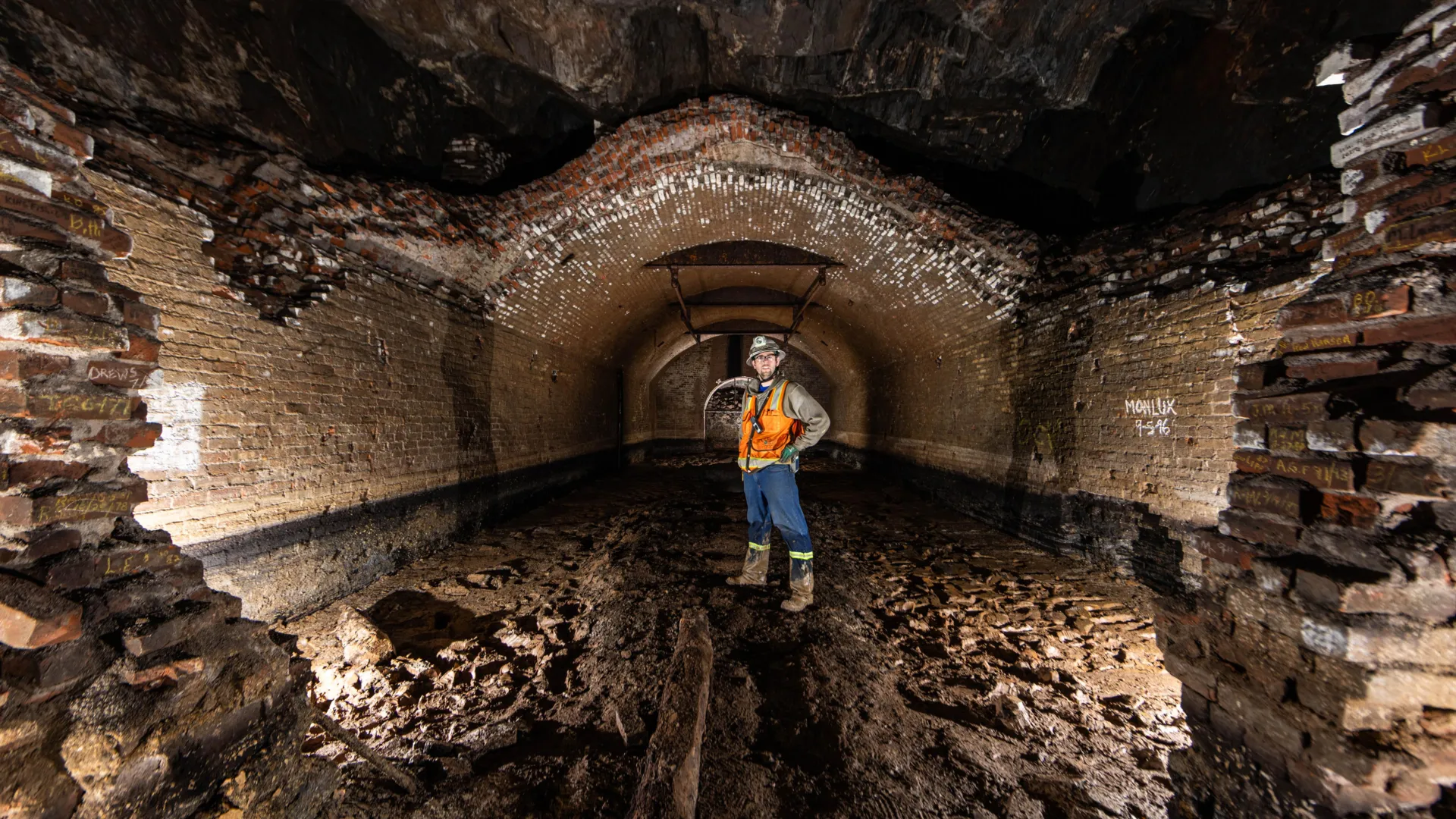
Engineers at the Sanford Underground Research Facility in South Dakota have traced unusual underground airflow changes during storms to rainwater sent down a deep shaft. The finding matters for mine and tunnel safety because ventilation patterns can shift when water is released underground, according to the South Dakota Science and Technology Authority.
The work focused on SURF, a former mining site now used as a large underground science laboratory. Although mining has stopped there, engineers still manage the shafts, tunnels, ventilation and water systems needed to keep the facility operating safely, the authority said.
Jason Connot, a SURF mining engineer who has managed the facility’s ventilation system since 2019, noticed that heavy rain sometimes disrupted normal airflow. According to the authority, air in some areas slowed and in some cases moved opposite its expected direction during major rain events.
Stormwater pointed to a shaft
Under ordinary conditions, fresh air enters SURF through two main shafts and leaves through two others. One of the exhaust routes is known as 5 Shaft, according to the authority.
During heavy storms, excess water is routed down 5 Shaft into a deep pool so it can later be pumped to the surface. SURF engineers suspected that the falling water could be changing how air moved through the underground network, the authority said.
New measurements helped test that idea. Maestro airflow sensors installed on the 2000 Level for an automated ventilation control system gave engineers a clearer record of air movement, according to the authority.
Earlier clues also came from the 4850 Level, where sensors recorded an unexpected airflow increase during a test of a shaft deluge system. Those sensors had been built and installed by Steve Gabriel, a Spearfish High School science teacher, and his students before Gabriel became a full-time ventilation technician at SURF, the authority said.
Model matched what engineers saw
Connot compared the SURF observations with published research on large municipal sewer systems, where moving water can affect air in confined spaces. Working with colleagues at South Dakota Mines, he adapted fluid dynamics equations from that literature to the conditions at SURF, according to the authority.
The model supported the engineers’ explanation: water falling down 5 Shaft acted like a piston, pushing air through the underground passages. The result accounted for the ventilation changes that workers had observed during heavy rain, the authority said.
The research was published as “Effects of Water Inflows on a Mine Ventilation System: A Case Study” in Mining, Metallurgy & Exploration. The listed authors are Connot, Andrea Brickey, Purushotham Tukkaraja and Srivatsan Jayaraman Sridharan.
The finding could apply beyond storms, according to Connot. The authority said mine engineers may release water down a shaft during a fire, and knowing that such a release can change airflow could help operators predict ventilation effects during emergencies.
Bryce Pietzyk, SURF’s director of underground operations, said the study helps the facility anticipate airflow problems and set ventilation controls appropriately. Andrea Brickey, Connot’s adviser and a professor in the Department of Mining Engineering and Management at South Dakota Mines, said the work showed how the behavior could be predicted and could aid the wider industry.
This story draws on original reporting from ScienceDaily.