
Prairie vole study links early care to adult bonding and brain networks
UNAM researchers found that prairie voles raised without fathers showed altered adult brain connectivity and, in males, weaker partner preference.
By Priya Raghavan · Science Reporter
3 min read
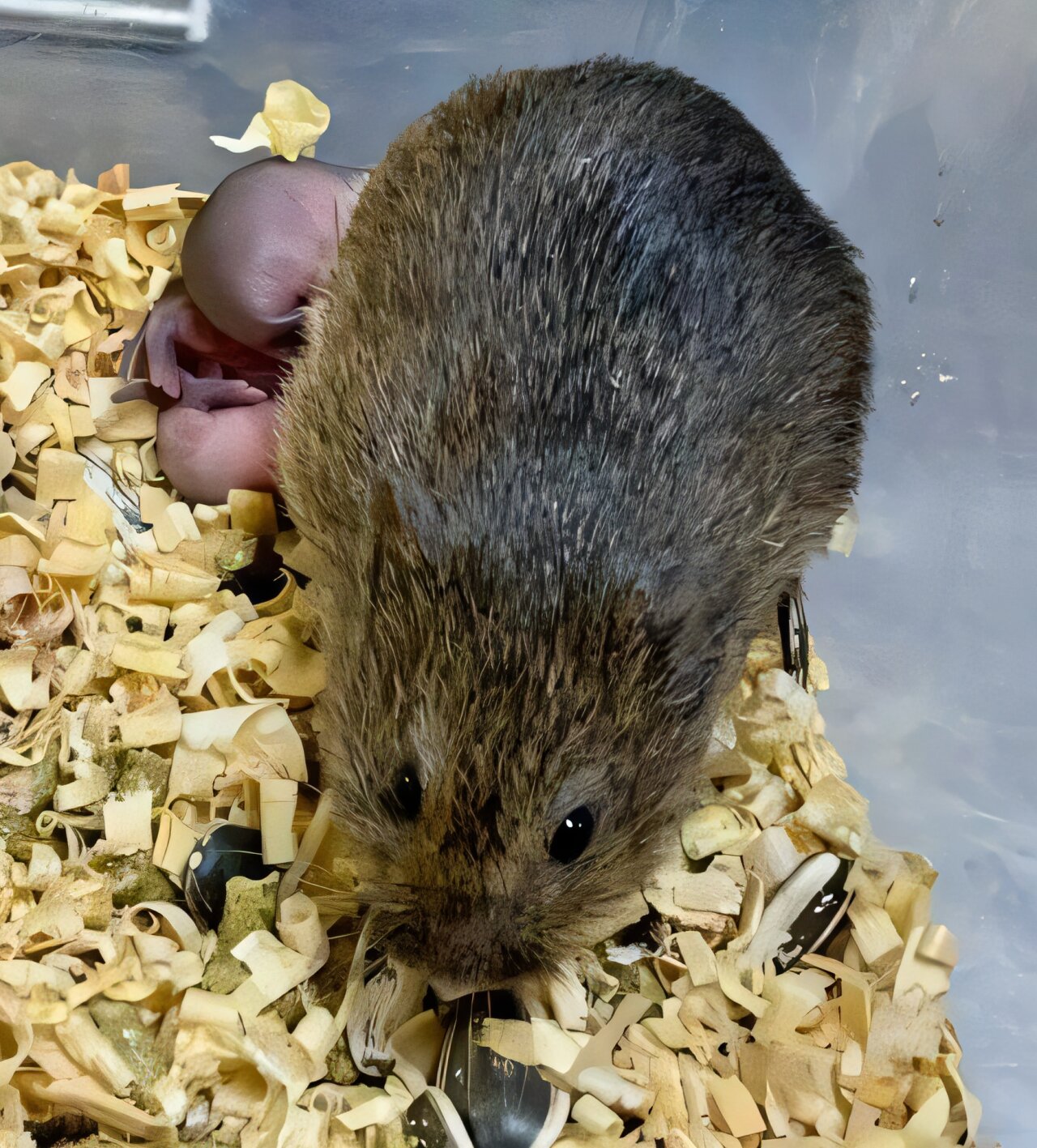
Researchers at Universidad Nacional Autónoma de México report that early parental care in prairie voles is linked to adult brain connectivity and social bonding behavior. The findings matter because prairie voles are among the few mammals that form long-term pair bonds and often receive care from both parents, making them useful for studying the biology of social relationships.
The study, published in Open Biology, compared prairie voles raised by both parents with voles raised only by their mothers. According to the research team, led by M. Fernanda López-Gutiérrez with co-senior authors Wendy Portillo and Néstor F. Díaz, the work was designed to test how early family structure relates to adult socio-sexual behavior and large-scale brain activity patterns.
How the experiment worked
The UNAM researchers assigned vole pups to two rearing conditions. In the biparental group, both mother and father stayed with the pups during development; in the monoparental group, the father was removed shortly before birth, leaving the mother to provide care until weaning.
Six days after birth, the team recorded the families and scored caregiving behaviors, including licking, grooming and crouching over pups in the nest. The researchers also measured how much time parents spent away from the nest, allowing them to compare not only family structure but also the amount of direct care pups received.
When the animals reached adulthood, the team placed males and females with unrelated opposite-sex partners and recorded behaviors during early cohabitation, including sexual behavior and huddling. The researchers then used a partner preference test, in which a vole could move among three connected chambers containing a familiar partner on one side and an unfamiliar vole on the other.
Before the partner preference test, the researchers scanned the animals’ brains using resting-state functional magnetic resonance imaging. Portillo and Díaz said the method allowed the team to measure synchronized activity across multiple brain regions and estimate large-scale functional connectivity.
Male bonding differed after father absence
The researchers found that pups raised in monoparental families received less licking, grooming and crouching than pups raised by both parents. The team reported that those early-care differences were associated with lasting changes in adult brain functional connectivity.
During the first hours of the socio-sexual test, the researchers did not see significant behavioral differences between animals from the two rearing conditions. After 48 hours of cohabitation, however, the team found sex-specific results: females from both groups showed partner preference, as did males raised by both parents, while males raised only by mothers did not show a significant partner preference.
The researchers also identified different brain networks associated with early family structure, the amount of licking and grooming received, prosocial behavior and partner preference. According to the team, the results suggest adult social behavior is tied to distributed brain connectivity patterns rather than isolated brain regions.
The study connected circuits involved in reward learning, emotion, smell, social recognition and parental behavior within a broader network framework, the researchers said. They also said the animal findings may help scientists study neurodevelopmental and psychiatric conditions marked by social impairments, including depression, autism spectrum disorders and attachment-related disorders.
Portillo cautioned that functional MRI shows which brain regions are active together but does not prove direct anatomical connections or cause-and-effect links with behavior. The UNAM group plans to use electrophysiology, optogenetic and chemogenetic tools to test whether the identified networks play causal roles in pair bonding, parental behavior and other social behaviors.
The team also plans to study neurotransmitters and signaling systems involved in prairie vole social behavior, including oxytocin, vasopressin and dopamine. According to the researchers, future work will examine whether early-life changes in brain connectivity are permanent or can be reversed before or after adulthood.
This story draws on original reporting from Phys.org.