
Radio search finds no technosignatures from comet 3I/ATLAS
SETI Institute researchers say scans of the interstellar comet turned up Earth-made signals, not evidence of alien technology.
By Priya Raghavan · Science Reporter
2 min read
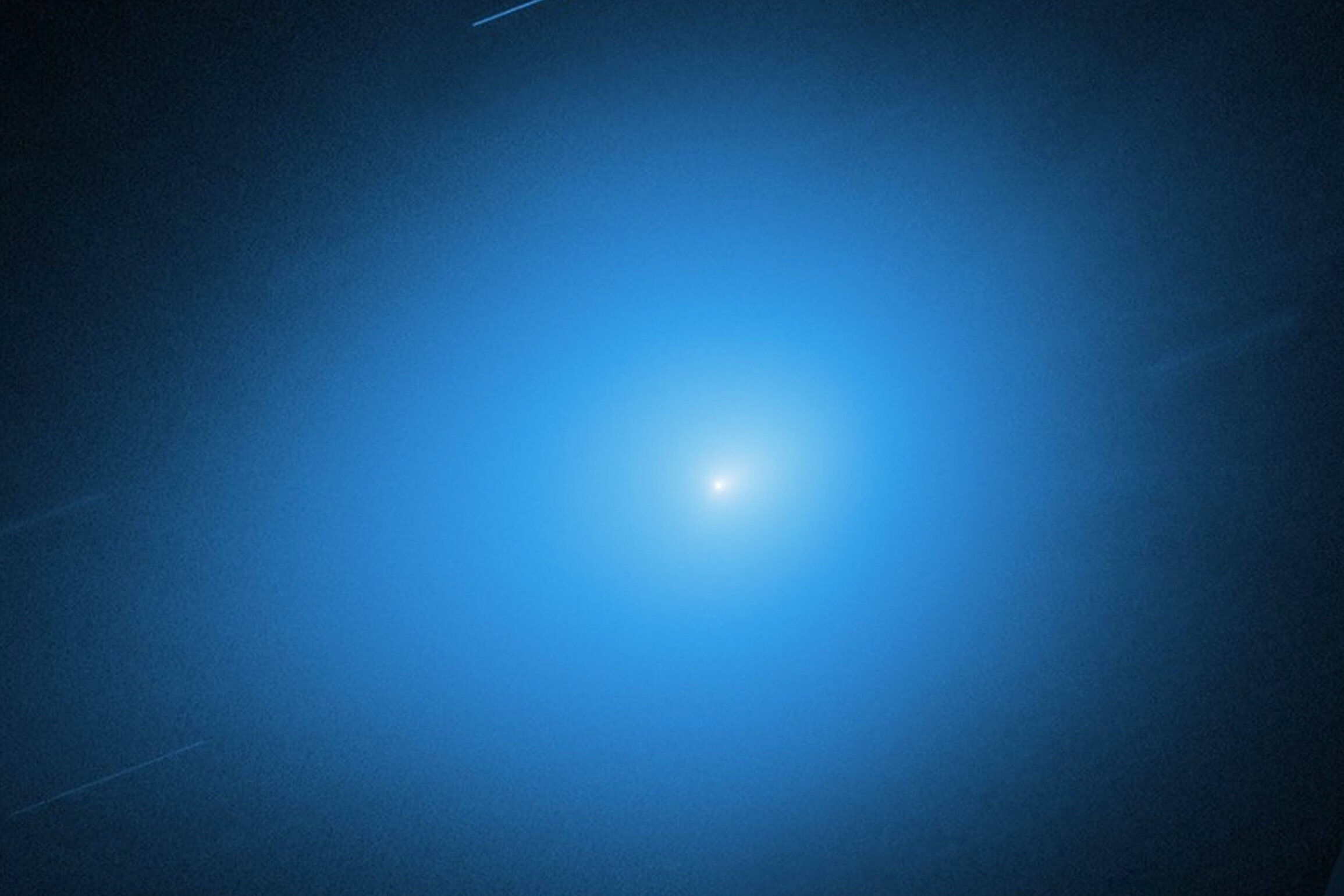
SETI Institute researchers found no evidence of alien technology coming from 3I/ATLAS, the interstellar comet now leaving the solar system. The result matters because the object is only the third known visitor from another star system, and some unsupported claims had suggested it could be linked to intelligent life.
The institute said Wednesday that observations by the Allen Telescope Array in Northern California detected no technosignatures from the comet. The results were published in the Astronomical Journal by lead author Sofia Z. Sheikh and colleagues.
Scientists identified 3I/ATLAS as a comet after it was discovered last summer, according to the SETI Institute and the published paper. It joined two earlier known interstellar objects that have passed through the solar system, all of which scientists have regarded as natural bodies rather than technology.
SETI said its team observed the comet for more than seven hours in July, soon after discovery, and searched across a broad range of radio frequencies. The scan produced nearly 74 million narrow-band radio detections, the kind of signals examined in searches for possible engineered transmissions.
After researchers accounted for human radio interference and signals consistent with the object's motion, just over 200 detections required closer review, according to SETI. The institute said those remaining signals all came from technology on Earth or from satellites orbiting Earth.
Valeria Garcia Lopez of Furman University, a co-author of the study, said in a statement that the work shows current instruments can realistically detect a signal if one is present. She said continued searches for technosignatures are useful even when the target is an object that scientists do not expect to emit artificial signals.
The paper also noted that humanity has already made objects that will become interstellar visitors elsewhere. Sheikh and her colleagues wrote that NASA's Voyager probes, launched in the 1970s and now traveling through interstellar space, will eventually pass through other star systems, showing that technological interstellar objects are possible in principle.
NASA spacecraft observed 3I/ATLAS when it passed Mars last October, coming within about 19 million miles, or 30 million kilometers, of the planet, according to the Associated Press. Its closest approach to Earth came in December at about 167 million miles, or 269 million kilometers.
The comet is now roughly 1 billion miles, or 1.3 billion kilometers, away as it heads back into interstellar space, the Associated Press reported. Scientists estimate its size at between 1,444 feet, or 440 meters, and 3.5 miles, or 5.6 kilometers, and suspect it may be up to 11 billion years old.
This story draws on original reporting from Phys.org.