
Insect losses linked to smaller tree swallows and fewer chicks
A long-running Ontario data set ties a steep drop in flying insects to lower body mass and reduced breeding success in tree swallows.
By Priya Raghavan · Science Reporter
3 min read
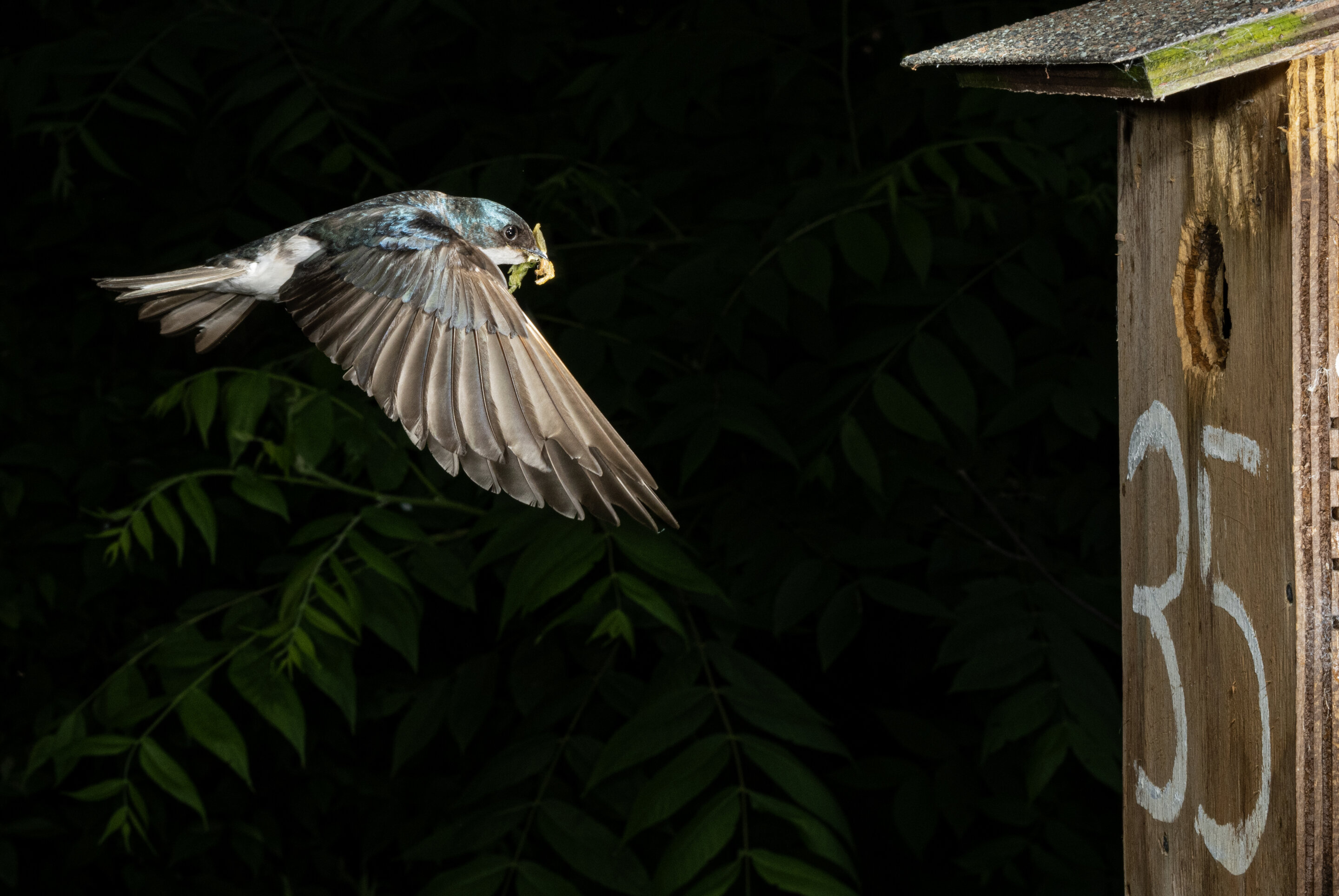
Tree swallows at Canada’s Long Point Bird Observatory have become smaller and are producing fewer young as flying insects have declined sharply, according to new research led by the University of Michigan. The findings matter because they suggest bird declines tied to climate shifts cannot be understood without also measuring the loss of food resources.
The study, published in the Proceedings of the National Academy of Sciences, found that insect numbers at the southern Ontario site have fallen by more than 60% since the 1970s. University of Michigan researchers said tree swallows, which feed on flying insects, are especially sensitive to that change during breeding season.
Charlotte Probst, the study’s lead author and a doctoral student in the University of Michigan School for Environment and Sustainability, said the number of eggs tree swallows lay is closely linked to insect availability. With fewer insects, the researchers found, birds had lower body mass and raised fewer offspring.
Food declines complicate climate effects
The research examined both food supply and climate data, a combination the University of Michigan team said is needed to understand changes in bird biology. Brian Weeks, a University of Michigan associate professor and senior author of the paper, said climate change remains a factor, but the study shows its effects depend on the broader decline in biodiversity.
Tree swallows and other birds that eat flying insects have been declining across North America, according to the researchers. One suspected pressure is phenological mismatch, a timing gap between when birds breed and when insects are most abundant.
At Long Point, insects tend to peak in May after temperatures rise enough for them to become active. As winters have warmed, the researchers said insects have been emerging earlier, and the birds have not shifted their breeding timing as quickly.
The team found that the mismatch between tree swallow breeding and peak insect availability has grown by more than three days per decade since 1977. Yet the study also found that the penalty from that mismatch has weakened over time because the insect peak itself has become much smaller.
Weeks said that when the main burst of insects contains far fewer insects than it once did and arrives in a flatter pattern, the exact overlap between breeding and peak insect emergence carries less benefit. Probst said an early insect peak can also coincide with cold snaps that threaten nests, changing the trade-off for birds.
Cause of insect decline remains under study
The researchers said more work is needed to identify what caused the insect collapse at Long Point. They said the decline does not appear to be driven by rising temperatures alone.
The study notes that the insect decline accelerated in the 1990s, around the time neonicotinoid pesticide use increased. Probst said even small amounts of those pesticides entering wetlands could harm aquatic insect larvae, including midges and mosquitoes that tree swallows eat.
Probst said the Long Point findings leave room for cautious optimism because local action may help address insect losses in that system. The team contrasted that with the broader global challenge of reducing climate change.
The analysis drew on decades of monitoring at Long Point Bird Observatory, which the University of Michigan described as the oldest continuously operating bird observatory in North America. The researchers used tree swallow records from 1969 to 2024 and insect records from 1977 to 2011.
Probst credited Long Point staff and volunteers for maintaining the records needed for the study. Weeks said the work shows the value of long-term ecological data, especially when researchers are trying to connect climate, food availability and changes in a single species at one location.
This story draws on original reporting from Phys.org.