
North Sea crater linked to ancient asteroid strike
Researchers say the Silverpit Crater was carved by a 160-meter space rock that struck the seabed 43 million to 46 million years ago.
By Priya Raghavan · Science Reporter
3 min read
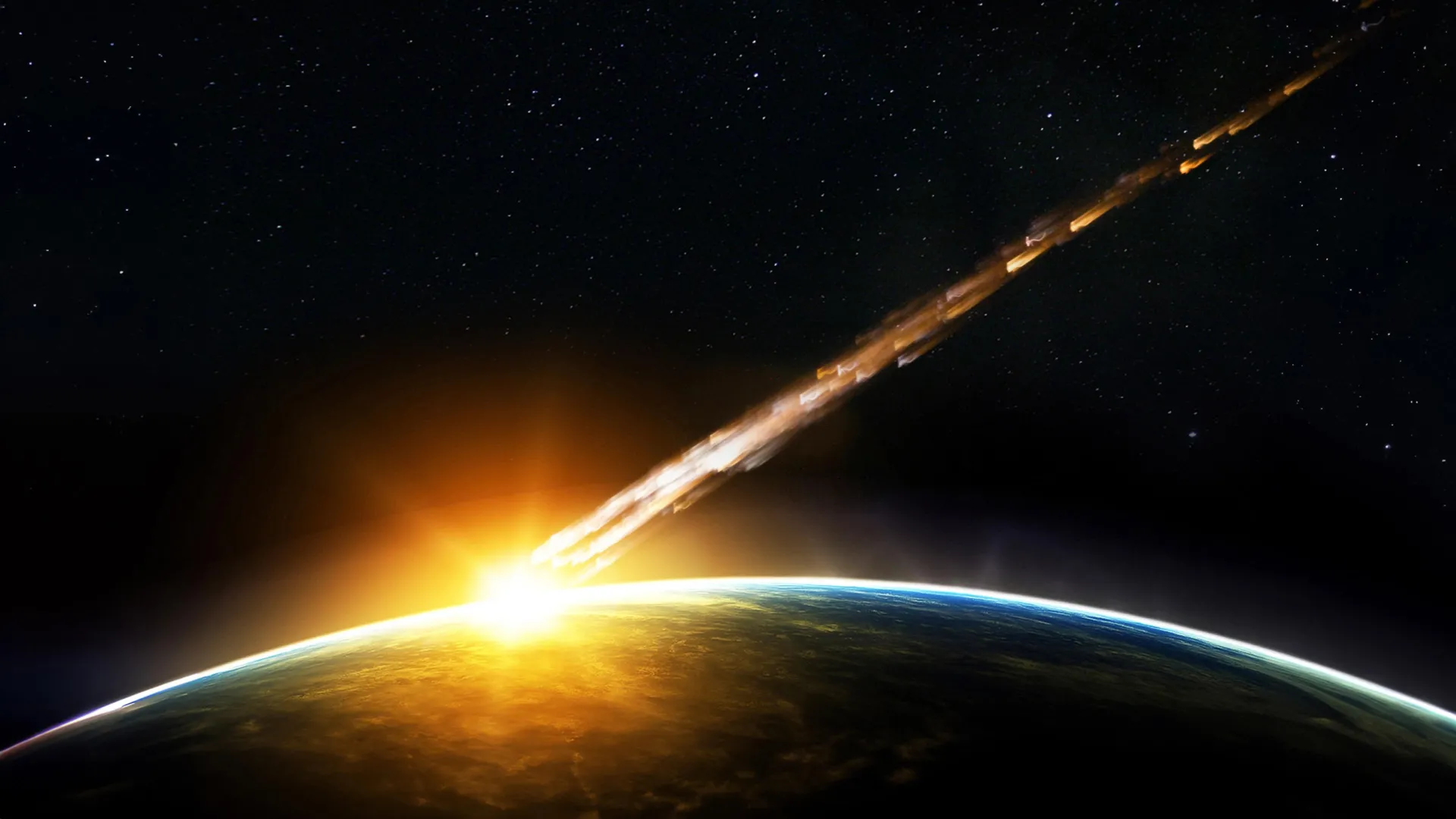
Scientists have confirmed that the Silverpit Crater beneath the North Sea was made by an asteroid or comet impact, Heriot-Watt University said. The finding settles a dispute that ran for more than 20 years and adds the buried structure to the short list of known impact craters on Earth.
The research team, led by Dr. Uisdean Nicholson of Heriot-Watt University in Edinburgh, used seismic scans, rock samples and computer modeling to test how the crater formed. The results were published in Nature Communications, according to the university.
A buried structure with a disputed past
Silverpit sits about 700 meters below the floor of the southern North Sea, roughly 80 miles off the Yorkshire coast, Heriot-Watt said. The crater is about three kilometers wide and is encircled by a broader system of circular faults that reaches about 20 kilometers across.
Geologists have argued over Silverpit since its discovery in 2002, according to Heriot-Watt. Some researchers had pointed to an impact at extreme speed because of the crater’s round form, central uplift and ring-shaped faulting, while others proposed movement in buried salt deposits or collapse linked to volcanic activity.
The university said the debate was prominent enough that geologists voted on the question in 2009. A report in Geoscientist magazine that year said most participants rejected the impact explanation, according to the account cited by Heriot-Watt.
Minerals supplied key evidence
The new study relied in part on recently available seismic imaging, which allowed the team to examine the crater’s buried architecture in detail, Heriot-Watt said. Researchers also studied fragments recovered from an oil exploration well near the structure.
Those samples contained shocked quartz and feldspar at the same depth as the crater floor, according to Nicholson’s team. Heriot-Watt said such microscopic damage forms under extreme pressures and is considered strong evidence for a hypervelocity impact rather than ordinary geological processes.
Professor Gareth Collins of Imperial College London, a member of the study team, built numerical models to compare a possible impact with the crater’s observed shape, the university said. Collins also took part in the 2009 debate over Silverpit’s origin, according to Heriot-Watt.
A shallow strike and a tall wave
The team concluded that the object was about 160 meters wide and hit the seabed from the west at a shallow angle, Heriot-Watt said. The impact occurred roughly 43 million to 46 million years ago, according to the study summary.
Modeling by the researchers indicates the strike threw up a curtain of rock and water about 1.5 kilometers high within minutes, Heriot-Watt said. When that material fell back into the sea, it generated a tsunami more than 100 meters high, or over 330 feet, according to the university.
The impact would have excavated the crater and blasted seabed material, sediment and seawater upward, Heriot-Watt said. The object was far smaller than the asteroid associated with the end-Cretaceous extinction, but the team said it was still capable of severe local destruction.
Rare record of an ocean impact
Nicholson’s team said Silverpit is unusually well preserved because Earth tends to erase impact scars through erosion, weathering, volcanism and plate tectonics. Heriot-Watt said about 200 confirmed impact craters are known on land, while only about 33 have been identified beneath the ocean.
The university said the confirmation places Silverpit alongside other recognized impact structures, including Mexico’s Chicxulub Crater and the Nadir Crater off West Africa. Researchers say the North Sea site can now be used to study how asteroid impacts affect Earth and other planets below the surface.
The work was funded by the Natural Environment Research Council, according to Heriot-Watt University.
This story draws on original reporting from ScienceDaily.