
New catalog raises gravitational wave detections to 390
The LVK catalog adds 161 black hole merger signals and strengthens evidence for black holes formed by earlier collisions.
By Lucas Ferreira · Science & Environment Writer
3 min read
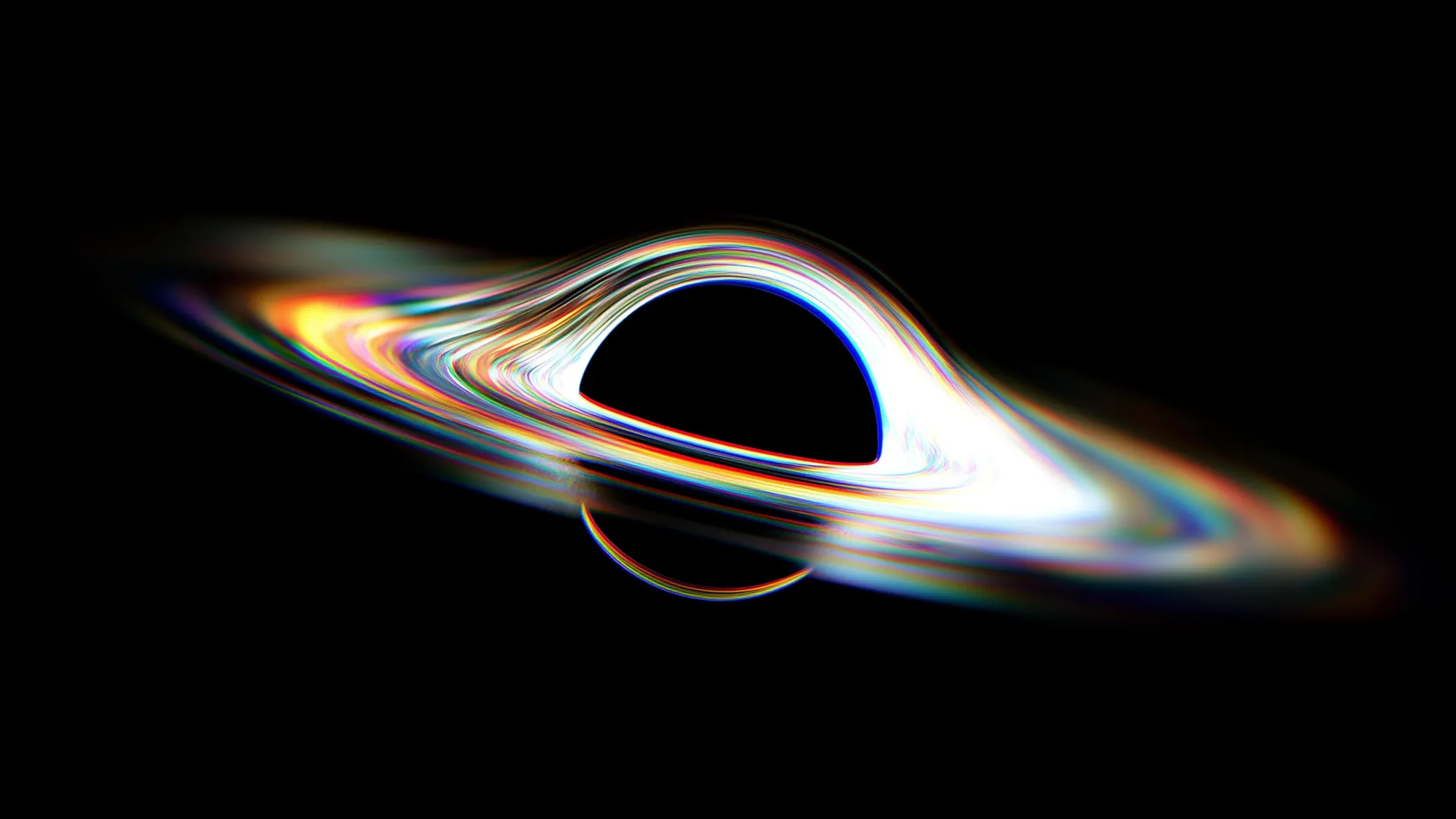
A new gravitational-wave catalog has brought the number of confirmed detections to 390, giving astronomers a broader record of black hole collisions across the universe. The University of Glasgow said the data strengthen evidence that some black holes were themselves created in earlier mergers.
The Gravitational Wave Transient Catalogue-5.0, known as GWTC-5, has been released online, with companion papers submitted to Astrophysical Journal and Astrophysical Journal Letters, according to the university. The catalog adds 161 newly identified signals from colliding black holes detected between April 2024 and the end of January 2025.
The detections came from the LIGO observatories in the United States, Virgo in Italy and KAGRA in Japan, which together form the international LVK collaboration, the University of Glasgow said. The university said the network is now finding about three to four gravitational-wave events a week during observing runs, with more expected as detector upgrades improve sensitivity.
Record-setting signals
According to the University of Glasgow, GWTC-5 includes the most precisely located gravitational-wave source yet recorded, the clearest gravitational-wave signal so far and the first measurement of three vibrational modes from a black hole. It also adds evidence for so-called second-generation black holes, which may have formed in earlier black hole mergers before colliding again.
One event, GW240615, was detected on June 15, 2024, by both LIGO sites and Virgo, the university said. Researchers traced it to a region of sky covering six square degrees, the most accurate localization reported for a gravitational-wave source. The signal came from two black holes about 26 and 30 times the mass of the Sun that merged more than 3 billion light-years from Earth, according to the university.
Another event, GW250114, reached Earth on Jan. 14, 2025, the University of Glasgow said. It came from two black holes of roughly 32 and 34 solar masses more than 1 billion light-years away and produced a signal-to-noise ratio of 76.9, the strongest gravitational-wave detection recorded to date.
The University of Glasgow said the clarity of GW250114 allowed researchers to carry out detailed tests of general relativity and to confirm Stephen Hawking’s black hole area theorem. John Veitch, an academic at the university, said the team compared the warped space-time before and after the merger and found that the total area of the black holes’ event horizons increased in line with Hawking’s laws of black hole mechanics.
Clues to how black holes form
The catalog also highlights two unusual mergers from late 2024, GW241011 and GW241110, according to the University of Glasgow. The first occurred about 700 million light-years away and the second about 2.4 billion light-years away. Researchers found that the black holes’ spins suggest they may have been products of previous mergers.
The university said repeated mergers are thought to be more likely in dense stellar clusters, where black holes can interact and collide more often. Storm Colloms, a postgraduate researcher at Glasgow’s Institute for Gravitational Research, said a population study covering 267 sources, including 104 new observations, found links between black hole mass ranges and spin, pointing to more than one formation route.
The expanded catalog is also being used to refine measurements of the Hubble constant, the value that describes how fast the universe is expanding, according to the University of Glasgow. Alex Papadopoulos, a postgraduate researcher at the institute, said the return of Virgo improved sky localization, making it easier to search for host galaxies, and that 236 signals were used in the analysis, almost double the previous number.
Glasgow researchers have worked on gravitational-wave science since the 1970s and helped design mirror suspension systems used in NSF LIGO, the university said. The university said its teams also developed faster software for cosmology analysis and have contributed to detector technology and signal analysis across the LVK collaboration.
This story draws on original reporting from ScienceDaily.