
Smithsonian VR astronomy show opens in DC with more cities planned
The 40-minute Starstruck experience takes visitors through telescopes, star birth, an exoplanet and the Milky Way’s central black hole.
By Maya Lindqvist · Senior Technology Correspondent
3 min read
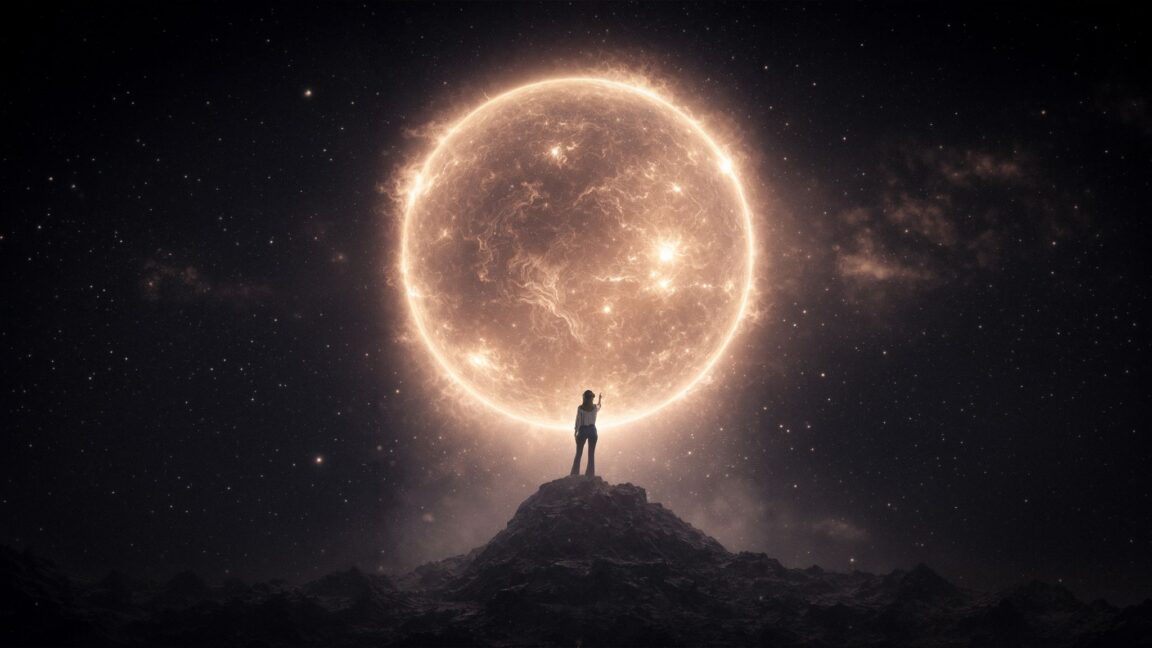
A new Smithsonian astronomy experience is using virtual reality to turn deep-space objects into a guided room-scale tour. The show, called Smithsonian Starstruck: An Immersive Experience, opened in Washington, DC, in May and is scheduled to reach three more U.S. cities later this year, according to the Smithsonian and Ars Technica.
The 40-minute program puts visitors in headsets and moves them through scenes tied to major astronomy targets and observatories. According to the Smithsonian, solo adult tickets in Washington currently range from $29 to $35, while group tickets for four or more begin at $18 each, with a 15 percent discount now listed.
From observatories to exoplanets
Ars Technica reported that the DC version begins after setup steps that include accessibility choices such as closed captioning and a waiver. Visitors then use an HTC Vive Focus 3 headset and receive basic instructions for moving through the shared exhibit area.
The opening scene places guests at the Multiple Mirror Telescope at the Smithsonian Astrophysical Observatory’s Whipple Observatory. From there, participants follow a virtual guide voiced by narrator James Seawood through a sequence that includes the Big Bang and the Pillars of Creation, the star-forming region made familiar by images from the Hubble Space Telescope.
Ars Technica reported that the tour also features NASA spacecraft and observatories, including the Parker Solar Probe, Hubble, the Chandra X-ray Observatory and the James Webb Space Telescope. In the experience, visitors can interact with small virtual models of some spacecraft and see close-up versions of the observatories.
The program spends much of its time on stars and planets, according to Ars Technica. One stop places visitors on a simulated version of Janssen, also known as 55 Cancri e, an exoplanet about 41 light-years away whose orbit around the star Copernicus lasts about 17 hours.
The show depicts Janssen with rocky terrain, lava and diamonds formed under extreme conditions, Ars Technica reported. NASA’s Jet Propulsion Laboratory has described some research suggesting the planet’s full surface may be molten rock.
A black hole and a future telescope
Other scenes focus on stellar death. Ars Technica reported that visitors see Betelgeuse, the red supergiant in Orion, as a late-stage star and then as a future supernova.
The tour also travels to Sagittarius A*, the black hole at the center of the Milky Way. In that section, Ars Technica reported, visitors can direct a beam of light toward the black hole and watch it curve and redden near the event horizon.
The final scene returns to Earth, placing visitors in Chile’s Atacama Desert at the future site of the Giant Magellan Telescope. The Smithsonian Astrophysical Observatory is one of the telescope project’s founding partners, and the Starstruck scene shows the observatory completed, with its seven primary mirrors aimed at the sky, according to Ars Technica.
Technical details may vary by city. Ars Technica reported that the DC location used the 2021-era Vive Focus 3 during a June visit, while Starstruck patrons in other cities are expected to use HTC’s newer Vive Focus Vision headset; the Washington show is also expected to change to that model at some point.
After Washington, Smithsonian Starstruck is planned for Denver, Orlando, Florida, and San Antonio, Texas, later this year, according to the show’s organizers.
This story draws on original reporting from Ars Technica.