
Nanoparticle method carries therapeutic antibodies inside cells
A Cornell-led study reports lipid nanoparticles can deliver full-length antibodies to intracellular targets linked to cancer, inflammation and Parkinson’s disease.
By Tom Brennan · Health & Medicine Correspondent
3 min read
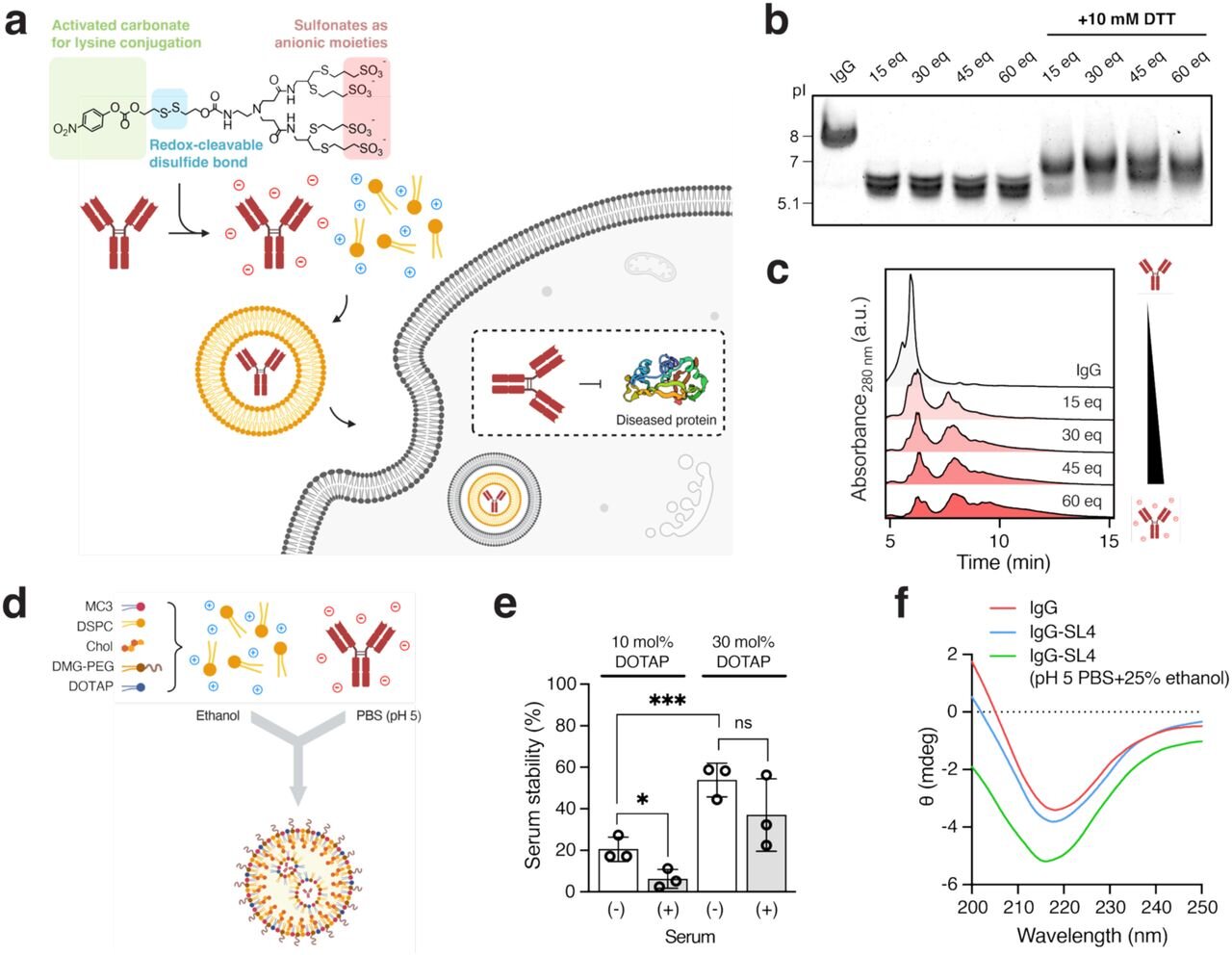
Researchers have reported a lipid nanoparticle delivery method that can carry full-length therapeutic antibodies into cells, according to a study published June 23 in the Proceedings of the National Academy of Sciences. The finding matters because many disease-related targets sit inside cells, while conventional antibody drugs generally act outside them, Cornell University said.
The work was led by Azmain Alamgir, a Cornell Ph.D. graduate now doing postdoctoral research at the Massachusetts Institute of Technology, according to Cornell. The paper’s co-senior authors are Chris Alabi, the Fred H. Rhodes Professor of Chemical Engineering, and Matt DeLisa, the William L. Lewis Professor of Engineering and director of the Cornell Institute of Biotechnology.
How the delivery method works
Cornell said the platform builds on earlier work by Alabi and DeLisa to alter protein surfaces with a negatively charged ion. That change lets the proteins associate with positively charged lipid nanoparticles, which Cornell described as tiny fat-based carriers.
Once the particle reaches a cell, the cargo can be released so the therapeutic protein can act inside the cell, according to Cornell. In the new PNAS study, the researchers applied that approach to antibodies, which are large proteins that usually cannot pass through a cell membrane by themselves.
Alabi said in Cornell’s account that antibody drugs have reshaped treatment for diseases including cancer and autoimmune disorders, but most approved antibodies are limited to targets outside cells because of their size. He said the new approach could allow clinically validated antibodies to reach disease drivers inside cells.
Tests in brain and lung models
The study reported results across several disease contexts, including cancer cells, lung inflammation and Parkinson’s disease, according to Cornell and the PNAS publication details. The paper is titled “Intracellular delivery of full-length antibodies via organ-targeted lipid nanoparticles.”
Cornell said a team led by Avi Schroeder at the Technion-Israel Institute of Technology used the Cornell group’s cloaking material, a sulfonate group called SL4, and the accompanying protocol. The Technion researchers applied it to antibodies that target alpha-synuclein, a protein associated with Parkinson’s disease, according to Cornell.
Alabi said the outside test was an important step because the method was reproduced by researchers in another country under different conditions. Cornell said the result provided evidence beyond cell culture, including work in a living system.
At the same time, Alabi’s team tested commercial anti-NF-kB antibodies against a separate target tied to lung inflammation in a mouse model of acute lung injury, according to Cornell. Alabi said the study showed the cloaked-antibody system could be applied to different disease indications, including a brain-related target and a lung inflammation target.
Next steps
The researchers are now looking at chemical groups beyond sulfonates that may also cloak proteins or antibodies, Cornell said. Alabi, DeLisa and Alamgir have also started a company, Cloak Bio, to pursue therapeutic uses of the platform.
The study was published in the Proceedings of the National Academy of Sciences with the DOI 10.1073/pnas.2531649123, according to the journal information provided by Cornell. A related preprint is listed on bioRxiv under DOI 10.1101/2025.09.26.678781.
This story draws on original reporting from Phys.org.