
Study maps how mitochondria assemble key protein-making machinery
Karolinska Institutet researchers say the findings clarify how mitoribosome assembly errors may contribute to energy-linked disease.
By Lucas Ferreira · Science & Environment Writer
3 min read
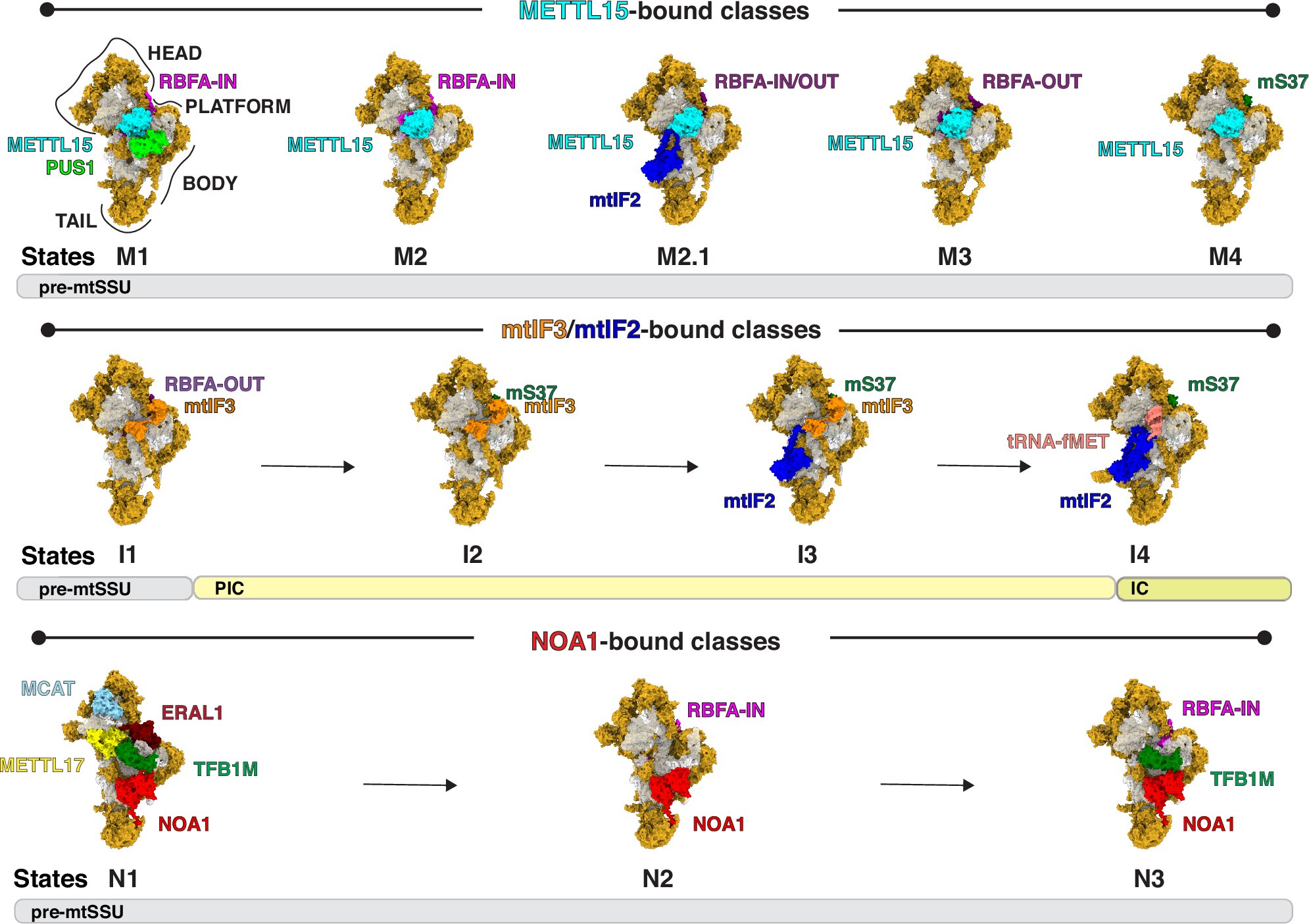
Researchers at Karolinska Institutet have charted late steps in how human mitochondria build part of their protein-making machinery, a process tied to the cell’s energy supply. The work, published in Nature Communications, may help explain how defects in mitochondrial ribosome assembly can contribute to disease.
Mitochondria convert nutrients into usable energy for cells, according to Karolinska Institutet. To do that, they depend on mitoribosomes, specialized ribosomes inside mitochondria that produce proteins needed for mitochondrial function.
The new study focuses on the small subunit of the mitoribosome, known as the mitochondrial small ribosomal subunit. Using cryo-electron microscopy, the researchers captured a series of structural views showing how parts of that subunit mature inside human cells, Karolinska Institutet said.
Assembly appears to happen in modules
The researchers reported that assembly does not follow a rigid one-step-after-another route. Instead, the findings point to a coordinated process in which different regions of the subunit mature in parallel and pass through specific structural checkpoints.
Anas Khawaja, co-corresponding author at Karolinska Institutet’s Department of Medical Biochemistry and Biophysics, said the team wanted to understand control of the final stages of mitochondrial small ribosomal subunit assembly. “What we found is that the process is not a simple linear pathway, but a modular and dynamic maturation process involving several factors acting at specific structural checkpoints,” Khawaja said.
The paper identifies two proteins, PUS1 and mtIF2, as assembly factors for the human mitoribosomal small subunit. Karolinska Institutet said the structures show how these factors contribute to the maturation of the subunit before it becomes functional.
PUS1 had been known mainly for its role in modifying RNA, according to Karolinska Institutet. The researchers now report that it also helps stabilize a key part of ribosomal RNA that contributes to the decoding center, the site where genetic information is read during protein synthesis.
Link to mitochondrial disease
Karolinska Institutet said problems in mitoribosome construction can reduce energy production, with particular relevance for tissues that require large amounts of energy, including the brain, heart and muscles. The study connects the mechanics of assembly with broader questions about disorders involving mitochondrial energy metabolism.
Mutations in PUS1 have been linked to MLASA, a rare mitochondrial disorder affecting muscles and metabolism, according to the institute. By describing how PUS1 acts during ribosome assembly, the researchers say the study may clarify how such mutations interfere with energy production in cells.
Khawaja said the structural data provide a more detailed model for how mitochondrial ribosomes form and become active. He said understanding those mechanisms is important because mitochondrial protein synthesis is central to energy metabolism and may point to targets for future therapies.
The study, “Pseudouridine synthase PUS1 and initiation factor mtIF2 are human mitoribosomal small subunit assembly factors,” was published in Nature Communications. The authors include Vivek Singh and colleagues, and the paper carries the DOI 10.1038/s41467-026-74700-x.
This story draws on original reporting from Phys.org.