
Minimally invasive knee procedure shows promise for arthritis pain
CU Anschutz says genicular artery embolization may help some patients with knee osteoarthritis reduce pain and delay major surgery.
By Tom Brennan · Health & Medicine Correspondent
3 min read
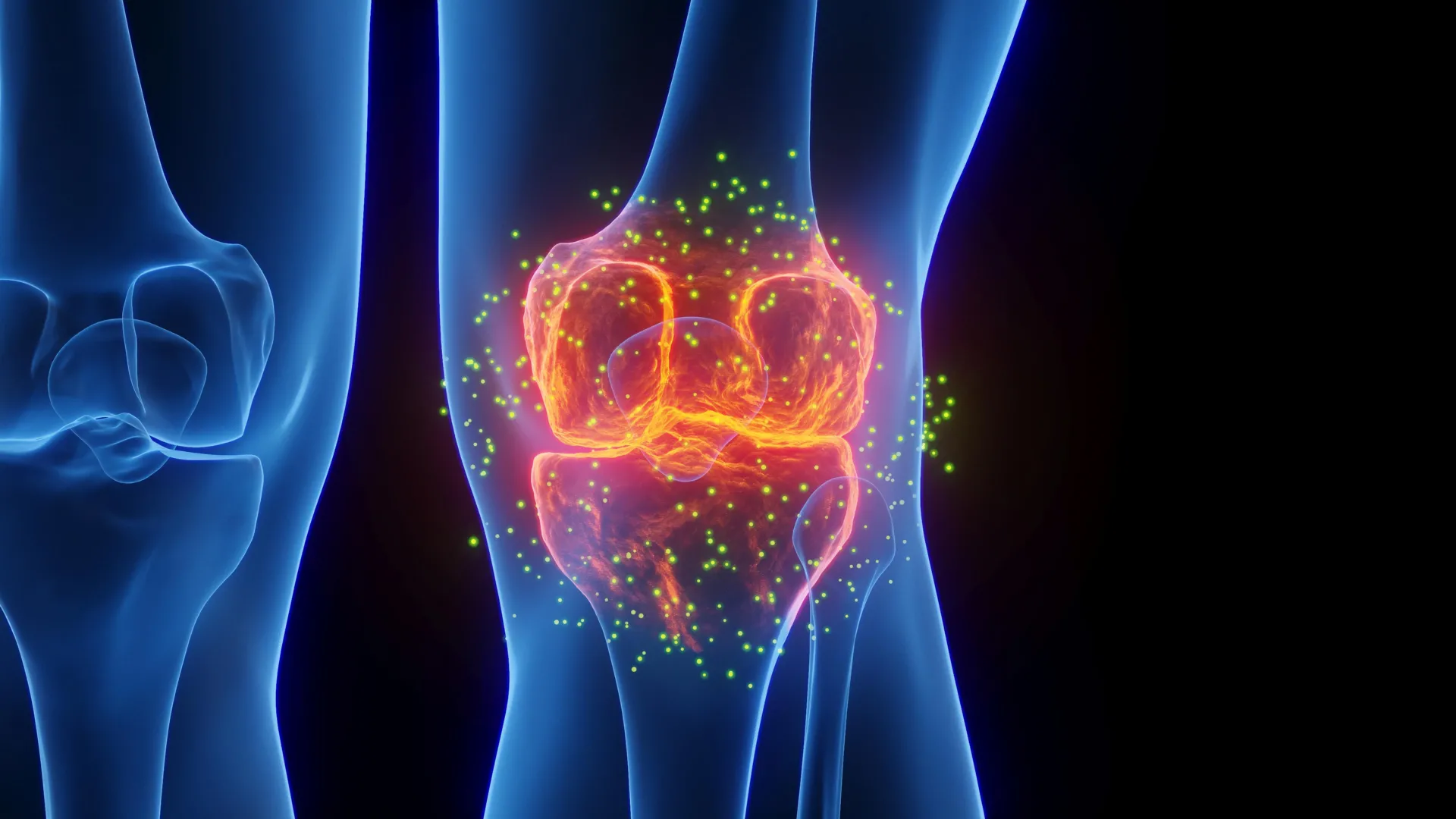
A minimally invasive outpatient procedure is giving some people with chronic knee pain another option before knee replacement, according to the University of Colorado Anschutz School of Medicine. The treatment, called genicular artery embolization, targets inflamed tissue in the knee and early research suggests relief can last for years in some patients.
Leigh Casadaban, an assistant professor of radiology at CU Anschutz and a vascular interventional radiologist, said the procedure may fill a gap for patients whose pain has not improved with medication, physical therapy or injections but who are not ready for total knee replacement.
Genicular artery embolization, or GAE, is designed to reduce blood flow to abnormal vessels linked to inflammation inside the knee joint. Doctors use imaging to guide a catheter into arteries around the knee, then release tiny beads that block selected vessels in painful areas identified by the patient.
Who may benefit
According to Casadaban, patients with mild to moderate knee osteoarthritis tend to respond best. People with more advanced disease may still receive the procedure, but the benefit is generally less durable, she said.
Casadaban said about 70% of patients have strong results, with pain scores falling by half or more in many cases. She said a smaller number of patients report no pain after treatment.
CU Anschutz highlighted the case of Cynthia Schraf-Fletcher, 74, who had GAE on her right knee after previously undergoing total knee replacement on her left knee. Schraf-Fletcher said nearly a year after the embolization procedure, the improvement in her right knee was comparable to the result from the replacement surgery on her left knee.
Schraf-Fletcher told CU Anschutz that reduced pain has made routine activities, including gardening and riding a stationary bicycle, more enjoyable. She had sought an alternative after complications from knee replacement surgery, according to the university.
How the procedure is done
GAE is usually performed with conscious sedation and takes about one to two hours, according to CU Anschutz. The care team makes a small incision near the leg crease, then uses X-ray imaging and contrast dye to move a small catheter through the femoral artery into the genicular arteries near the knee.
After the beads are placed, patients are watched for several hours and typically go home the same day, the university said. Doctors generally advise several days of lighter activity after the procedure.
The technique was first developed in Japan more than 10 years ago, according to CU Anschutz. In the United States, the Food and Drug Administration has granted breakthrough device status since 2021 to multiple devices tied to the procedure.
Research continues
Casadaban said the working theory is that GAE reduces inflammation within the joint. She cited four-year data from Japan showing pain relief lasting that long after a single outpatient procedure, and U.S. data showing that patients who respond well can maintain relief for two years.
Casadaban is leading two clinical trials at CU Anschutz. One is studying changes in knee fluid after GAE, while the other is evaluating Nexsphere-F, a temporary arterial treatment device intended to block small knee blood vessels that may contribute to inflammation and pain.
GAE is now used for knee conditions, according to CU Anschutz. Casadaban said researchers and clinicians are also beginning to study whether similar approaches could help other painful musculoskeletal conditions, including frozen shoulder, tennis elbow and plantar fasciitis.
This story draws on original reporting from ScienceDaily.