
Mars may have hosted buried magma networks without plate tectonics
Oxford-led researchers say InSight seismic data point to large ancient magma systems beneath Mars, with implications for planetary habitability.
By Priya Raghavan · Science Reporter
3 min read
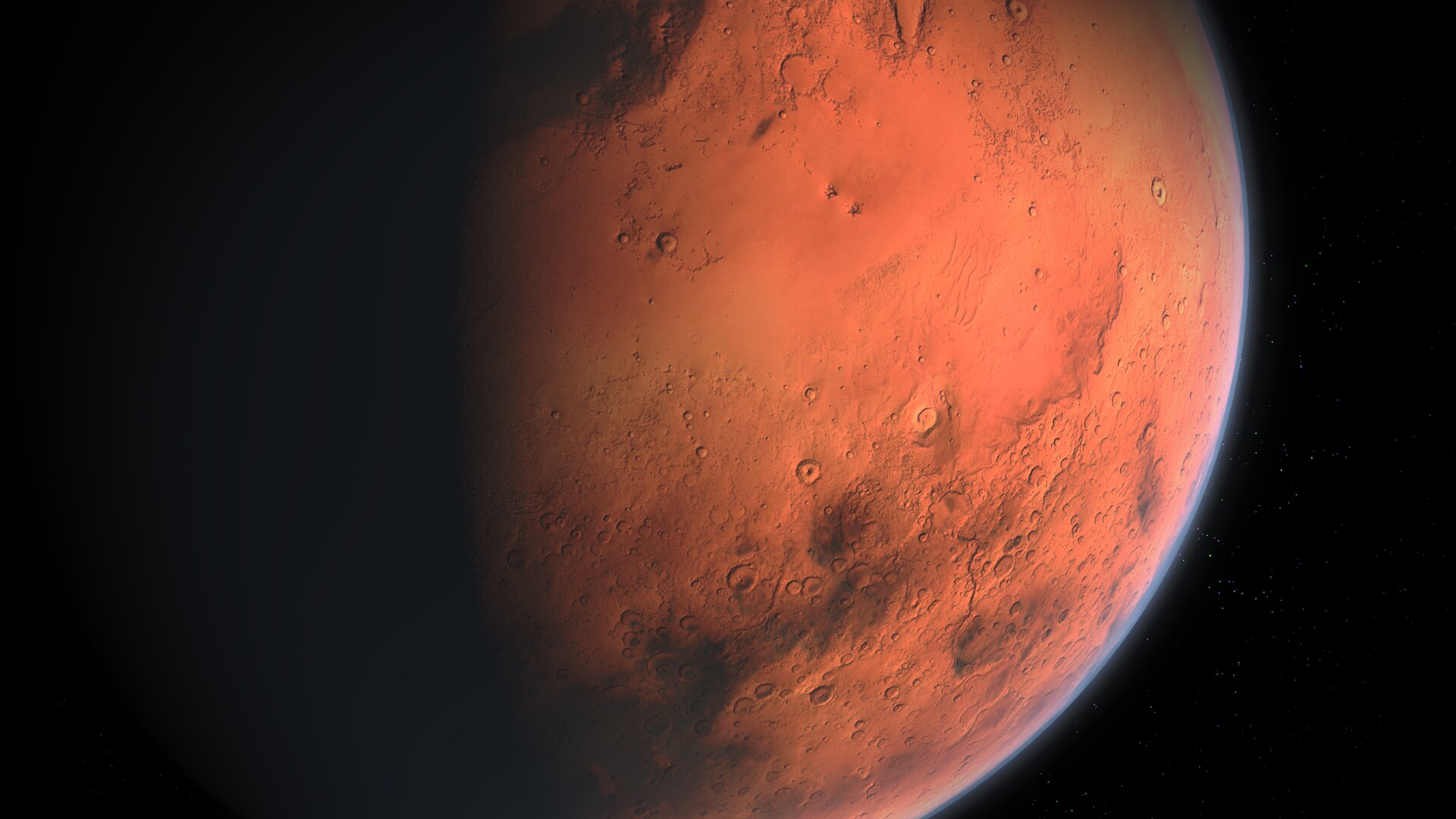
Researchers say Mars may once have contained broad, long-lived magma systems deep below its surface, despite lacking the moving tectonic plates that shape much of Earth’s geology. The finding matters because it suggests rocky planets may be able to build complex crusts in more ways than scientists had assumed.
The study, led by researchers at the University of Oxford and published in Nature Astronomy, used seismic records from NASA’s InSight mission to examine a boundary about 24 kilometers, or 15 miles, beneath the Martian surface. According to Oxford, that boundary had been seen in earlier work, but its meaning was unresolved.
InSight, which placed the first seismometer on Mars in 2018, recorded vibrations from marsquakes and meteorite impacts. Oxford said researchers in its departments of Earth Sciences and Statistics used those recordings to test what kinds of rock could explain the seismic properties detected below the surface.
Seismic data point to layered crust
The team compared hundreds of possible rock compositions with the InSight observations using thermodynamic modeling and statistical analysis, according to Oxford. The researchers found that rocks rich in iron and magnesium and low in silica, known as ultramafic rocks, best matched the material below the 24-kilometer boundary.
Oxford said rocks above the boundary were a better fit for mafic compositions, which contain more silica. The researchers interpret that pattern as evidence that molten rock once collected underground and separated into different materials as it cooled and evolved.
In that scenario, dense crystals would have remained lower in the crust while lighter, more evolved melts moved upward, according to the study. Oxford said comparable processes on Earth occur beneath volcanic arcs and are associated with continent-building.
Dr. Tobermory Mackay-Champion, the study’s lead author and formerly of Oxford’s Department of Earth Sciences, said the work challenges the idea that Martian volcanism was relatively simple compared with Earth’s. He said the evidence points to large systems in which molten rock could evolve and be reworked through the crust.
A challenge to assumptions about Mars
Mars is often described as a “stagnant lid” planet because its outer shell is not divided into shifting plates like Earth’s, Oxford said. Since plate tectonics drives much of Earth’s volcanism, crustal recycling and continent formation, scientists have often treated it as a key ingredient for complex rocky-planet geology.
The new study argues that Mars may have developed a more elaborate crust through internal melting and recycling alone. Oxford said the inferred layer may stretch across hundreds or thousands of kilometers around the planet’s northern hemisphere, pointing to connected magmatic systems rather than isolated volcanoes.
The process is known as transcrustal magmatism, according to the researchers. Oxford said the study presents seismic evidence for that style of magma movement on Mars, a process previously viewed as a feature of Earth.
The implications extend beyond Martian geology. Oxford said geological recycling is tied to the development of atmospheres, oceans and potentially habitable conditions because it can help regulate climate and cycle water and other volatile substances over long periods.
Professor Jon Wade, a co-author in Oxford’s Department of Earth Sciences, said the findings bear on whether Earth is unusual among rocky planets. If Mars could form complex crust without plate tectonics, he said, similar conditions may be possible on planets that have been discounted because of their size or lack of obvious tectonic activity.
The research was conducted by Oxford’s Department of Earth Sciences with collaborators from the University of Bristol and Oxford’s Department of Statistics. The paper is titled “Seismic evidence for a melt-depleted lower crust and transcrustal magmatism on Mars.”
This story draws on original reporting from Phys.org.