
Climate-driven food changes may put solitary bees at higher risk
Researchers say shifts in pollen and nectar could hit solitary and short-ranging bees harder than better-studied social species.
By Tom Brennan · Health & Medicine Correspondent
3 min read
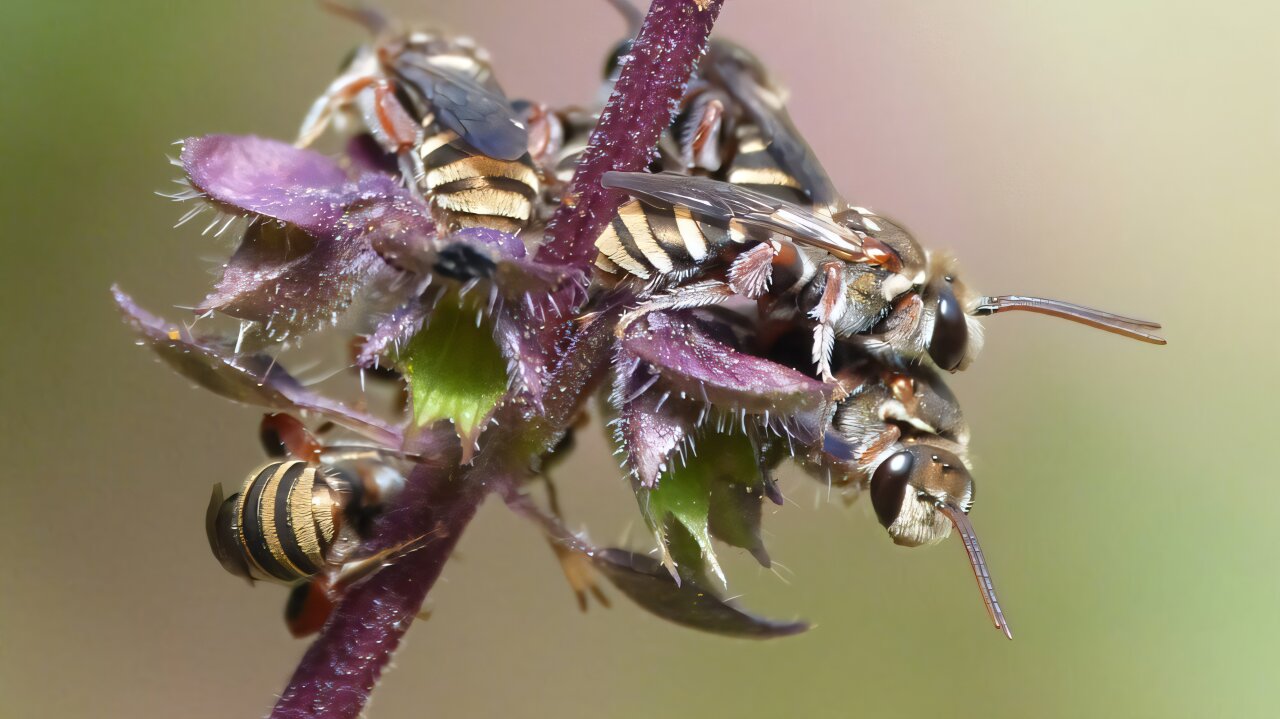
Climate change is altering the food available to bees, and researchers warn that many solitary species may be poorly equipped to cope. In a paper published in Current Opinion in Insect Science, Brooke Zanco and Carmen da Silva argue that bee vulnerability depends heavily on diet, foraging range and social behavior.
The authors, writing in The Conversation, said the presence of flowers alone does not guarantee that bees receive the nutrients they need. Bees rely on pollen and nectar with suitable mixes of nutrients, and climate change is changing both how much of that food is available and what it contains, according to the researchers.
That creates a problem for scientists trying to predict which bees are most at risk. Zanco and da Silva said much of the existing research on bee nutrition focuses on highly social species, including honeybees and bumblebees, while many native bees in Australia and elsewhere live alone or in loose communal groups without queens and workers.
Different bees face different food risks
The paper says several traits shape whether a bee encounters nutritional stress. Those include how far it can fly to feed, how varied its diet is, whether it lives alone or with others, and the size of any group it belongs to.
A bee species that can travel longer distances and use many kinds of flowers may be able to compensate when nearby plants provide poor food. A species with a short foraging range or a narrow diet has fewer options if local flowers bloom at the wrong time or produce less suitable pollen.
The authors point to the native stingless bee Tetragonula carbonaria as an example. They said this species generally feeds over shorter distances than honeybees, which could make it more dependent on nearby plants and more exposed to climate-related changes in local floral nutrition.
Colonies can soften some shocks
Social bees may have some protection from short-term food disruption, according to the researchers. In colonies such as those of T. carbonaria, workers gather food, share it and may be able to shift effort when one resource declines.
Stored food and food-sharing can help a colony absorb temporary stress, the authors said. Even so, poor nutrition can still reduce reproduction, slow colony growth, produce smaller workers, weaken immunity or make bees less able to handle heat and pesticides, according to research cited in the paper.
Solitary females have fewer backups
Solitary bees face a different set of risks because one female often must do all the work of nesting, laying eggs and supplying food for her young. The authors cite blue banded bees, Amegilla chlorocyanea, as an example of native bees that do not have colony support.
If suitable flowers are absent, bloom too late or produce pollen with different nutrients than expected, the effects on solitary species may show quickly, according to Zanco and da Silva. They said possible outcomes include fewer nests, smaller offspring, fewer daughters and lower survival.
Because each female’s condition can strongly affect the next generation, the researchers said poor nutrition could contribute to fast population declines in some solitary bees. They said future studies need to link the nutritional quality of flowers with bee performance in real settings, across species with different life histories.
For gardeners and land managers, the authors recommend planting varied mixes of native plants rather than focusing only on flower abundance. They also said nesting habitat matters: many native bees do not use hives or bee hotels, and some need bare ground, stems, wood or existing cavities.
This story draws on original reporting from Phys.org.