
Laser cutting depth recoil force method tracks wafer cuts in real time
Chiba University researchers used vaporization recoil to sense laser-cutting depth and detect when silicon wafers are fully pierced.
By Tom Brennan · Health & Medicine Correspondent
3 min read
Researchers at Chiba University say a laser cutting depth recoil force method can monitor how far a laser has cut into silicon as the work happens. The finding matters for semiconductor manufacturing, where too little cutting leaves wafers unfinished and too much can damage the wafer or its holding tape.
The team, led by Professor Hirofumi Hidai of Chiba University's Graduate School of Engineering, reported the work in Optics and Laser Technology. Chiba University said the study focused on laser dicing, a process that uses tightly focused pulses to separate chips from a semiconductor wafer and is useful for fragile materials that can be harmed by mechanical blade cutting.
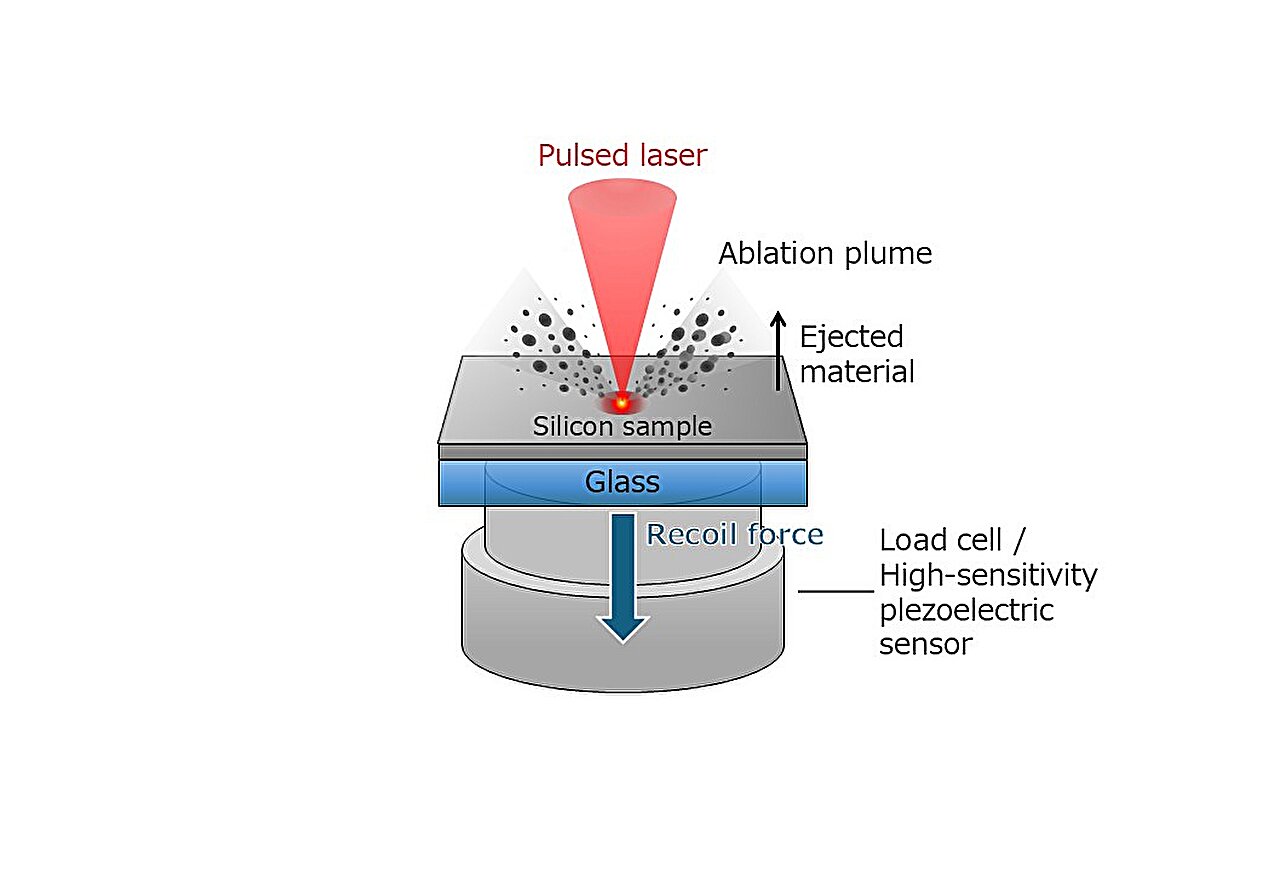
According to the university, existing ways to monitor processing depth are often too slow or too delicate for production-line use. The researchers instead measured recoil force, the small reaction force created when a laser pulse rapidly heats and vaporizes material at the surface.
How does recoil force measure laser cutting depth?
When vaporized material is ejected from the target, it pushes back on the sample with a force that can be recorded. Chiba University said that force changes in a predictable way as the laser focus, pulse energy and cut depth change, allowing researchers to infer the state of the process without stopping to inspect the wafer.
The research group included Masataka Sato and Sho Itoh of Chiba University's Graduate School of Science and Engineering, Mutsumi Horikoshi of KISTLER Japan GK, and Souta Matsusaka of Chiba University's Graduate School of Engineering.
In experiments on silicon samples, the team used a laser that generated 25-nanosecond pulses. A load cell, which converts mechanical force into an electrical measurement, recorded the recoil from each pulse as material left the sample.
Chiba University said the measurements rose predictably when pulse energy increased and fell when the laser focus moved away from the wafer surface. That pattern indicated a mathematical link between recoil force and the conditions of laser processing.
The researchers then used repeated laser pulses to drill deeper into a silicon wafer while measuring how the recoil signal changed. As the hole grew deeper, the force decreased in a steady pattern, and the signal changed noticeably when the laser fully penetrated the wafer, according to the university.
Hidai said direct measurement of recoil force let the team detect processing depth and penetration while observing laser processing conditions in real time. The university said the method identified the moment of full wafer penetration without physical inspection.
What did the researchers find?
Using their model, the researchers estimated processing depth with a relative error of 24.3%, according to Chiba University. The result showed that recoil force data can provide practical real-time information during laser machining, though the reported error also indicates room for improvement before tighter control is achieved.
Hidai said reducing underprocessing and overprocessing could lower the number of defective products, supporting steadier supply and lower costs for electronics used in smartphones, vehicles and medical equipment. Chiba University said the team sees the approach as a step toward laser systems that can assess cutting conditions and adjust them automatically during manufacturing.
This story draws on original reporting from Phys.org.