
Brief, intense UVB exposure caused extra DNA damage in tadpoles
A University of Queensland study found striped marsh frog tadpoles fared worse under short, strong UVB doses than longer, weaker exposure.
By Priya Raghavan · Science Reporter
3 min read
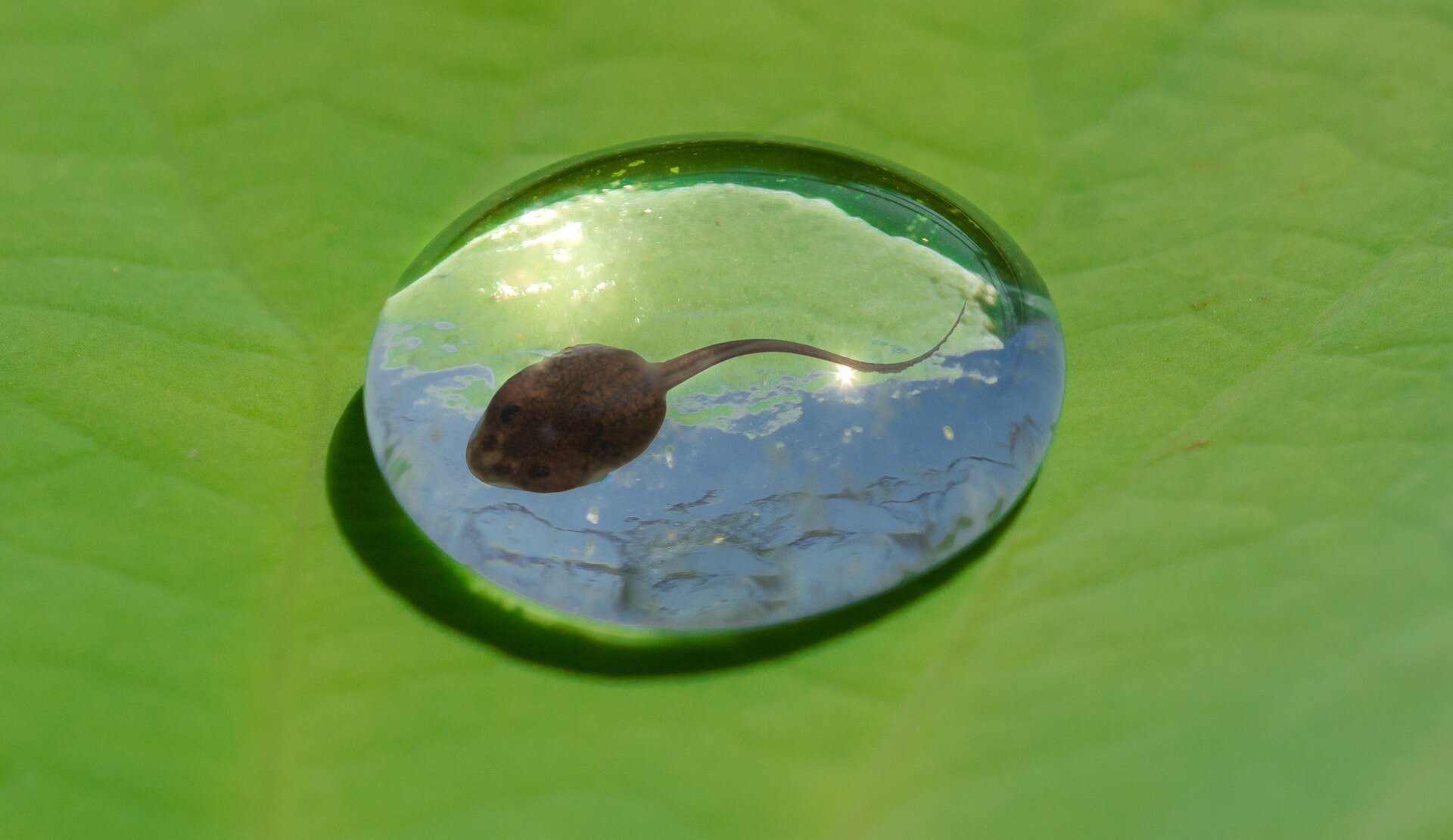
Short, intense ultraviolet-B exposure caused more DNA damage in striped marsh frog tadpoles than a weaker dose spread over more time, University of Queensland researchers report. The finding matters for aquatic larvae in sunlit shallow water, especially in parts of the Southern Hemisphere where depleted ozone allows more UVB to reach the surface.
Niclas Lundsgaard, Craig Franklin and Rebecca Cramp of the University of Queensland published the work in the Journal of Experimental Biology. According to The Company of Biologists, the study challenges the assumption that UVB damage depends only on total exposure.
That assumption would predict that a brief, strong dose and a longer, weaker dose should have the same effect if the total amount of radiation is equal. Lundsgaard and colleagues tested whether intensity itself changes the outcome.
How the experiment worked
The team collected newly laid striped marsh frog spawn from a creek in Brisbane and raised the tadpoles for five weeks in a laboratory without ultraviolet light, The Company of Biologists reported. The researchers then exposed different groups of tadpoles to UVB while keeping total exposure equal across treatments.
One group received a one-hour dose at 80 μW/cm2, a level described by the researchers as comparable to a clear pond. A second group received the same strong one-hour exposure and then another strong dose the next day.
Other tadpoles were exposed to 40 μW/cm2 for two hours, giving them the same total UVB dose over a longer period. A fourth group received that weaker two-hour exposure on two consecutive days.
Lundsgaard then measured DNA damage in the animals, according to the study summary from The Company of Biologists.
Intensity changed the result
The tadpoles exposed to the stronger UVB accumulated damage nearly three times faster than those given the weaker exposure, the researchers reported. By the end of the comparison, the high-intensity group had 47% more DNA damage than tadpoles that received the same total UVB dose at lower intensity.
The two-day results also showed added harm from strong exposure. Tadpoles that received the intense dose carried more than twice as much DNA damage into the second day as those exposed to weaker UVB, according to The Company of Biologists.
After two days of exposure, tadpoles had 20% more DNA damage than tadpoles exposed for only one day, the researchers reported. Lundsgaard also found that the smallest tadpoles had about 50% more DNA damage than larger siblings, a pattern the team said may be linked to greater surface area relative to body mass.
Possible implications for other species
The study focused on striped marsh frog tadpoles, so the researchers did not extend the findings to humans. Lundsgaard said frogs and people repair UV-related DNA damage through different mechanisms.
He did warn that other aquatic larvae, including fish and corals, could face similar problems if exposed more often to short, strong bursts of UVB. “The larvae of other aquatic animals might struggle with more frequent exposure to short, intense UVB,” Lundsgaard said.
Lundsgaard said the study shows that risk from sun exposure may not be captured by total radiation alone. For these tadpoles, how quickly the UVB arrived changed how much DNA damage built up.
This story draws on original reporting from Phys.org.