
Hermit crabs in cramped shells may slow growth by wasting nutrients
Tufts-led research suggests hermit crabs in undersized shells keep eating but convert less food into body mass.
By Priya Raghavan · Science Reporter
2 min read
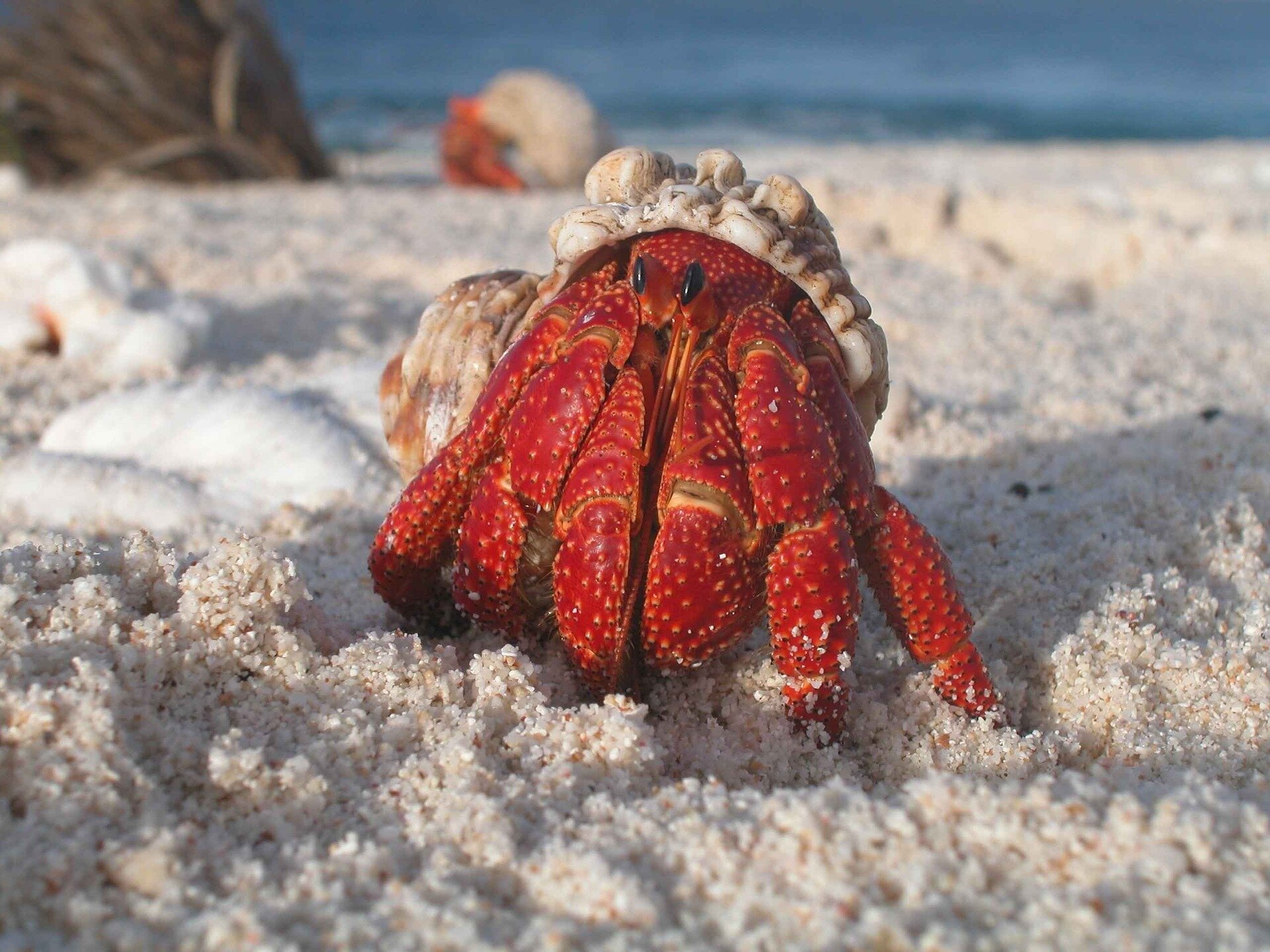
Hermit crabs living in shells that are too small appear to curb their growth by changing how they process food, according to research led by Tufts University. The finding helps explain a long-observed pattern in which crabs trapped in cramped borrowed shells grow more slowly.
The study, published in Invertebrate Biology, examined the long-clawed hermit crab, Pagurus longicarpus. Hermit crabs rely on empty snail shells for protection, and suitable shells can be scarce, according to Caitlin Ball, who led the work as a graduate student in Tufts’ Department of Biology.
Biologists had known for decades that a shell shortage can hold back hermit crab growth, Tufts reported. The open question was whether the animals slowed down because they ate less or because another part of their physiology changed.
To test that, the researchers compared crabs kept in properly sized shells with crabs placed in shells that were intentionally too small. They tracked feeding behavior and waste production to see whether shell fit changed intake or the fate of consumed food.
The crabs in undersized shells did not reduce how much they ate, according to the Tufts report. Instead, they produced waste more often, a result the researchers said is consistent with the animals eliminating more nutrients instead of using them to build tissue.
Phil Starks, a Tufts associate professor of biology and the study’s senior author, said the results support the idea that the animals adjust nutrient assimilation. In other words, shell size may influence how efficiently a crab turns food into growth.
The finding points to growth control as more than a matter of appetite, according to the researchers. Under a physical constraint such as a tight shell, an animal may alter internal processing of energy while continuing to consume food at a similar level.
Starks cautioned that the work should not be treated as a model for human metabolism or used to explain differences in human weight. He said the broader point is that, across animals, body mass can depend on nutrient absorption and use as well as food intake.
Jan Pechenik, a Tufts professor emeritus of biology and co-author of the paper, said the study addresses a question that had remained unresolved after years of observations. Researchers knew cramped shells were linked to slower growth, and the new work offers evidence for a possible mechanism.
The paper is titled “Small shells, slower growth: Experimental evidence consistent with nutrient elimination in Pagurus longicarpus.” Its authors are Caitlin E. Ball and colleagues, and it appears in Invertebrate Biology with DOI 10.71161/ivb.144.4.2025.00022.
This story draws on original reporting from Phys.org.