
Gut-targeting drug reverses MASH in animal tests
Michigan Medicine researchers say DT-109 repaired the gut barrier and eased severe fatty liver disease in mice and nonhuman primates.
By Lucas Ferreira · Science & Environment Writer
3 min read
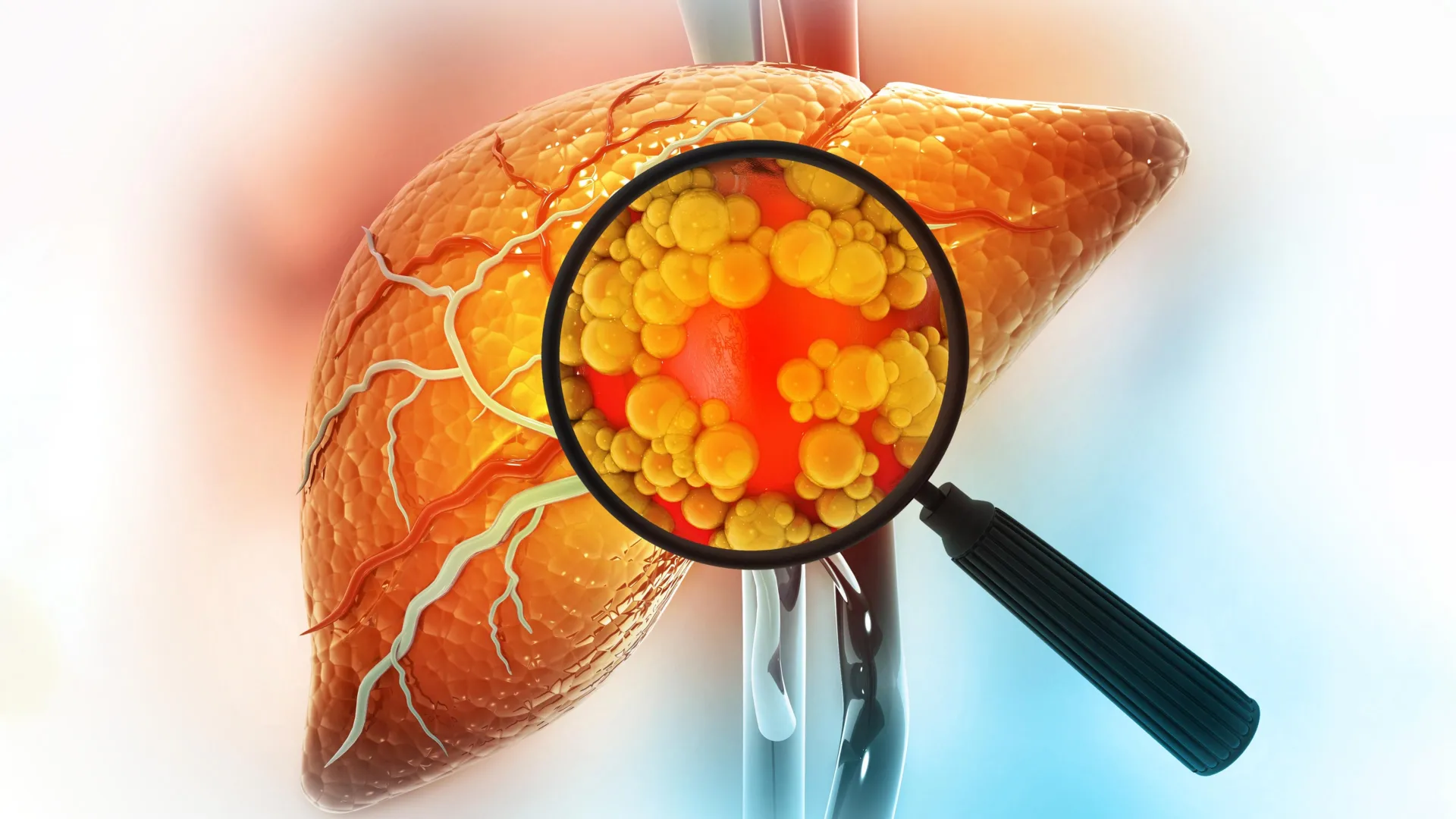
An experimental drug from Michigan Medicine reversed severe fatty liver disease in animal studies by acting on the gut, according to findings published in the Journal of Clinical Investigation. The work points to a possible treatment path for metabolic dysfunction-associated steatohepatitis, or MASH, a condition Michigan Medicine says has limited treatment options and can progress to cirrhosis, liver cancer and liver failure.
MASH affects about 7% of people worldwide, according to Michigan Medicine. The drug candidate, called DT-109, is a glycine-based tripeptide that researchers said worked by interrupting a harmful gut-liver process rather than by targeting the liver alone.
The research team reported that an overgrowth of Clostridium perfringens can increase ammonia production in the intestine. According to the study, high ammonia levels can injure the intestinal lining, weaken the gut barrier and allow microbial products to enter the bloodstream and reach the liver.
Michigan Medicine said that process can set off inflammatory immune activity in the liver, including excess activation of CD8+ T cells. In the animal experiments, researchers said DT-109 reduced Clostridium perfringens, lowered intestinal ammonia and strengthened the barrier that separates gut contents from the rest of the body.
Eugene Chen, senior author of the study and a professor of cardiovascular medicine at the University of Michigan Medical School, said the data showed DT-109 protected the gut epithelial barrier and reduced the flow of harmful microbial products thought to contribute to MASH. Chen said the compound showed gastrointestinal benefits and potential as a MASH treatment.
The team tested DT-109 in mice and nonhuman primates, according to Michigan Medicine. The researchers said results in nonhuman primates were encouraging because their liver biology and gut microbiota are closer to humans than those of mice.
In nonhuman primates, DT-109 reduced liver inflammation and produced a significant improvement in MASH severity, the researchers reported. Jifeng Zhang, a co-author and research professor of cardiovascular medicine at the University of Michigan Medical School, said the findings connected changes in gut microbes with liver protection through restoration of gut barrier integrity.
Michigan Medicine said prior work from Chen’s laboratory had shown DT-109 could improve MASH in animals. The new study was designed to explain the mechanism behind that effect, with a focus on ammonia, gut-barrier damage and the movement of pro-inflammatory microbial products along the gut-liver axis.
The researchers said DT-109 may have potential beyond fatty liver disease, though those uses remain investigational. Michigan Medicine said earlier studies found the compound reduced atherosclerosis plaque formation and prevented vascular calcification in nonhuman primates, suggesting possible relevance to cardiovascular disease.
The university also said gut-barrier breakdown has been linked to several digestive disorders, and the team believes DT-109 could later be studied for conditions such as inflammatory bowel disease. Future research will focus on additional testing needed before clinical trials can assess safety and effectiveness in people, according to Michigan Medicine.
The study lists Pengxiang Qu and colleagues as authors and was published under the title “Metabolic dysfunction–associated steatohepatitis exacerbated by Clostridium perfringens–derived ammonia is attenuated by tripeptide DT-109.” Michigan Medicine said Ying Zhao, Oren Rom, Jifeng Zhang and Y. Eugene Chen are inventors on a related patent application, and Chen is also an inventor of DT-109.
The University of Michigan has patented DT-109 and licensed it to Diapin Therapeutics, according to the university. Michigan Medicine said Chen and the university hold an ownership interest in Diapin, which supplied DT-109 for the study and is continuing to develop the compound.
This story draws on original reporting from ScienceDaily.