
Asian mantises are classified as invasive in Europe
Researchers say two fast-spreading Hierodula mantises are moving north, preying on native wildlife and adding pressure to European mantis populations.
By Tom Brennan · Health & Medicine Correspondent
3 min read
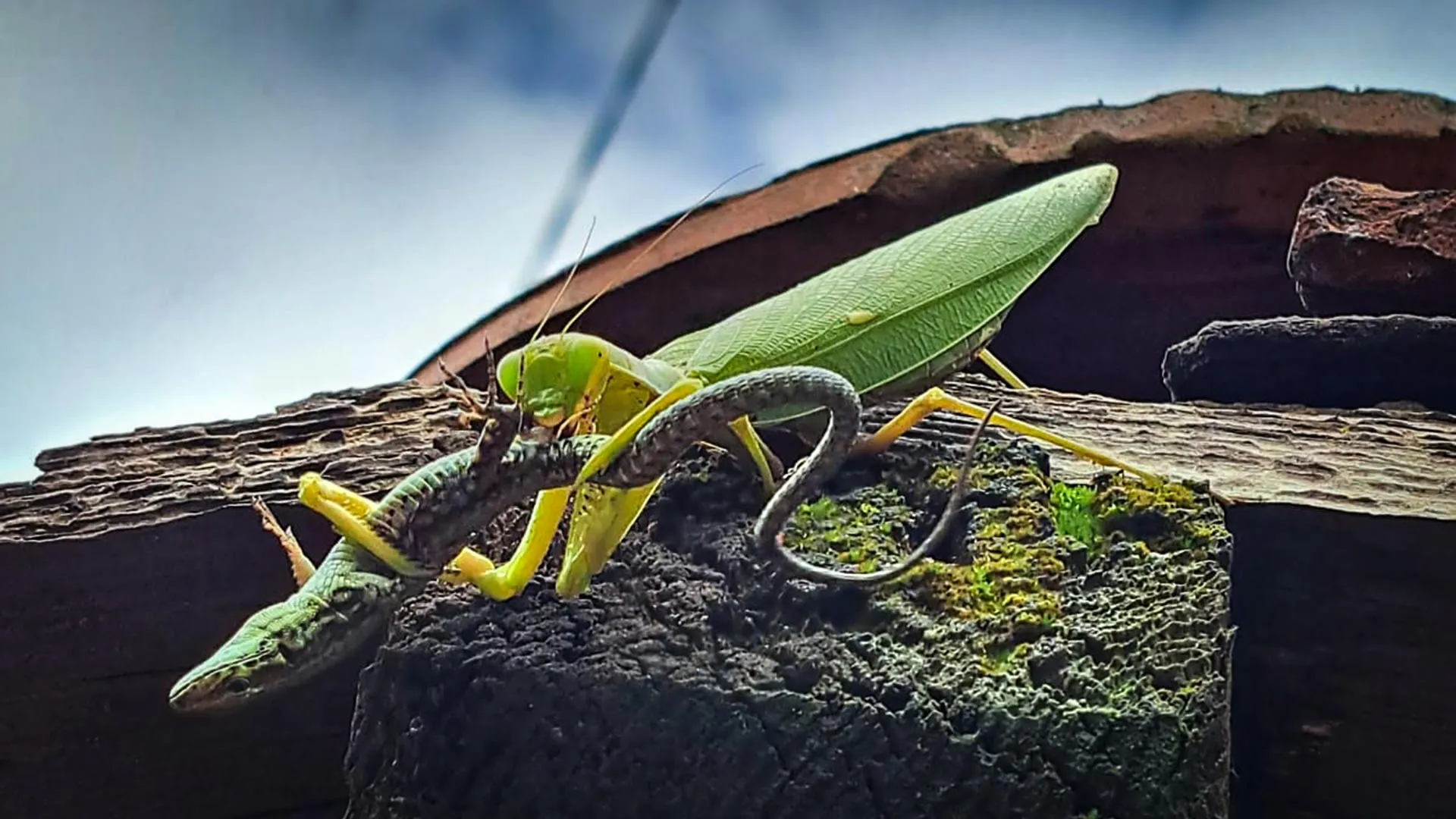
Two Asian praying mantis species spreading through Europe have been formally classified as invasive, according to a study in the Journal of Orthoptera Research. Researchers say the predators pose risks to native insects, pollinators and small vertebrates as warming conditions and urban areas help them establish new populations.
The study, led by Roberto Battiston of the Museum of Archaeology and Natural Sciences “G. Zannato,” examined the European spread and early ecological effects of Hierodula tenuidentata and Hierodula patellifera. Pensoft Publishers said the work gives the two Asian native species the status of Invasive Alien Species in Europe.
Battiston’s team reported that the mantises have been in Europe for about 10 years, with numbers rising sharply in recent years across Mediterranean and continental regions. Battiston said climate change is helping them move farther north, while members of the public are increasingly reporting established populations in parks and gardens.
Why the species are spreading
The researchers described both species as large, adaptable predators that often use trees and shrubs. Their reproduction gives them another advantage: each egg case produces about 200 young on average, nearly twice the output of the native European mantis, Mantis religiosa, according to the study summary.
The team also found that young nymphs are less prone to cannibalism than native mantises, which can allow more juveniles to survive. Together, those traits can help populations build quickly once the insects arrive in suitable habitat.
The study says the invaders can harm native mantises through mating interactions. Females of the Asian species attract male European mantises, which try to mate and are then eaten, reducing local native populations, according to the researchers.
Their diet is also broad. Pensoft Publishers said the mantises have been documented feeding on honeybees and other pollinators, as well as protected small vertebrates including tree frogs and lizards. A documented case of H. patellifera preying on a wall lizard was credited to Flavio Basilico.
Cities, cats and public reporting
Urban and suburban areas appear to aid the insects’ expansion, according to the study. The researchers said city heat can keep the mantises active later into colder seasons, while structures such as insect hotels can serve as productive hunting sites.
The study also identified domestic cats as the main recorded vertebrate predator of the invasive mantises, accounting for 45% of positive predation events. Battiston cautioned that free-roaming cats do not distinguish between invasive and native mantises, and can add pressure to European mantises already facing competition.
Researchers said the risks require particular attention on Mediterranean islands, where many invertebrates and vertebrates are endemic. Species with small ranges can be more vulnerable when a new generalist predator becomes established.
The project also relied on citizen science. Battiston said William Di Pietro and Antonio Fasano of GRIO helped collect more than 2,300 public reports, which the researchers said are useful for monitoring and public awareness.
The team said people can help by reporting sightings and, with expert guidance, looking for egg cases in winter, when leaves no longer hide them. Pensoft Publishers said the brown, spongy oothecae are about 2 to 3 centimeters long, but Battiston advised consulting specialists before removing any egg cases to avoid harming native species.
This story draws on original reporting from ScienceDaily.