
Great ape laughter study points to ancient roots of speech
University of Warwick researchers say laughter rhythms shared by living great apes may trace back 15 million years and help explain human vocal control.
By Priya Raghavan · Science Reporter
3 min read
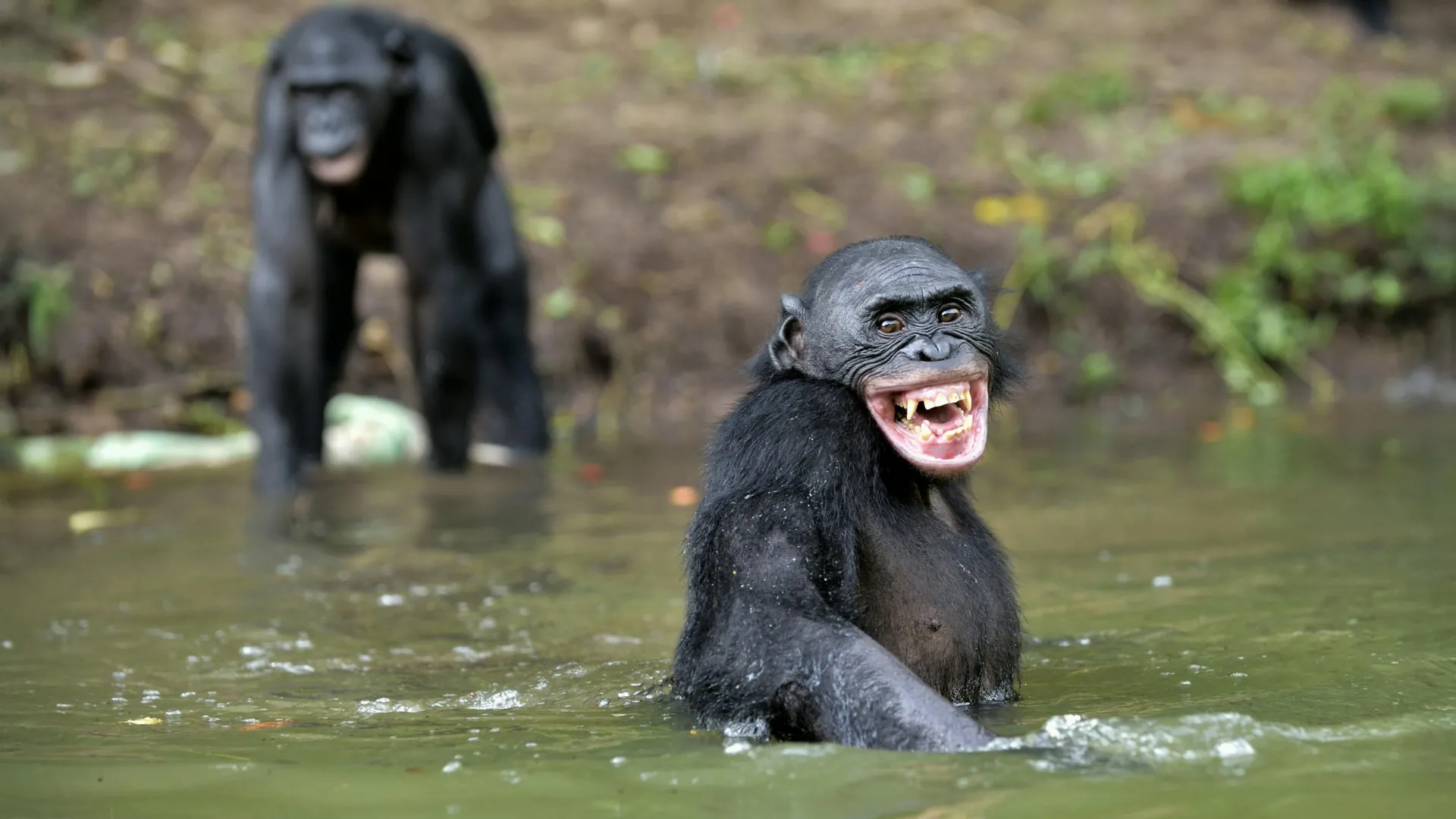
A shared rhythm in the laughter of humans and other great apes may preserve clues to how speech evolved, according to a University of Warwick study. The findings matter because spoken language leaves no fossil record, forcing researchers to look for older vocal behaviors that humans share with close primate relatives.
The study, published in Communications Biology, compared laughter in humans, chimpanzees, bonobos, gorillas and orangutans. Researchers analyzed 140 laughter sequences from four humans, four chimpanzees, three bonobos, two gorillas and four orangutans, the University of Warwick said.
Across the species studied, the team found that laughter sounds were separated by regular rhythmic intervals. The researchers said that common timing pattern likely reaches back to a shared ancestor of living great apes about 15 million years ago.
Human laughter changed, but its timing remained
University of Warwick researchers said human laughter differs from that of other great apes in speed, flexibility and social use. People can alter laughter depending on context, including laughter from tickling, a polite laugh in a formal setting, nervous laughter after an error or laughter that spreads through a group.
Despite those differences, the study found that human laughter still rests on the same basic rhythmic structure seen in other great apes. The researchers said that mix of continuity and change suggests vocal control evolved gradually rather than appearing suddenly in humans.
Chiara De Gregorio, an honorary research associate in the University of Warwick’s Department of Psychology and a study author, said the absence of speech fossils makes the origin of human language difficult to study directly. She said laughter offers an unusual comparison point because all living great apes produce it, allowing researchers to look for shared features across species.
According to the university, the study’s central finding is that the rhythm of laughter has remained stable while the human ability to control vocal timing became more adaptable. The authors argue that such increasing control may have helped lay the groundwork for speech.
A rare signal from before language
Researchers have long known that humans are not the only primates that laugh, the University of Warwick said. Chimpanzees, bonobos, gorillas and orangutans all make laughter-like vocalizations, but scientists have questioned how those sounds changed over evolutionary time and what they might reveal about language origins.
Adriano Lameira, an associate professor in the University of Warwick’s Department of Psychology and a study author, said laughter provides a rare window into vocal changes that occurred before the first humans appeared. He said the findings support the view that human vocal control developed along a continuum shared with other hominids.
The paper, by De Gregorio, Marina Davila-Ross and Lameira, is titled “Rhythm and timing in laughter reveal that human vocal plasticity falls on a hominid continuum.” It appears in Communications Biology, according to the journal reference released by the University of Warwick.
The researchers said the results do not show that laughter is speech. Rather, they point to laughter as an older vocal behavior that may preserve signs of the timing control later used in human language.
This story draws on original reporting from ScienceDaily.