
Graphene structure shows several superconducting states in MIT study
MIT researchers report that rhombohedral graphene can support multiple forms of superconductivity, including states strengthened by magnetic fields.
By Tom Brennan · Health & Medicine Correspondent
3 min read
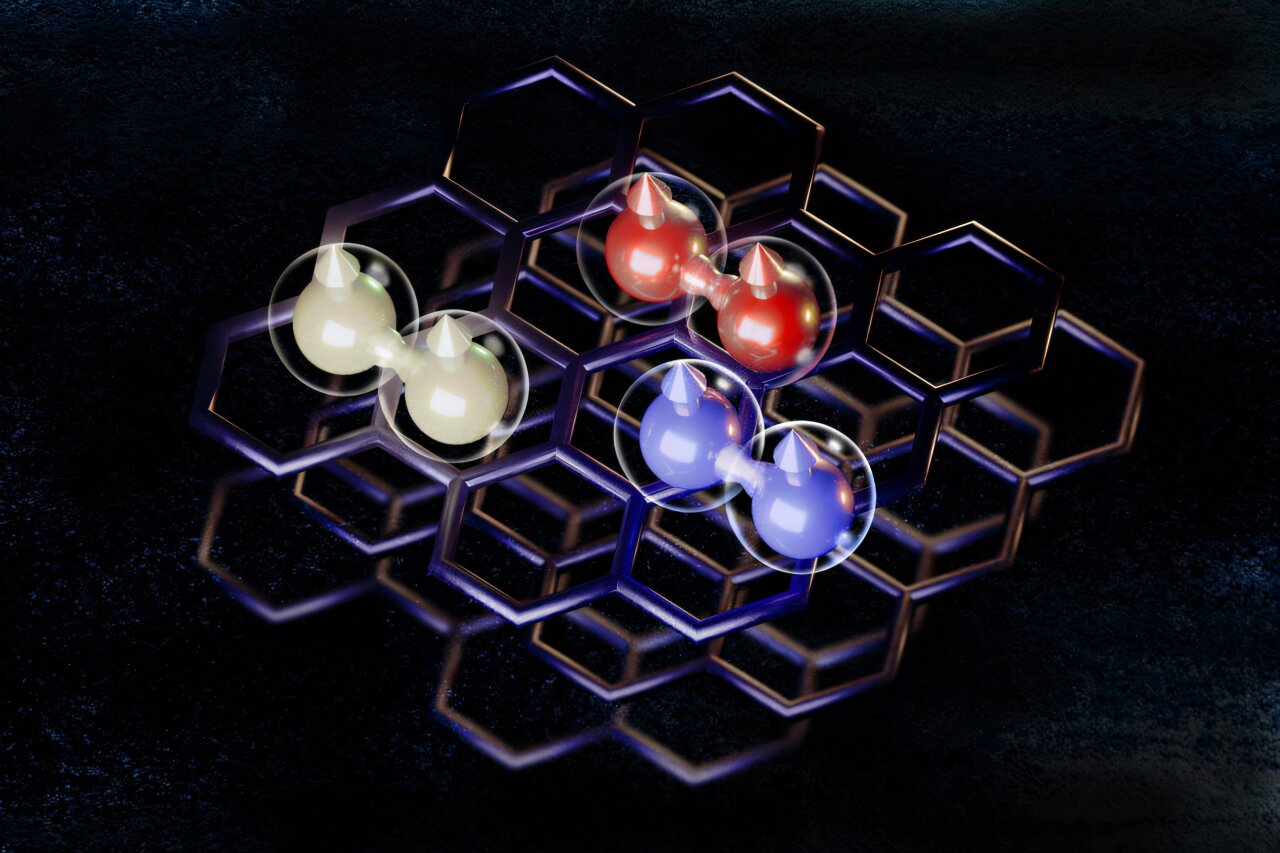
MIT researchers have found that a naturally occurring form of graphene can produce several distinct superconducting states, according to a study published in Nature. The result matters because superconductivity usually appears in one form within a material, and magnetic fields typically weaken or destroy it.
The work focused on rhombohedral graphene, a stacked arrangement of carbon sheets that can occur inside ordinary graphite, MIT said. In superconductors, paired electrons move through a material without electrical resistance.
Long Ju, an associate professor of physics at MIT and senior author of the study, said the findings show that carbon can behave in unexpected ways when researchers adjust experimental controls such as electrical voltage. “People might assume that this is a simple, boring carbon material,” Ju said, according to MIT.
Stacked graphene under test
Graphene is a one-atom-thick layer of carbon arranged in a lattice. The MIT-led team studied samples in which four or five graphene layers were stacked in a rhombohedral pattern, with each layer offset from the next in a stair-step arrangement.
MIT said researchers isolated the material by exfoliating graphite, commonly using adhesive tape, then searching for the desired structure. Ju’s group previously reported unusual behavior in rhombohedral graphene, including chiral superconductivity and fractional electron charge.
For the new study, the team changed how it tested the samples. Earlier experiments added electrons to the material while measuring for a drop in voltage that would signal resistance-free flow. This time, researchers removed electrons, lowering the electron density while applying current and measuring resistance, MIT said.
The experiments also placed the samples under magnetic fields in directions both parallel and perpendicular to the graphene plane. MIT said collaborators in Dominik Zumbuhl’s group at the University of Basel provided access to equipment for high magnetic fields and ultracold temperatures.
Magnetic fields did not end the effect
At certain electron densities, the researchers observed four superconducting states, according to MIT. Three of them remained present under a parallel magnetic field as high as about 9 tesla, roughly 180,000 times stronger than Earth’s magnetic field.
That behavior runs counter to the usual effect of magnetism on superconductivity. MIT said magnetic fields commonly break apart the electron pairs responsible for resistance-free current.
The team also found that a perpendicular magnetic field could strengthen superconductivity at one electron density. Ju said the transition temperature rose from 55 millikelvin to probably 90 millikelvin, and the material could carry about 50% to 60% more current before the superconducting state failed.
Researchers have not determined the microscopic mechanism behind the multiple states, MIT said. One possibility proposed by the team is that electrons in rhombohedral graphene may pair with aligned spins at certain electron densities, allowing a magnetic field to preserve the pairing rather than disrupt it.
Ju said the unexplained magnetic-field response gives theorists and experimentalists new material to examine. MIT identified the paper’s co-first authors as Junseok Seo and Shenyong Ye of MIT and Armel Cotten, with additional collaborators from the University of Basel, Florida State University, the University of Florida in Gainesville and Japan’s National Institute for Materials Science.
Seo, a graduate student in Ju’s group, said the work shows how researchers can use controls to alter carbon beyond its natural state while keeping it within the same material system, according to MIT.
This story draws on original reporting from Phys.org.