
French power outage hits thousands as heat records fall across Europe
A transformer incident left about 68,000 households without electricity as France and nearby countries faced dangerous heat.
By Priya Raghavan · Science Reporter
3 min read
A heat-related transformer incident knocked out electricity to about 68,000 households in France’s northwestern Finistere department on Wednesday, authorities said, as Europe endured a heat wave that has broken records and strained public services. AFP reported that France placed millions more people under its highest heat warning while countries from Italy to Hungary prepared for dangerous temperatures.
France’s national temperature indicator, which averages day and night readings from 30 weather stations, reached 29.8C on Tuesday, AFP reported. That was the highest reading since records for the indicator began in 1947.
Four additional French departments were moved into the top heat alert category Wednesday, bringing the number of people affected to about 44 million, according to AFP calculations. With 31 departments also under orange alert, more than 90% of France’s population was exposed to extreme heat, with forecasts of 39C to 41C from Brittany to the Paris region and across much of the southwest.
The Finistere outage began late Tuesday. Repair crews worked overnight, but authorities said full service was not expected back before the end of Wednesday at the earliest. AFP reported that as many as 106,000 French power network customers were without electricity late Tuesday.
Heat strains buildings and public life
Scientists say human-driven climate change has made heat waves longer, more common and more intense, AFP reported. Experts cited by AFP said the current heat is tied to atmospheric patterns that trap hot air for days, with global warming worsening the effect.
Demand for cooling equipment surged in France, where many homes and buildings were not built for sustained extreme heat. Carrefour chief executive Alexandre Bompard said the hypermarket chain had sold 30,000 fans and air conditioners by 6:30 p.m. Monday, calling that “a thousand times more than on a normal day.”
AFP reported that Amazon’s sales of cooling equipment in France nearly doubled last week compared with the same period in 2025, while Fnac Darty recorded double-digit growth. Thierry, an electrician in southwest France, told AFP he was receiving heavy demand for urgent air-conditioning installations, including from residents who did not want to wait for building association approvals.
In Bordeaux, 62-year-old retiree Martine Belloc told AFP it was difficult to live alone without air conditioning. She had gone to La ManuCo, a coworking site that opened its doors to older residents during the heat.
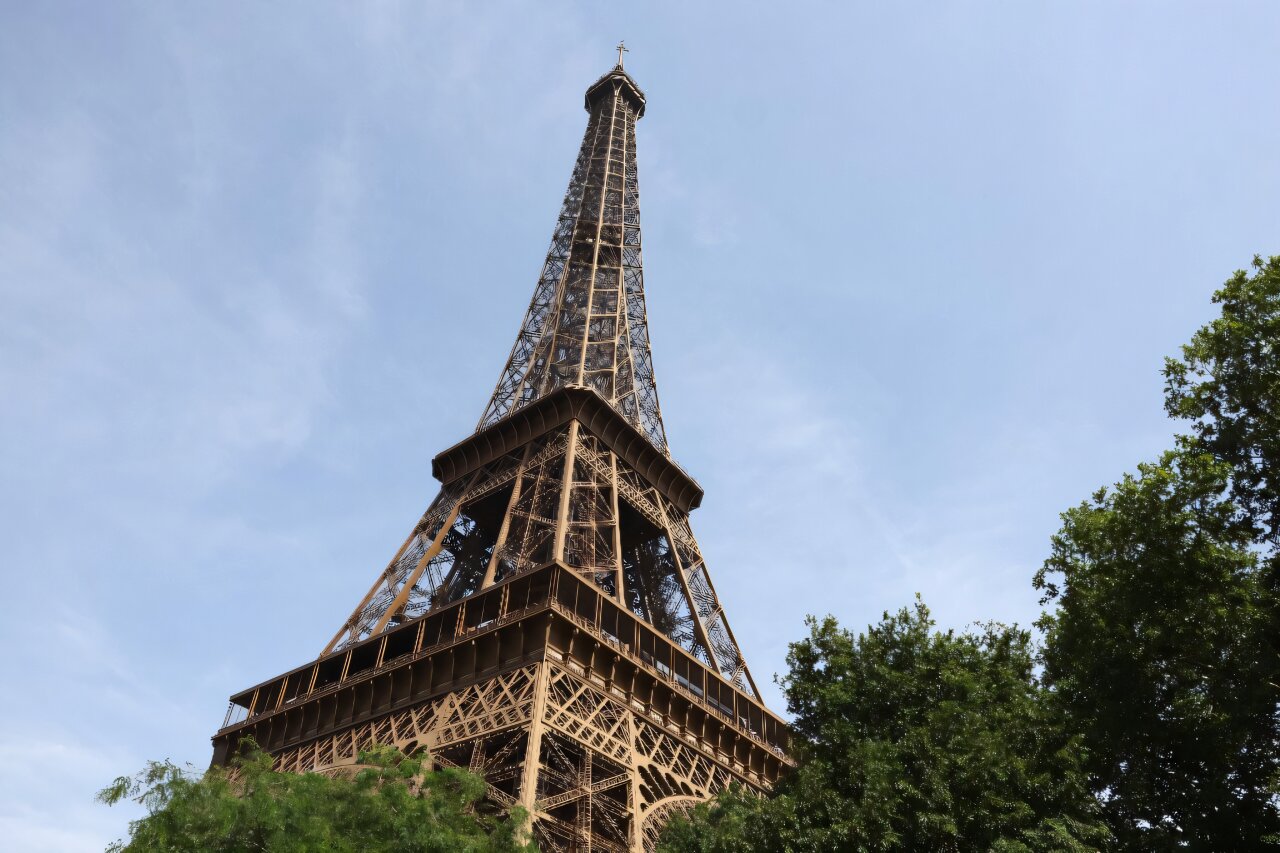
Tourism and transport were also affected. The Louvre Museum and the Eiffel Tower limited visiting hours in France, while Brussels’ Atomium said it would close earlier from Wednesday to Friday, AFP reported.
Warnings widen across Europe
Italy’s Health Ministry put 16 cities, including Rome and Milan, under red heat alerts Wednesday. Poland’s weather service issued high-level warnings for the west of the country from Thursday through Saturday and said temperatures could exceed the national record of 40.2C set in 1921.
Croatia placed its Adriatic coast under red alert for Friday and Saturday. Hungary, already at a second-level heat alert, said it would raise the warning to the maximum level from Saturday through Tuesday.
The Netherlands planned a code orange warning for the central and southern parts of the country from Wednesday until at least Friday. In Amsterdam, residents with a city pass were offered free swimming at six outdoor pools, while national rail company NS said it would reduce trains on some routes from Wednesday.
Britain’s schools were also adapting. James Bowen of the National Association of Head Teachers told AFP that nearly every school in the UK would have to adjust because of the heat, and said the school estate was not well prepared for such temperatures.
A scientific study published this week found that human-induced climate change significantly worsened the heat wave, AFP reported. The study said temperatures during the event would have been 2C to 4C cooler without that warming influence.
This story draws on original reporting from Phys.org.