
Four-winged dinosaur fossil may explain crushed bird bones in China
Researchers say Jian changmaensis, a newly named microraptor, may have hunted birds at a fossil-rich site in the Changma Basin.
By Priya Raghavan · Science Reporter
3 min read
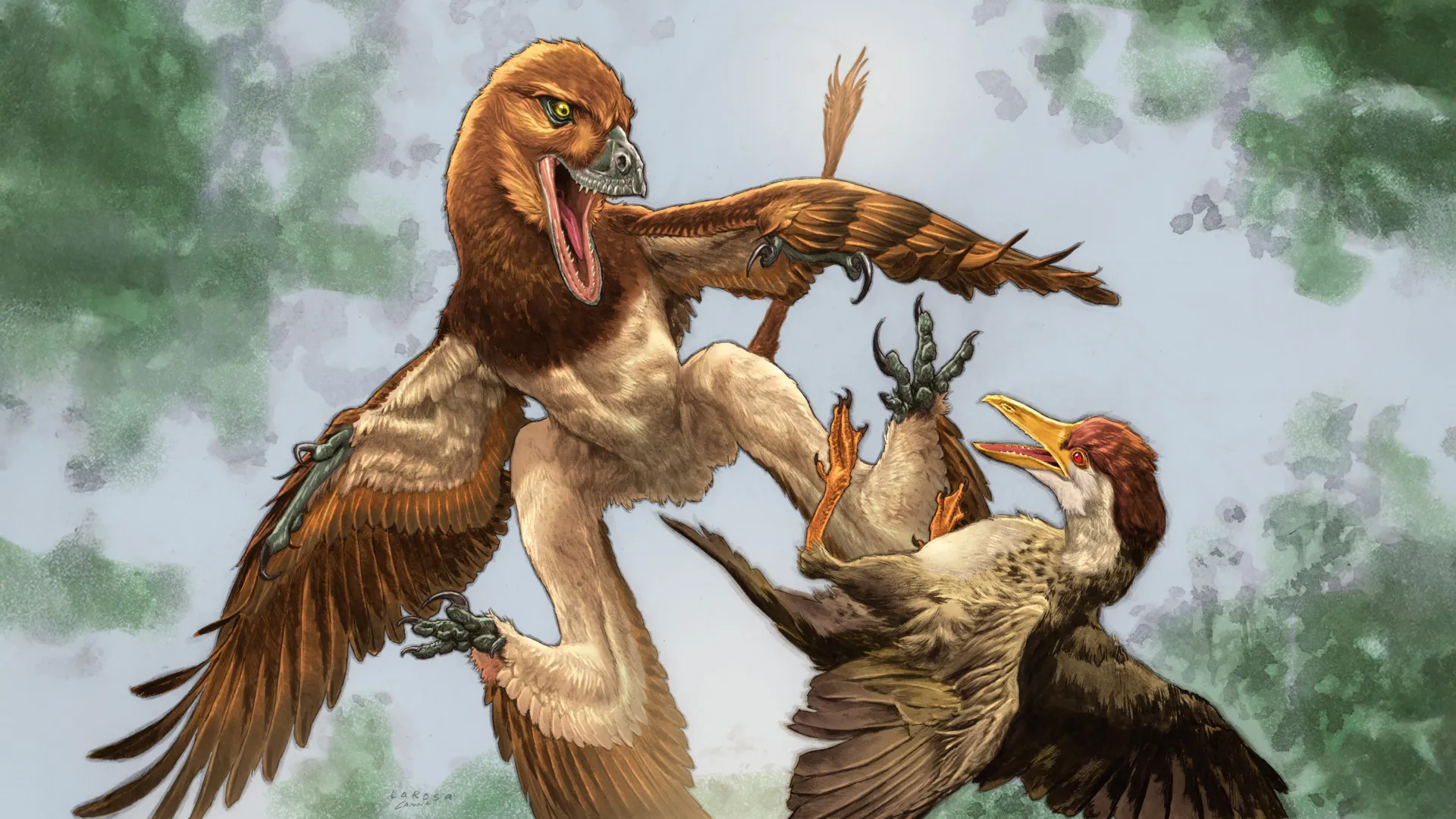
A newly described feathered dinosaur from northwestern China may solve a long-running puzzle at a fossil site packed with ancient bird remains. Researchers reporting in the Annals of Carnegie Museum say Jian changmaensis is the strongest candidate yet for the predator behind clusters of crushed bird bones found in the Changma Basin.
The Field Museum said the site has produced hundreds of prehistoric bird fossils, including broken bone masses that resemble pellets left by modern owls. Paleontologists had suspected a larger hunter was feeding on the birds, but the museum said no matching predator had been identified from the same deposits until now.
Jingmai O'Connor, associate curator of fossil reptiles at the Field Museum and senior author of the study, said the new dinosaur is the team's best explanation because it was carnivorous, larger than the other animals recovered there and the only non-bird dinosaur known from the site.
A raptor relative with four wings
According to the researchers, Jian changmaensis belonged to the dromaeosaurs, the feathered dinosaur group that includes Velociraptor. The new species was part of a smaller subgroup called microraptors, many of which were much smaller animals.
O'Connor said the known upper arm bone is about 4 inches long, making Jian one of the largest microraptor specimens found so far. The team estimates the animal may have had a wingspan of roughly 4 feet, comparable to a barn owl.
The researchers said only part of the animal's arm has been recovered, but its anatomy suggests it shared features seen in other microraptors. Those dinosaurs likely carried long feathers on both the forelimbs and hind limbs, giving them a four-winged appearance.
O'Connor said Jian and related microraptors probably could not fly with the powered wingbeats of modern birds. The Field Museum said the animals were more likely gliders, with a mode of movement compared by O'Connor to that of a flying squirrel.
Clues from a bird-rich fossil bed
The dinosaur's name links it to both appearance and place, according to the researchers. Jian refers to a winged creature in Chinese mythology, while changmaensis refers to the Changma Basin in Gansu province, where the fossil was found.
Matt Lamanna, corresponding author of the study and a dinosaur researcher at Carnegie Museum of Natural History, said the discovery shows non-avian dinosaurs lived in a region best known for fossil birds. Lamanna said the team has recovered more than 100 bird fossils at Changma but only one non-avian dinosaur specimen.
The Field Museum said the find helps fill out the ecology of the basin, where early birds and close dinosaur relatives lived together. A museum illustration accompanying the research depicts Jian attacking the early bird Gansus yumenensis in what is now northwestern China about 120 million years ago.
O'Connor said studying early birds and their non-bird dinosaur relatives helps researchers understand the origins of modern birds. The Field Museum noted that living birds are the only dinosaur lineage to survive after the asteroid impact 66 million years ago.
This story draws on original reporting from ScienceDaily.