
Fossil tube feet show how ancient sea lilies fed 452 million years ago
Rare soft-tissue fossils from Québec offer the oldest known evidence of crinoid tube feet and clues to ancient deep-water feeding.
By Priya Raghavan · Science Reporter
3 min read
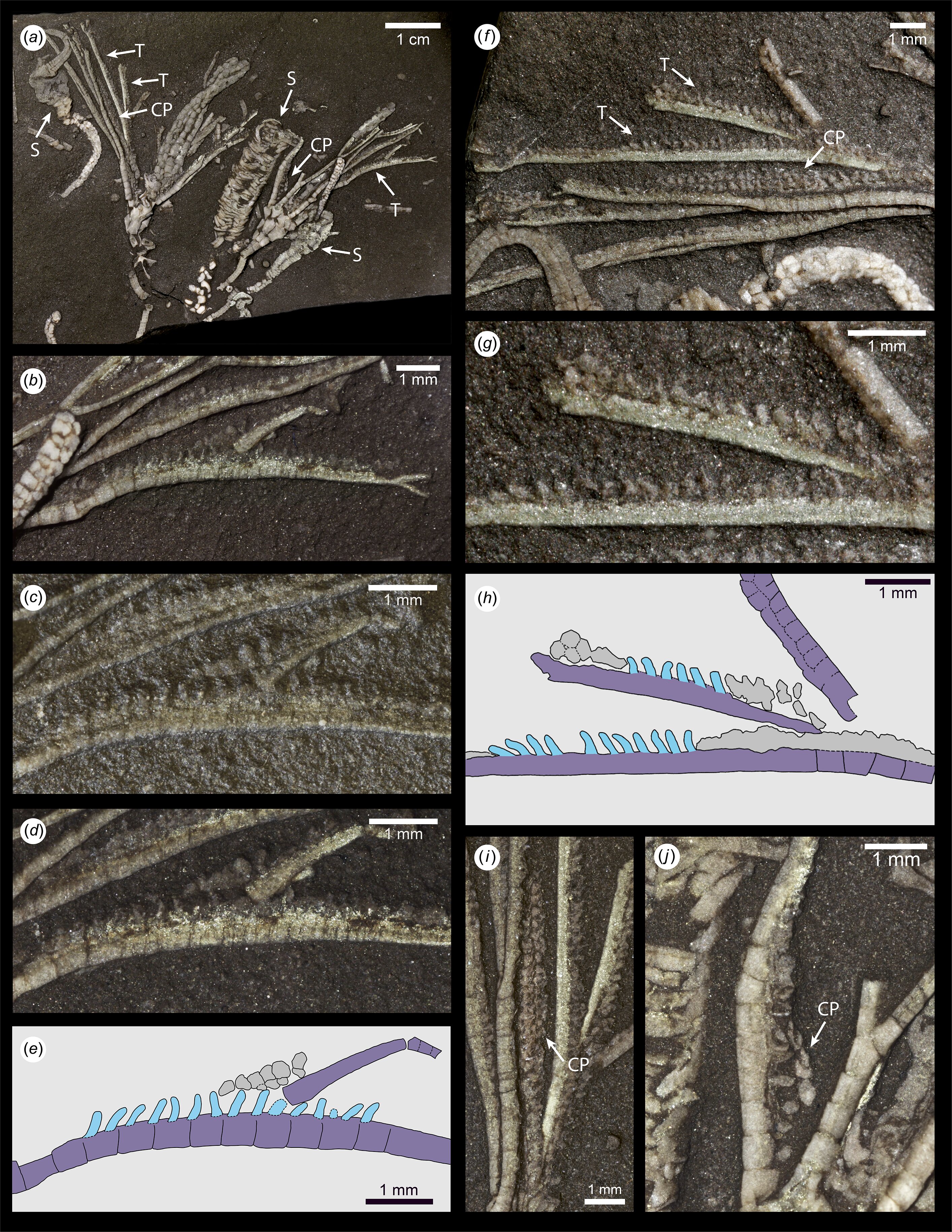
Researchers have identified the oldest known preserved tube feet in crinoids, pushing direct evidence of these soft structures back about 452 million years. The finding matters because tube feet help show how sea lilies fed, sensed their surroundings and lived, while most crinoid fossils preserve only hard skeletal pieces.
The study, by Selina R. Cole and colleagues and published in Royal Society Open Science, examined two museum specimens of the Ordovician sea lily Dendrocrinus simcoensis. The fossils came from the Saint-Joachim Quarry in the Neuville Lagerstätte in Québec, according to the researchers.
Rare soft tissue in an old animal group
Crinoids are echinoderms, the broader group that includes starfish and sea urchins. Living echinoderms use tube feet for movement, feeding, breathing and sensing, but those flexible structures rarely survive fossilization, the study authors said.
Crinoids have a fossil record reaching back roughly 485 million years, according to the study. Before this report, researchers had documented only one fossil crinoid with preserved tube feet, from the Devonian period, tens of millions of years younger than the Québec specimens.
Cole and colleagues said the newly described tube feet appear as thin films of pyrite. Their overall form resembles tube feet in living crinoids, but their size and spacing create a pattern not seen in modern species.
Short tube feet, wide spacing
The team measured about four tube feet per millimeter in D. simcoensis. Each arm plate was associated with two pairs of tube feet, and the tube feet averaged 0.41 millimeters in length.
That combination stands out against living crinoids, the researchers said. In modern species surveyed by the authors, average spacing generally falls between 4.59 and 9.49 tube feet per millimeter, while tube foot length ranges from about 0.45 millimeters to at least 2 millimeters.
The comparison with the only other known fossil crinoid tube feet is even sharper. That Devonian example has tube feet at least 7 millimeters long, with spacing of about 0.3 tube feet per millimeter, according to the study.
The authors also compared their measurements with spacing inferred from cover plates in other crinoid fossils lacking soft tissue. Those estimates range from 2.24 to 13.7 tube feet per millimeter, leading the team to conclude that fossil crinoids showed broader variation in tube foot size and spacing than living crinoids do.
Clues to feeding and habitat
The tube feet may also revise assumptions about how D. simcoensis held its arms while feeding. Cole and colleagues said the animal may have used a multidirectional or cone-like arrangement, rather than the fan posture often associated with stalked crinoids.
The study links tube foot spacing and length to water movement by comparing the fossil with living crinoids. The authors said modern crinoids with certain tube foot arrangements occupy different flow conditions, including exposed settings with stronger currents and more sheltered settings with slower, multidirectional flow.
On that basis, the researchers said D. simcoensis likely lived in a low-current, deep-water setting. They cautioned that the record remains sparse, but said each case of preserved tube feet can add evidence about the anatomy, ecology and evolution of ancient echinoderms.
The study is titled “Exceptional soft-tissue preservation reveals the oldest evidence for tube feet and their ecological significance in crinoids” and appears in Royal Society Open Science. The journal lists the DOI as 10.1098/rsos.260101.
This story draws on original reporting from Phys.org.