
Farm windbreaks may cut numbers of open-habitat birds
A Japan study found shelterbelts helped edge species but reduced grassland bird abundance by more than 70% near tree rows.
By Priya Raghavan · Science Reporter
3 min read
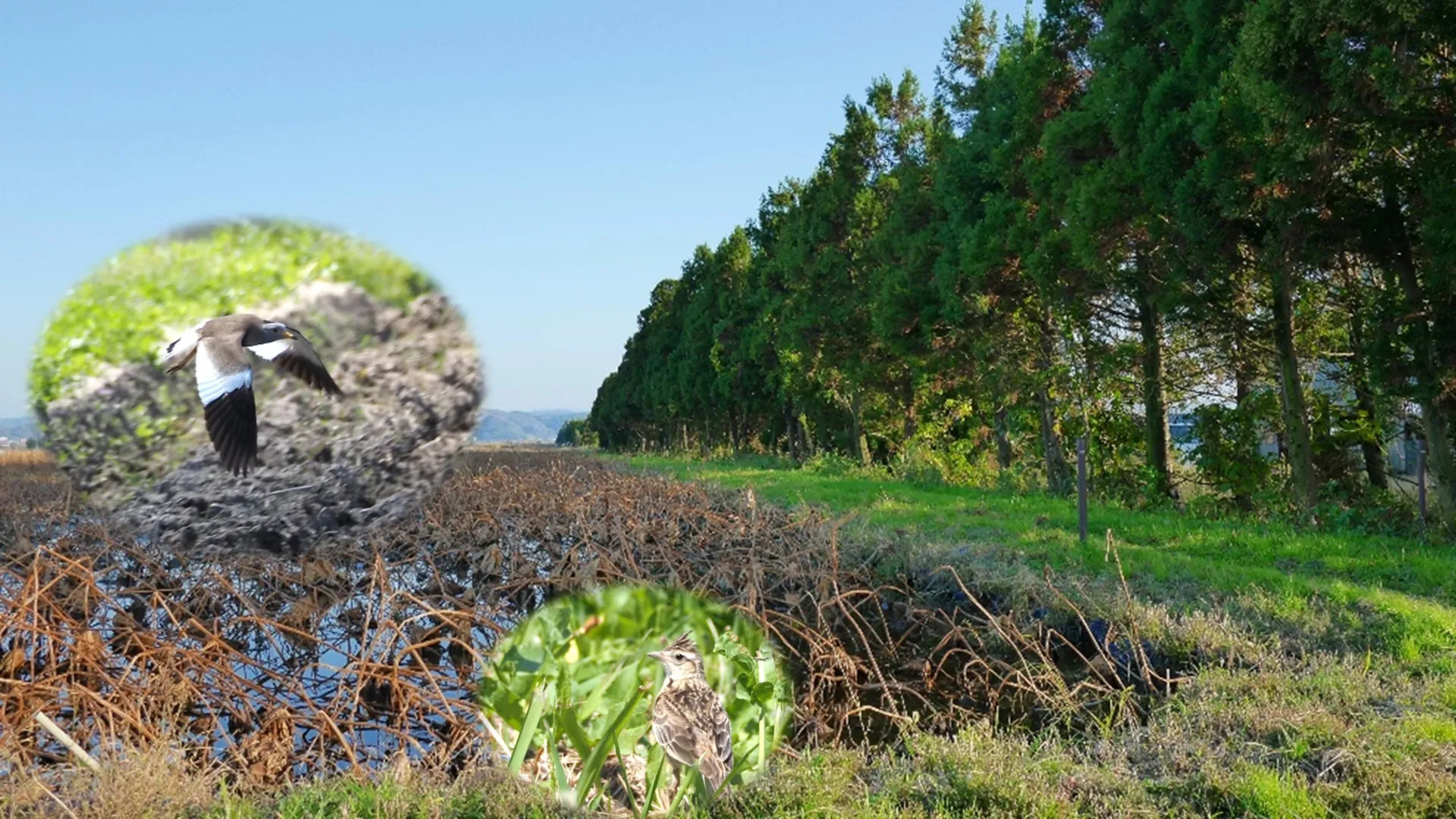
Rows of trees planted to shield farms from wind can leave some birds worse off, according to a new study from researchers including Hiroshima University scientists. The finding matters for conservation programs that treat tree planting as a broad biodiversity gain in farm country.
The study, published in the Journal of Environmental Management, examined shelterbelts in wet agricultural areas on the western coast of central Japan. Researchers found that the tree rows supported birds that use shrubs and habitat edges, while reducing the presence of species tied to open grassland and wetland areas.
Hiroshima University said grassland bird abundance was more than 70% lower at sites beside shelterbelts than at open sites about one kilometer away. The university said the results show that even narrow lines of trees can change which birds use a farm area.
Wet farmland as bird habitat
The research focused on farmland around Lake Kahokugata in central Japan, an area that includes rice paddies, lotus fields, cropland and pastureland, according to Hiroshima University. The region faces strong winter winds and storms, making shelterbelts a common way to protect fields.
Hiroshima University said Lake Kahokugata is also a stopover on the East Asian-Australasian Flyway. Nearly 300 bird species have been recorded in the area, and migratory birds use it across seasons, including wintering birds in colder months and breeding birds in summer.
The research team surveyed birds in February and March 2021 and again in June 2023, using point counts to measure abundance and diversity, according to the university. The team included researchers affiliated with Hiroshima University, the University of Tokyo, Kyoto University, the Fukui City Museum of Natural History, the University of British Columbia, Simon Fraser University, Nihonkai Eco Engineering Technologies, Zhenjiang A&F University and Nakano City Hall.
Tree rows bring trade-offs
Many farm conservation efforts encourage trees and hedgerows because woody features can provide habitat, Hiroshima University said. The researchers said much of the evidence for those benefits comes from cropland and grassland systems in Europe and North America, leaving less known about wet farming areas such as rice paddies, which are common in Asia.
Masumi Hisano, corresponding author and assistant professor at Hiroshima University’s Graduate School of Advanced Science and Engineering, said the study asked whether shelterbelts help all farmland birds in wet agricultural areas or create losses for open-habitat species. Hiroshima University said the answer was mixed: edge-associated birds gained habitat, while grassland birds and wetland specialists lost usable open space.
The researchers said shelterbelts may also affect birds indirectly by increasing exposure to predators, according to Hiroshima University. Hisano described the tree rows as acting like ecological barriers for some species.
Planning beyond planting
Hiroshima University said the findings do not show that trees are broadly good or bad for farmland biodiversity. Instead, the researchers said conservation planning needs to account for placement, design and the needs of species that depend on open space.
The team said future work should test how shelterbelt width, height, spacing, layout and tree species affect wildlife in different regions and seasons. The study was supported by the Kahokugata Lake Institute and the Japan Society for the Promotion of Science KAKENHI, according to Hiroshima University.
This story draws on original reporting from ScienceDaily.