
Experimental molecule helps brain immune cells target Alzheimer’s plaques
Researchers say OLE restored protective microglia activity and improved memory in worm and mouse models of Alzheimer’s disease.
By Priya Raghavan · Science Reporter
3 min read
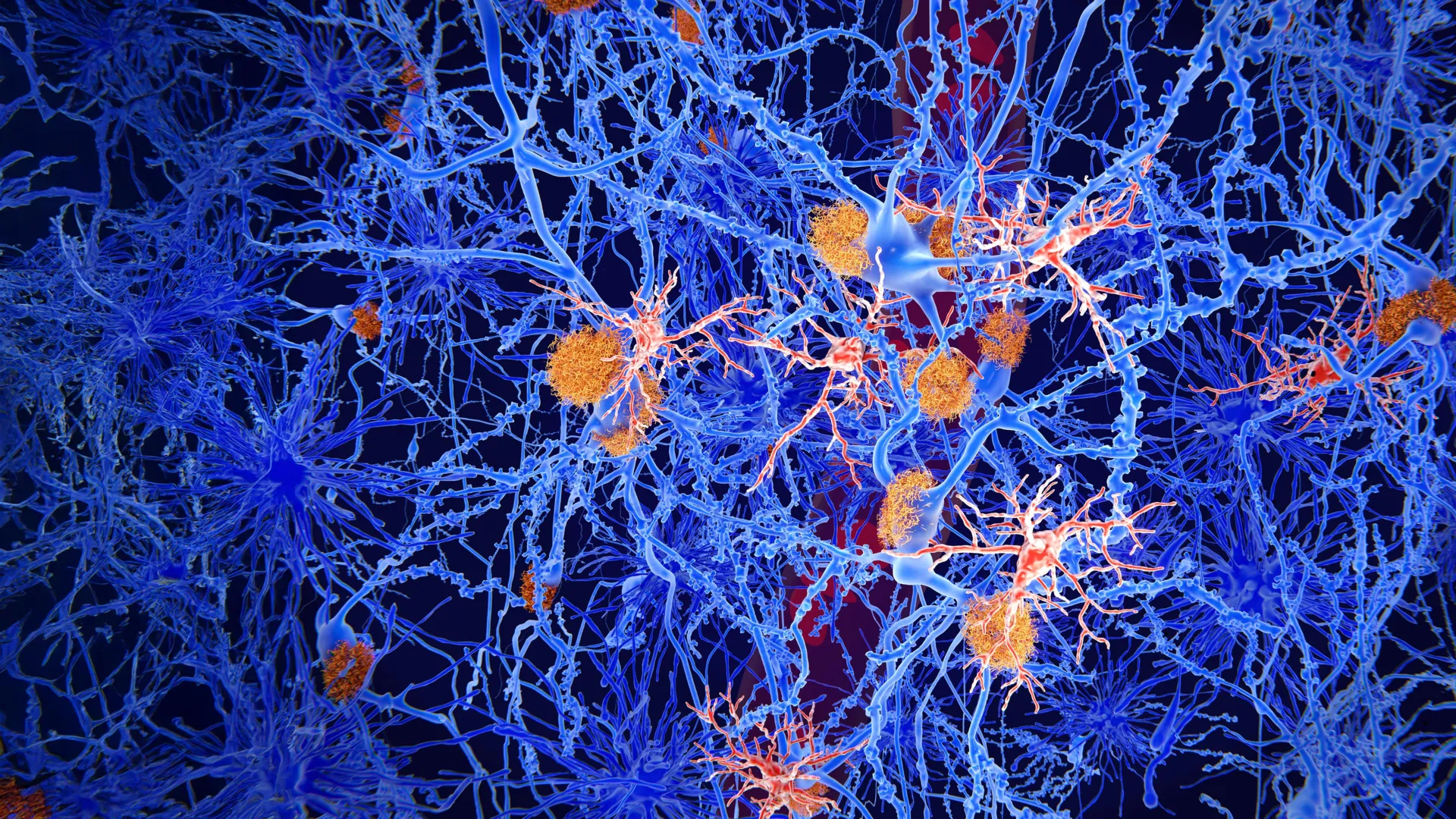
Researchers in Spain and Switzerland have identified an experimental molecule that helped brain immune cells respond more effectively to Alzheimer’s-related plaques in laboratory and animal studies. The work matters because it points to a possible treatment strategy aimed at restoring the brain’s own defenses, though the findings have not been tested in people.
The molecule, called OLE, was linked to the PM20D1 gene and appeared to change the behavior of microglia, the immune cells that help protect the brain, according to Universidad Miguel Hernández de Elche. The study was led by José Vicente Sánchez Mut of the Institute for Neurosciences, a joint center of the Spanish National Research Council and Miguel Hernández University of Elche, and Johannes Gräff of the École Polytechnique Fédérale de Lausanne.
The findings were published in Cell Death and Disease. The researchers reported that OLE helped microglia gather around beta-amyloid plaques, reduce their size and limit their damaging contact with neurons in Alzheimer’s disease models.
Microglia shifted toward a protective role
Beta-amyloid plaques are a defining feature of Alzheimer’s disease. Universidad Miguel Hernández de Elche said microglia normally help clear toxic deposits, but their protective activity weakens as the disease progresses and can become part of the damage affecting brain cells.
In the new study, OLE appeared to push microglia back toward a more useful state. After treatment, the cells moved toward beta-amyloid plaques and formed a barrier around them, which the researchers said reduced the harmful effect of plaques on nearby brain tissue.
Sánchez Mut said the study identified a molecule capable of restoring a protective function in microglia. He said the results suggest that the decline in these cells’ function in Alzheimer’s models can be reversed, opening new directions for research and possible therapies.
Tests used worms, mice and cell cultures
The researchers first tested OLE in genetically modified C. elegans worms that produce beta-amyloid. Universidad Miguel Hernández de Elche said the treatment reduced protein aggregates and improved movement in the worms, indicating a protective effect in that model.
The team then studied mouse models of Alzheimer’s disease. After three months of OLE treatment, the mice performed better on memory tests and had fewer beta-amyloid plaques than untreated mice, according to the university.
To examine the mechanism, the researchers analyzed thousands of individual brain cells. They found that microglia showed the strongest response to OLE, with activated pathways linked to beta-amyloid clearance and renewed movement toward plaques.
Victoria Pozzi, the study’s first author, said single-cell analysis showed that microglia were the cells most affected by the treatment. She said the compound helped those cells move toward plaques and better contain disease-related damage.
The team also tested the molecule in cell cultures. Universidad Miguel Hernández de Elche said OLE-treated microglia moved more effectively toward beta-amyloid deposits and helped remove them, while separate neuronal cultures exposed to Alzheimer’s-like conditions showed improved cell survival after OLE treatment.
Patents cover the findings
The findings are covered by two European patents, including one owned by the Spanish National Research Council, according to Universidad Miguel Hernández de Elche. The researchers said the patent coverage supports efforts to develop possible therapeutic uses from the discovery.
The study received support from research organizations in Spain, Switzerland, the European Union and Korea, including the Dementia Research Switzerland-Synapsis Foundation, the Pasqual Maragall Researchers Programme, the Spanish Ministry of Science, Innovation and Universities, the Swiss National Science Foundation, EPFL, the European Research Council and others.
This story draws on original reporting from ScienceDaily.