
European study sets out partial-reuse alternative to Starship
DLR researchers compared SpaceX’s Starship with a European RLV C5 concept that would trade full reuse for higher launch efficiency.
By Priya Raghavan · Science Reporter
4 min read
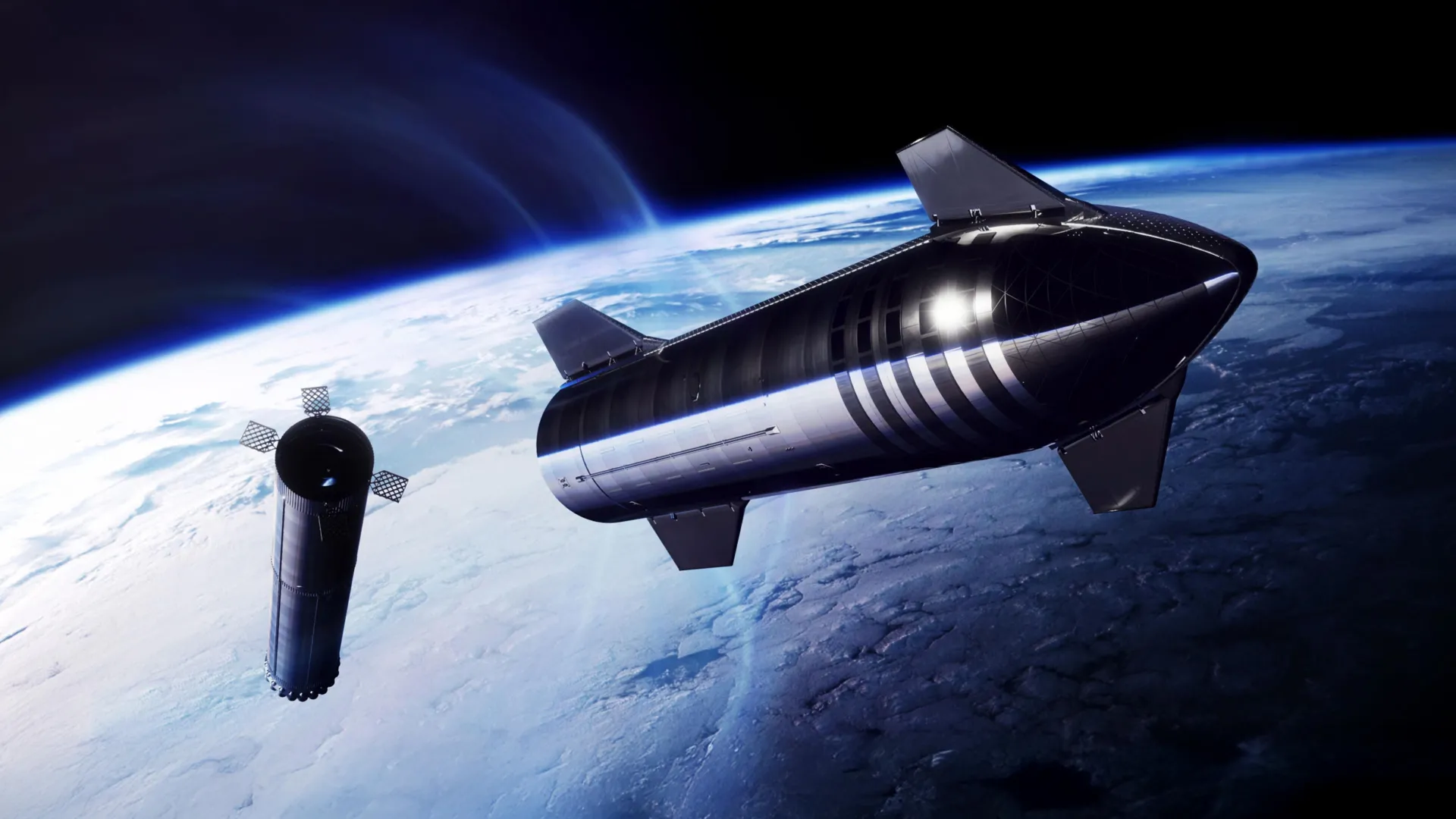
A German Aerospace Center study has laid out a European concept for a super-heavy rocket that would take a different route from SpaceX’s fully reusable Starship. The comparison matters because Starship’s flight tests have pushed governments and aerospace firms to consider how they might compete in lower-cost heavy launch.
The analysis, published in CEAS Space Journal by Moritz Herberhold, Leonid Bussler, Martin Sippel and Jascha Wilken, examined SpaceX’s Starship and a proposed European vehicle known as RLV C5. Universe Today reported that the study is one of the more detailed independent assessments of Starship’s performance so far.
Starship performance tested against public data
According to Universe Today, the DLR researchers did not base their work only on SpaceX’s stated specifications. They reconstructed performance data from public video of Starship’s first four integrated flight tests, using the footage to build and check their own models.
The study found that the current fully reusable Starship design could carry about 59 tonnes to low Earth orbit, Universe Today reported. That would put it in the same broad class as a Falcon Heavy flight in which none of the boosters are recovered.
The researchers also modeled a planned next-generation Starship with larger tanks and more powerful Raptor 3 engines. Their projection put its reusable payload to low Earth orbit at about 115 tonnes, or up to 188 tonnes if flown in an expendable configuration, according to Universe Today. That expendable figure would surpass the lift capacity of NASA’s Saturn V.
Starship has already reached several flight-test milestones. Universe Today noted that a Starship launch from the Texas coast in 2023 showed the vehicle could fly despite an imperfect mission, and that the fifth integrated flight test included the successful tower catch of the returning Super Heavy booster.
A winged European booster concept
The RLV C5 remains a proposal rather than a rocket in testing. The study describes it as a partially reusable system that would combine a reusable winged booster, derived from DLR’s SpaceLiner work, with an expendable upper stage.
Unlike Starship, the European concept would use liquid hydrogen and liquid oxygen, which the researchers identified as a more efficient propellant combination than Starship’s methane-and-oxygen system. Its booster would not land vertically under rocket power. After reentry, it would glide on wings and be captured in midair by a large subsonic aircraft, according to Universe Today’s account of the study.
The researchers said that approach could reduce the fuel penalty associated with landing. Because RLV C5 would not need to hold back propellant for a powered landing burn, more of its fuel could support ascent.
Different trade-offs for heavy launch
The study frames the two vehicles as answers to different engineering and policy goals. Starship aims for very high payload capacity and full reuse, making it suitable for missions such as lunar bases, Mars flights and large satellite constellations, Universe Today reported.
RLV C5 would offer less total lift, but the researchers found it would use its orbital mass more efficiently. According to the study, about 40% of the mass Starship places into orbit is useful payload, compared with about 74% for the partially reusable European concept.
Starship also carries penalties tied to full reuse, including thermal protection, landing propellant and stronger structures, the researchers found. Universe Today reported that Starship’s liftoff mass is more than three times that of the proposed RLV C5.
The study also points to the gap between flight hardware and a concept. Starship is already in testing but still faces major technical issues, including thermal protection damage during its fourth integrated flight test that required design changes, according to Universe Today. RLV C5 would need years of development before it could become an operational launch vehicle.
Herberhold and his co-authors concluded that RLV C5 could give Europe a way to build an independent partially reusable super-heavy launch capability. Their comparison suggests Europe may not need to copy Starship’s full-reuse model at the first step to pursue lower-cost heavy launch.
This story draws on original reporting from ScienceDaily.