
Practice may rewire the brain to handle learned tasks in parallel
Georgetown researchers say extensive training can move some tasks into specialized brain circuits, freeing executive regions for other work.
By Priya Raghavan · Science Reporter
3 min read
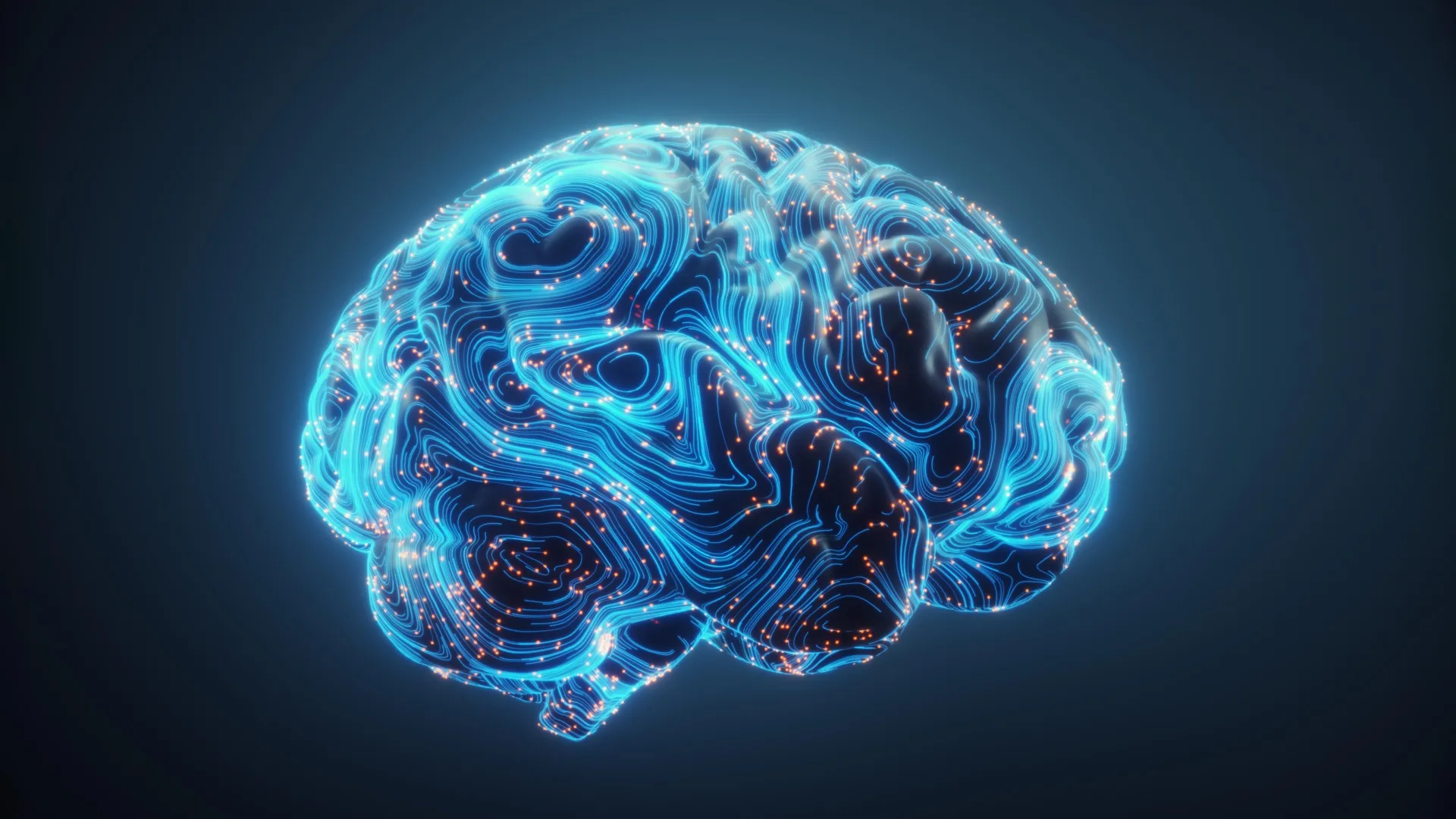
Extensive practice may change the brain’s wiring so a learned task can run with less help from executive-control regions, according to researchers at Georgetown University Medical Center. The finding matters because it challenges the common view that people only appear to multitask by switching attention quickly between jobs.
The study, published in the Journal of Cognitive Neuroscience, found that a heavily practiced visual categorization task shifted from the prefrontal cortex to the temporal cortex. Georgetown said that shift was linked to better performance when participants had to do another task at the same time.
How the study tested learning
Researchers led by Maximilian Riesenhuber, a neuroscience professor at Georgetown University School of Medicine, trained volunteers to sort morphed car images into two groups based on small visual differences. Participants completed more than 30,000 trials over five to 10 weeks using a smartphone app built as a game, according to Georgetown.
The team scanned participants’ brains with fMRI and EEG before training and after the practice period. Early on, Georgetown said, the task relied heavily on the prefrontal cortex, a region involved in planning, reasoning and conscious decisions.
After training, the same task drew more on the temporal cortex, which is involved in memory and complex object recognition. Patrick Cox, the study’s first author and now an assistant professor of psychology at Lehigh University, said the longitudinal design let the researchers compare the brain before and after training rather than studying experts only after they had become skilled.
A possible route around a bottleneck
The researchers said the trained car-sorting task appeared to create a specialized area in the temporal lobe that was not present before practice. They also reported that information from that area could reach response-related brain regions without relying as much on the prefrontal cortex.
Riesenhuber described the prefrontal cortex as a limited-capacity control center. Georgetown said that when training moved more of the task away from that region, participants became better at performing a second task alongside the sorting work.
The authors say the results support the idea that some trained behaviors can become automatic enough to run in parallel with other mental activity. Riesenhuber said the study shows brain circuitry can change in a way that permits two tasks to proceed at once.
Limits and possible uses
Georgetown said the work may help explain how experts perform familiar judgments with little deliberation. Cox cited radiologists who, after years of training, can often classify masses on X-rays as benign or malignant with limited conscious analysis.
The researchers also said the findings could inform the study of habits and compulsive behaviors. Riesenhuber said behaviors that have moved into less consciously controlled circuits may be hard to stop through advice that asks people to think about something else.
The team said the work may also be relevant to artificial intelligence research because humans can continue adding skills while preserving older ones. Georgetown said current AI systems often struggle to learn continuously without disrupting earlier knowledge.
The researchers plan to study what signals move learned tasks from one brain region to another and which tasks can become compatible enough to perform in parallel. Cox said walking and chewing gum can share attention, while texting while driving remains unsafe because looking at a phone takes the driver’s eyes off the road.
The study was written by Cox, Clara A. Scholl, Marissa L. Laws, Nelson E. Jaimes, Xiong Jiang and Riesenhuber. Georgetown said the work was supported by the National Science Foundation, the ARCS Foundation and the Army Research Laboratory, and that the authors reported no related personal financial interests.
This story draws on original reporting from ScienceDaily.