
East Coast broccoli expansion may reduce drought exposure
A Cornell-led model finds shifting some broccoli production east could trim costs and transportation distances during severe West Coast drought.
By Priya Raghavan · Science Reporter
3 min read
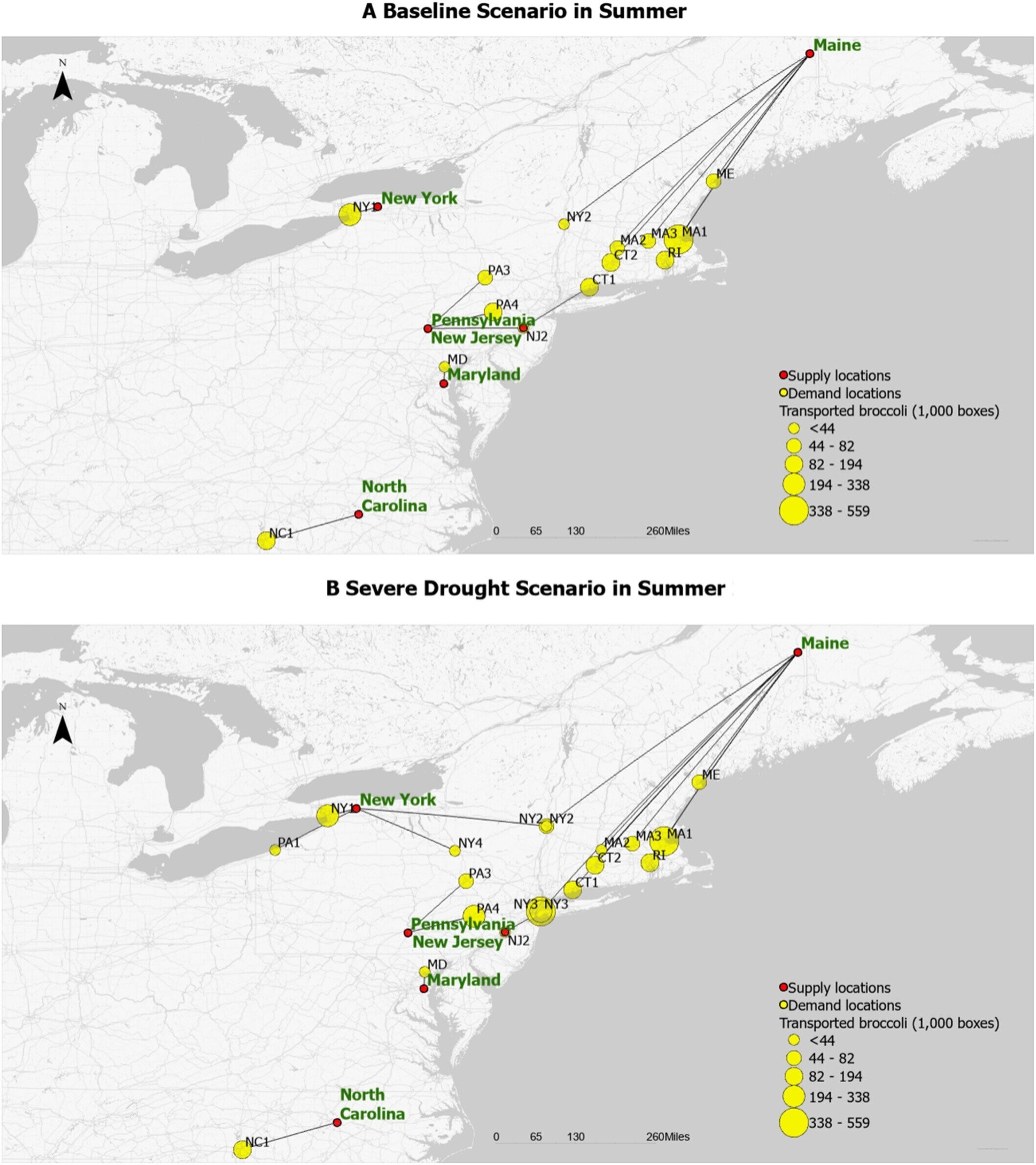
Expanding broccoli production along the East Coast could modestly lower supply-chain costs and reduce dependence on drought-prone California, according to a Cornell University-led study. The finding matters because California remains the nation’s leading broccoli producer while water scarcity in the West has become a growing risk for fresh produce shipments, researcher Bingyan Dai said.
The study, published in Agribusiness, used the U.S. broccoli market to test how fresh produce supply chains might be redesigned when drought disrupts production in the West. Dai, the paper’s first author and a doctoral student at Cornell, said the model could apply to other crops that face similar risks when production is concentrated in one state.
The model examined where broccoli production could expand across 10 Eastern states and measured effects on costs, market share and shipping distances, according to Cornell. It considered supply to East Coast markets from California, Arizona, Canada, Mexico and the East Coast, along with production and transportation costs, Dai said.
Under severe drought conditions, the paper found that shifting some production from California to the East Coast would reduce annual supply-chain costs by 1.5% and cut transport distances for the Eastern market by about 20%. The model also assessed moderate drought conditions and was designed to minimize total industry costs for the Eastern market, Cornell said.
Miguel Gómez, a co-author and the Robin G. Tobin Professor of Food Marketing in Cornell’s Charles H. Dyson School of Applied Economics and Management, said the work shows the industry can remain competitive while moving some production away from California in response to drought-related shipping pressures.
A seasonal system from Florida to Maine
The study also found that East Coast production has to be carefully timed across regions to provide a consistent supply, according to Cornell. The East Coast broccoli industry spans states from Maine to Florida, each with a different growing window.
Florida and Georgia produce broccoli in winter, and production moves to South Carolina by February before continuing north as the season advances, according to the model described by Cornell. Maine has a short growing season and a late-summer harvest.
Gómez said that northward sequence is what allows the East Coast to support a year-round regional supply system. The model identified the best production locations by time of year, rather than treating the region as a single growing zone.
The work builds on the East Coast Broccoli Project, which Cornell said Thomas Björkman, professor emeritus of horticulture at Cornell AgriTech, started in 2010. The project has helped create a $120 million industry by developing locally adapted broccoli varieties, recruiting growers and building networks among farms, packers, distributors and retailers, according to Cornell.
Those new varieties were needed because consumers expect uniform broccoli heads, Cornell said. The project included Gómez as an original team member.
Gómez said production from California and Texas would not be replaced, but an Eastern industry can diversify where fresh broccoli comes from. Dai said the approach can lower risk and cost across the supply chain.
This story draws on original reporting from Phys.org.