
Early black holes spotted by JWST may be lighter than they look
A new model suggests some distant black holes may appear overgrown because they are feeding at extreme rates while giving off weak X-rays.
By Tom Brennan · Health & Medicine Correspondent
3 min read
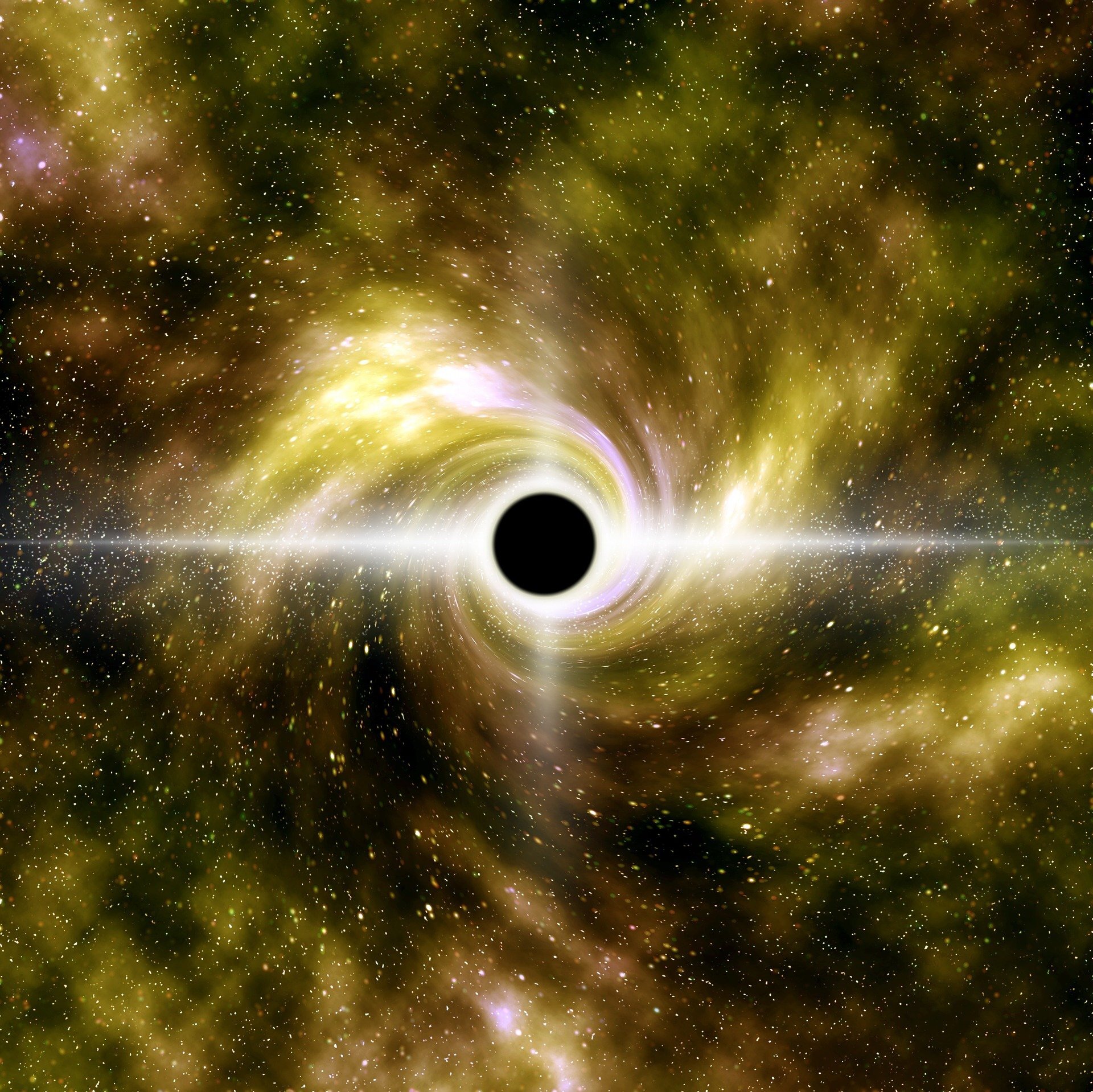
Some early-universe black holes identified with the James Webb Space Telescope may not be as massive as standard estimates suggest. A study in Astronomy & Astrophysics says extreme feeding could make smaller black holes resemble much larger ones while also explaining why they are faint in X-rays.
The paper, published June 19 and led by Alessandro Trinca of the INAF Astronomical Observatory of Rome, examined 14 distant active galactic nuclei that had previously been described as unusually X-ray quiet. The objects are part of a broader JWST puzzle: black holes seen within the universe’s first billion years can look too heavy for their host galaxies when astronomers use familiar mass-measuring methods.
Why the masses looked strange
Astronomers estimate black hole mass by studying gas moving near the object. That gas leaves spectral signatures, and faster motion points to stronger gravity, which is usually read as evidence for a more massive black hole.
Phys.org reported that this approach has worked well for nearby black holes over many years. Applied to early JWST discoveries, however, it can produce black hole masses that sit far above the relationships seen between black holes and galaxies in the local universe.
The same group of objects poses another problem, according to the study. Many are not detected in X-rays, even though actively feeding black holes often have a very hot region above the disk, known as a corona, that produces X-ray emission.
A fast-feeding explanation
Trinca’s team tested whether both issues could come from super-Eddington accretion. That term describes a black hole taking in matter faster than the theoretical rate at which its radiation should be able to push incoming gas away.
According to the researchers, such fast feeding could weaken the X-ray signal and change the emission lines used to infer mass. The team combined super-Eddington physics with a detailed model of an accretion disk spectrum, then applied that framework to the 14 X-ray-quiet objects.
The analysis found that each object could fit two broad interpretations. One possibility is that the black holes are very large but barely feeding, which would leave them dim across much of the electromagnetic spectrum. The other is that they are smaller black holes consuming material at extreme rates, with weak X-rays emerging as part of that behavior.
When the team compared the statistical likelihood of the two options, the fast-feeding, lower-mass explanation was favored for nearly all of the 14 objects, according to the paper. The researchers also said the dormant giant explanation was less plausible on physical grounds.
What still needs testing
The authors cautioned that their model assumes the X-rays are not being hidden by extremely dense gas. They said thick columns of gas could also absorb X-ray emission from an active galactic nucleus, and that possibility was not included in their calculations.
The researchers said future observations across multiple wavelengths, along with more detailed spectral measurements, should improve estimates of both black hole mass and feeding rate. If the model is supported, it would reduce pressure on theories of early black hole growth by showing that rapidly feeding black holes can imitate heavier ones.
This story draws on original reporting from Phys.org.