
Deep soil carbon shifts permafrost emissions timeline earlier
A Science Advances study finds northern permafrost could become a net CO2 source around the 2050s when deep carbon stores are modeled.
By Priya Raghavan · Science Reporter
3 min read
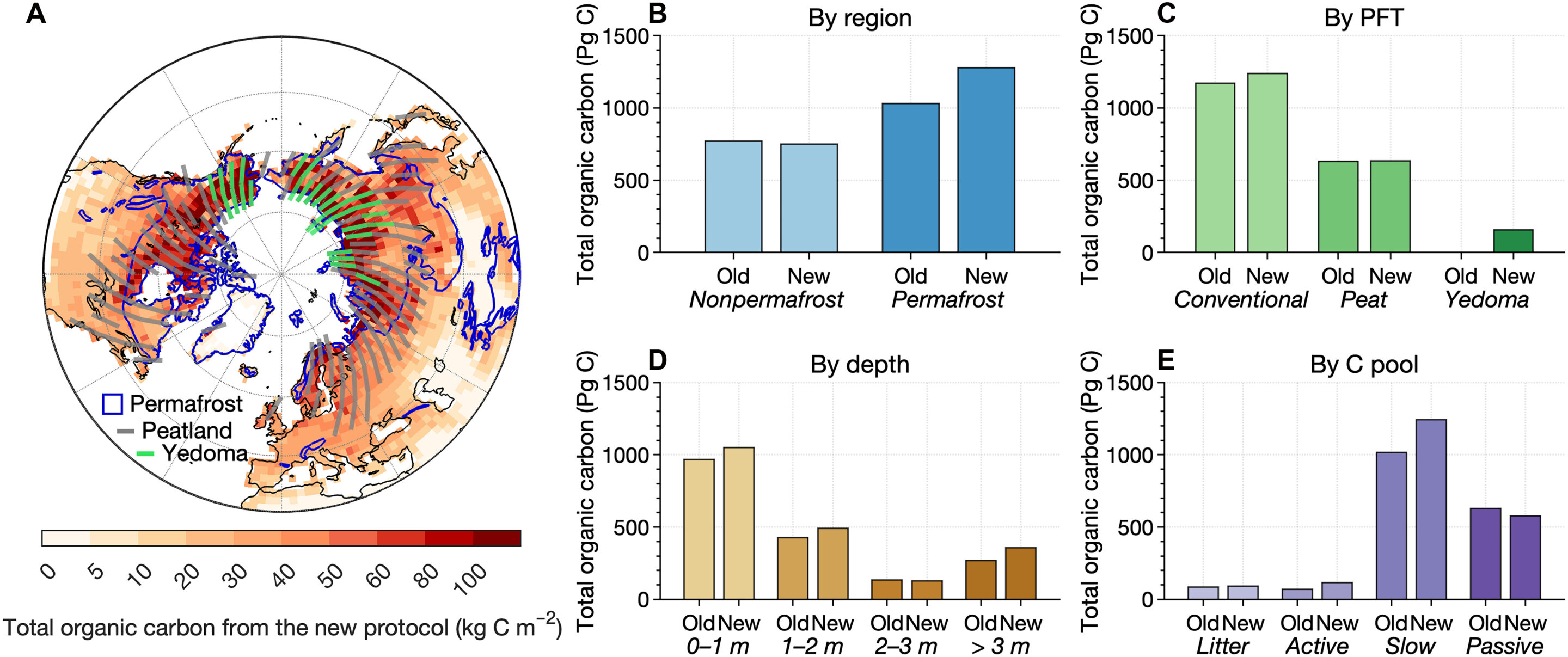
Northern permafrost may begin adding more carbon dioxide to the atmosphere earlier this century than many climate models have projected, according to a study published in Science Advances. The finding matters because permafrost soils hold large stores of ancient organic carbon that can be released as warming thaws frozen ground.
The study, led by Yi Xi and colleagues, examined how climate projections change when models include carbon buried deeper than the upper soil layers commonly represented in Earth system models. Phys.org reported that many current models treat northern permafrost regions overall as a carbon sink through the century because warmer conditions also support plant growth, which removes carbon from the air.
According to the report, Arctic and northern high-latitude regions are warming about two to four times faster than the global average. Permafrost soils store about one-third of the world’s organic soil carbon, much of it locked away for thousands of years, Phys.org reported.
When frozen soils thaw, dead plant and animal matter can decompose and release greenhouse gases including carbon dioxide, according to the report. The study’s authors focused on whether deeper frozen carbon reserves alter the balance between carbon taken up by vegetation and carbon released from soil.
Why deeper layers change the estimate
Phys.org reported that many Earth system models represent permafrost carbon only in roughly the top 3 meters, or about 10 feet, of soil. The new study says that approach leaves out major deposits in deeper ground, including peatland carbon down to about 10 meters and Yedoma deposits down to about 20 meters.
Yedoma is ice-rich, organic-rich permafrost, according to the report. The study authors said omissions of deep carbon and simplified soil-formation histories can cause models to underestimate permafrost extent and high-latitude carbon stocks when compared with observation-based datasets.
To address that gap, the researchers updated the ORCHIDEE-MICT land surface model, according to Phys.org. The revised model simulated the formation of deep Yedoma deposits since the last glacial period and the development of northern peatlands during the Holocene.
The study modeled northern regions above 30 degrees north latitude. The researchers ran historical simulations from 1900 to 2014 and projections from 2015 to 2100 under three shared socioeconomic pathway scenarios used in climate research, according to the report.
Projected switch around midcentury
With deep permafrost and peat carbon included, the revised simulations found higher preindustrial northern soil carbon storage than standard models estimate, Phys.org reported. Across the three climate scenarios, the model showed the northern land carbon sink shrinking sharply between 1900 and 2100 and then changing into a carbon source.
The reversal occurred around the 2050s in the updated model, according to the report. Phys.org said the original version delayed the shift until after midcentury.
The study authors attributed the greater projected soil carbon loss mainly to the slow breakdown of deep permafrost carbon, especially from Yedoma deposits, as the seasonally thawed active layer thickens more quickly after the middle of the century.
The researchers also reported that the updated model better matched measurement-based estimates of soil carbon stocks, terrestrial ecosystem carbon dioxide fluxes and soil carbon quality than the earlier model version, according to Phys.org.
The authors said additional processes could increase projected releases further if added to the model. Phys.org reported that those include abrupt thaw, ground-ice dynamics, thermokarst lakes, wildfire interactions with permafrost, vegetation shifts in Arctic and boreal regions, and nutrient-cycle effects on soil carbon storage.
The study’s authors said their method for initializing deep carbon in cold-region models could be applied to other land surface models. They also said the work points to the need to include deep carbon dynamics when estimating permafrost carbon feedbacks to climate.
This story draws on original reporting from Phys.org.